
Thicket Priory
Thicket Priory is a religious site in North Yorkshire, England, with a history stretching back to the 1180s as a Benedictine priory for nuns. Though dissolved and its original buildings demolished, the site was re-established as a Carmelite monastery in 2009. The current monastic buildings occupy a former country house constructed between 1844 and 1847, which was sold to the Carmelite Sisters in 1955.
Key Facts
- ›Site of a Benedictine priory for nuns from the 1180s until its dissolution in 1539.
- ›Re-founded as a Carmelite monastery in 2009.
- ›The main building was originally a country house built between 1844 and 1847.
- ›Acquired by the Carmelite Sisters of Exmouth in 1955.
- ›Includes three Grade II listed buildings: the former house, lodge, and coach house with stables and brewery.
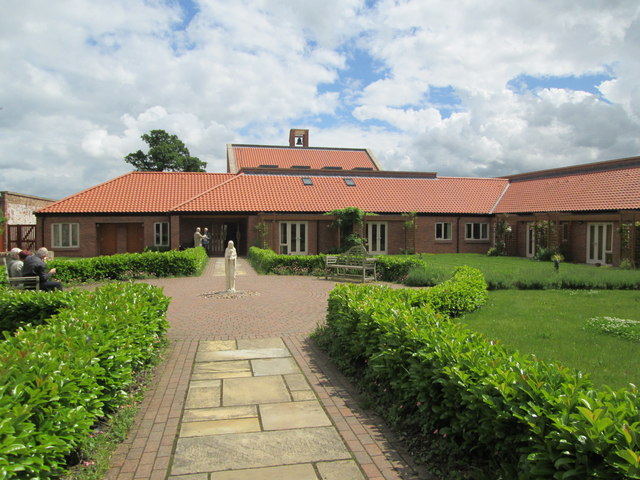
- Devotion To 'Our Lady of Thicket' Dating From the Medieval Period
- Grade Ii Listed Former Country House
- Grade Ii Listed Lodge
- Grade Ii Listed Coach House With Stables and Brewery
- Dissolution of the Benedictine Priory In 1539
- Demolition of Original Priory Buildings In 1850
- Re-Foundation As A Carmelite Monastery In 2009
About Thicket Priory
Thicket Priory is a religious house situated in the civil parish of Thorganby, North Yorkshire, England, approximately seven miles southeast of the city of York. It falls within the Roman Catholic Diocese of Middlesbrough.
Historical Context
The site has a long religious history, with evidence of a Benedictine priory for nuns existing from the 1180s. This original monastic establishment was dissolved in 1539, and its buildings were subsequently demolished in 1850. During the era of the Benedictine priory, there was also a notable devotion to ‘Our Lady of Thicket’.
Modern Re-establishment
New monastic buildings were erected on the grounds of the former establishment. These buildings were re-founded as a Carmelite monastery in 2009. The primary structure used by the community until its relocation in 2009 was originally built as a country house between 1844 and 1847. This property was sold in 1955 by Lt Col Sir John Dunnington-Jefferson to the Carmelite Sisters of Exmouth. The estate, comprising the former country house, its lodge, and a coach house with stables and brewery, holds three Grade II listed buildings, signifying their architectural and historical importance.
Status and Accessibility
As of January 2014, the estate was listed for sale. The nuns moved into a new, purpose-built convent in 2009, indicating that while the historical buildings may have been repurposed, the Carmelite community continues its active presence at Thicket Priory.
Source: Wikipedia ↗
Frequently Asked Questions
What was the original purpose of Thicket Priory?
The site was originally home to a Benedictine priory for nuns, established in the 1180s. This original priory was dissolved in 1539.
When did Thicket Priory become a Carmelite monastery?
The site was re-founded as a Carmelite monastery in 2009. The Carmelite Sisters acquired the property in 1955.
What is the history of the current buildings at Thicket Priory?
The main building used by the community until 2009 was originally constructed as a country house between 1844 and 1847. This property was later sold to the Carmelite Sisters.
Are any parts of Thicket Priory historically protected?
Yes, the property includes three Grade II listed buildings. These are the former country house, its lodge, and the coach house, which also contains stables and a brewery.
Related Monasteries

Ealing Abbey
Ealing Abbey is a Roman Catholic Benedictine monastery established in 1897, becoming an independent conventual priory in 1947 and an abbey in 1955. It is part of the English Benedictine Congregation and is dedicated to Saint Benedict of Nursia. The abbey is known for its parish work, music program, hospitality, and educational initiatives, though it has also faced significant challenges related to sex abuse scandals.

Mount St. Bernard Abbey
Mount St. Bernard Abbey is the only Trappist monastery in England, founded in 1835 near Coalville, Leicestershire. It holds the distinction of being the first permanent monastery established in England since the English Reformation. The abbey is renowned for brewing the sole Trappist beer in Britain and has a rich history of providing refuge and charity to the poor and distressed.

Turvey monastery
Turvey Abbey, located in Bedfordshire, England, has a history dating back to its original construction in 1603, with additions in the early 19th century. Originally a country house for wealthy merchants, it later became home to Catholic recusants. Today, it serves as a Benedictine priory for nuns and is affiliated with the Olivetan Benedictines, operating as the Priory of Our Lady of Peace.