
Shapwick Grange
England·Settlement
Shapwick Grange refers to the historic village of Shapwick, located in east Dorset, England, situated on the River Stour. The area has a rich history, dating back to the Iron Age with the hillfort of Badbury Rings and significant Roman presence, including a fort and a town believed to be Vindocladia. Shapwick lay on an important Roman road and served as a major river crossing point, contributing to its historical significance.
Key Facts
- ›Located in east Dorset, England, on the River Stour.
- ›Site of the Iron Age hillfort of Badbury Rings.
- ›Included a Roman fort and a Romano-British town (Vindocladia).
- ›Positioned on the Roman Road from Old Sarum to Durnovaria.
- ›Historically a major river crossing point on the navigable upper Stour.
- ›The village was used as a filming location for a Doctor who story in 1983.
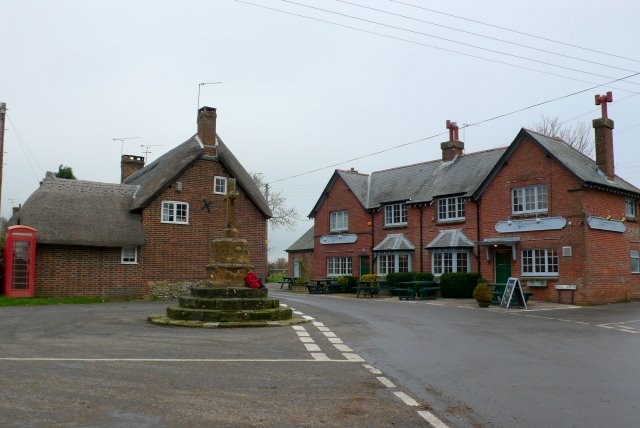
Badbury Rings, Roman Fort Site, Romano-British Town Site, River Stour Crossing Point, Anchor Inn, Crab Farm
Vindocladia
Charles Bennett
- Roman Occupation and Presence
- Development of Roman Road From Old Sarum To Durnovaria
- Filming Location For Doctor Who's 'the Awakening'
About Shapwick Grange
Shapwick Grange is a name associated with the historic village of Shapwick, a civil parish located in east Dorset, England. Nestled on the River Stour, this settlement boasts a history stretching back to the Iron Age, evidenced by the presence of the significant hillfort of Badbury Rings within its parish boundaries. The area also holds considerable Roman history, featuring a Roman fort at Crab Farm and a Romano-British town believed to be Vindocladia, as mentioned in the Antonine Itinerary. Shapwick's strategic position on the vital Roman Road from Old Sarum to Durnovaria, coupled with its role as a major crossing point on the River Stour—the highest navigable point—underscores its historical importance as a junction for ancient travel and commerce.
Over time, Shapwick has seen periods of decline, with some cottages not being rebuilt after fires. Despite this, it remains a place of historical interest and local lore. One notable legend is the 'Shapwick monster,' which recounts villagers' misidentification of a lost crab in 1706 as a fearsome creature. This tale has been preserved in verse and pictures and is commemorated locally. In more recent times, Shapwick gained a connection to popular culture when it served as one of the real-life locations for the filming of the Doctor Who story 'The Awakening' in 1983. The village has also been home to notable individuals, such as Charles Bennett, who achieved fame by winning the 1500 metres at the 1900 Summer Olympics.
Source: Wikipedia ↗
Frequently Asked Questions
What is the historical significance of Shapwick's location?
Shapwick's location on the River Stour made it a significant river crossing point in Roman times, being the highest navigable point on the river. It also lay on the important Roman Road from Old Sarum to Durnovaria, highlighting its strategic importance.
What are the ancient historical features found in Shapwick parish?
Within the parish, the Iron Age hillfort of Badbury Rings is a prominent feature. Additionally, there is evidence of Roman occupation, including a fort at Crab Farm and a Romano-British town identified as Vindocladia.
Is Shapwick known for any unusual local legends?
Yes, Shapwick is associated with a local legend known as the 'Shapwick monster.' The story, dating to 1706, tells of villagers mistaking a lost crab for a devil or monster, a tale later commemorated on a local story board and a weathervane.
Has Shapwick been used in popular culture?
Shapwick was notably used as a filming location for the Doctor Who story 'The Awakening' in 1983. The village's distinct character provided a backdrop for this science fiction production.
Related Monasteries
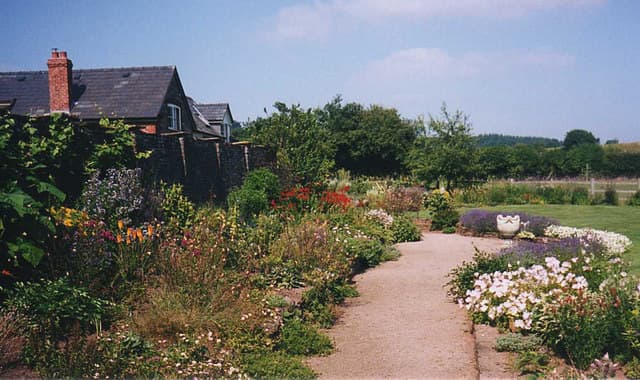
Abbey Dore
Abbey Dore is a village and civil parish in Herefordshire, England, notable for Dore Abbey, a 12th-century Cistercian monastery. The abbey, which underwent significant expansion in the 13th century, forms the core of the village's historical identity. The village's name, adopted in the 18th century, combines 'abbey' with the river name 'Dore'.

Abbotsbury Abbey
Abbotsbury Abbey was a Benedictine monastery founded in the 11th century by Orc and his wife Tola, becoming a significant local power center. Despite periods of misfortune, including the Black Death and coastal raids, the abbey was dissolved in 1539. Today, remnants of the abbey and associated structures like St. Catherine's Chapel are managed by English Heritage.
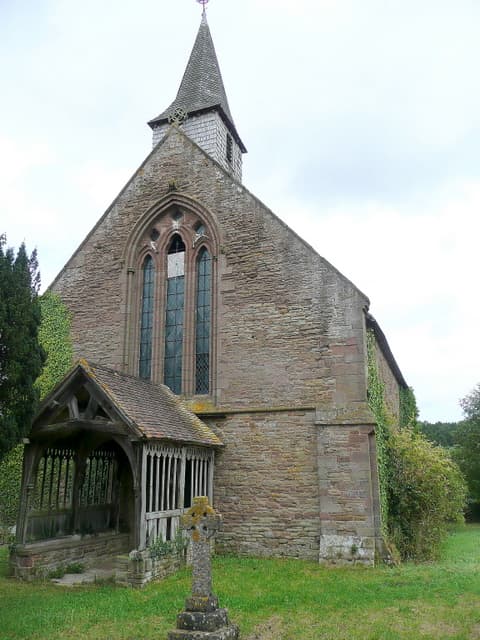
Aconbury Priory
Aconbury Priory was an Augustinian priory located in Herefordshire, England, founded in the early 13th century. The priory's church, still standing today, was initially constructed in 1230. While the conventual buildings have largely vanished, remnants of the east and north walls survived the dissolution.