
Pleterje Charterhouse
Pleterje Charterhouse is the only extant Carthusian monastery in Slovenia, located in Drča near Šentjernej. Originally founded in 1403 by Count Hermann II of Celje, it was destroyed by an Ottoman raid in 1471 and later passed through Jesuit and private ownership before its reacquisition by the Carthusians in 1899. The current buildings largely date from the late 19th century, though the Gothic church of the Holy Trinity remains from the original foundation.
Key Facts
- ›Founded in 1403 by Count Hermann II of Celje.
- ›Suffered destruction from an Ottoman raid in 1471.
- ›Reacquired by Carthusians in 1899, with new construction completed five years later.
- ›The Gothic church of the Holy Trinity is a remnant of the original 15th-century monastery.
- ›Monks cultivate 30 hectares, producing wine, fruit spirits, mead, and beeswax candles.
- ›Houses a collection of 17th and 18th-century paintings by Flemish, French, Italian, and German artists.

Gothic, 19th Century
- Gothic Church of the Holy Trinity
- Art Collection
- Open Air Museum of Typical Slovenian Peasant Buildings
Kartuzija Pleterje, Kartause Plettriach, Pleterjach, Pletriach, Pleteriach
Hermann Ii of Celje, Nikolaus Kempf
Ottoman Raid In 1471, Suppression of Jesuits In 1772, Fire By Communist Partisans In 1943
About Pleterje Charterhouse
Pleterje Charterhouse (Slovene: Kartuzija Pleterje; German: Kartause Plettriach) is the sole surviving Carthusian monastery in Slovenia, situated in the village of Drča, near Šentjernej, at the base of the Gorjanci Mountains.
History and Reconstruction
The monastery's origins trace back to 1403 when Count Hermann II of Celje initiated its founding, with construction concluding by 1407. During its early history, Nikolaus Kempf, an Austrian mystic and theologian, served as prior from 1447 to 1451 and again from 1462 to 1467. A significant setback occurred in 1471 when an Ottoman raid devastated the original structures, necessitating a reconstruction that emphasized greater strength and defensibility. Following a protracted period of decline, the monastery was granted to the Jesuits of Ljubljana in 1595 by Archduke Ferdinand II of Inner Austria. Upon the suppression of the Jesuits in 1772, Pleterje became state property before transitioning into private hands in 1839.
The Carthusians successfully reacquired the site in 1899, embarking on the construction of a new monastery that was completed five years later. This second foundation faced its own trials during World War II, suffering severe damage when Communist Partisans set fire to the charterhouse on February 21, 1943, which resulted in the destruction of seventeen monastic cells.
Present Day Operations and Features
Today, Pleterje Charterhouse continues to function as an active Carthusian monastery. While most of the current monastic buildings stem from the late 19th-century reconstruction, the Gothic church dedicated to the Holy Trinity is a surviving element from the initial foundation. The monks actively manage 30 hectares of land, primarily dedicated to cultivating fruit and producing honey, which they sell. Their produce also includes wine, fruit spirits (notably pear brandy), mead, and beeswax candles.
The community is also the custodian of a notable collection of several dozen paintings dating from the 17th and 18th centuries, attributed to Flemish, French, Italian, and German artists. For the sake of the community's peace, these artworks have been placed on permanent loan for exhibition at a gallery in Kostanjevica na Krki. It is believed these paintings arrived at Pleterje with refugee monks from Bosserville Charterhouse in Lorraine, who found shelter there in 1904.
Furthermore, the monastery hosts a display of items from the collections of the Dolenjska Museum, a local history institution. Additionally, a portion of the monastery's lands features the Pleterje Charterhouse Open Air Museum, showcasing typical Slovenian peasant buildings.
Source: Wikipedia ↗
Frequently Asked Questions
When was Pleterje Charterhouse first founded?
Pleterje Charterhouse was first founded in 1403 by Count Hermann II of Celje. Construction of the original monastery was completed by 1407.
What significant historical events have affected Pleterje Charterhouse?
The monastery was destroyed by an Ottoman raid in 1471. Later, during World War II, Communist Partisans set fire to the charterhouse on February 21, 1943, destroying 17 monastic cells.
What is produced by the monks at Pleterje Charterhouse today?
The monks cultivate 30 hectares of land and produce various goods for sale. These include wine, fruit spirits such as pear brandy, mead, and beeswax candles.
Does Pleterje Charterhouse have any notable art collections?
Yes, the community owns a collection of several dozen paintings from the 17th and 18th centuries, attributed to Flemish, French, Italian, and German artists. These are on permanent loan to a gallery in Kostanjevica na Krki.
What is the architectural style of Pleterje Charterhouse?
The Gothic church of the Holy Trinity is the main surviving structure from the original foundation. The majority of the current monastery buildings date from the second foundation in the late 19th century.
Related Monasteries

Stična Abbey
Stična Abbey is the oldest continuously operating monastery in Slovenia and the country's sole active Cistercian foundation. Established in 1136, it quickly grew into a significant religious, cultural, and economic hub. Despite periods of disruption, including dissolution in the late 18th century and wartime use as a prison, the abbey was resettled and continues its monastic traditions today, also serving as a center for cultural and educational activities.

Seiz Charterhouse
Seiz Charterhouse, also known as Žiče Charterhouse, was a significant Carthusian monastery founded between 1155 and 1165, notable as the first Carthusian house within the German sphere of influence and outside of France or Italy. It played a crucial role in the Carthusian order, serving as the seat for the prior general for nearly two decades and housing a substantial library, making it a center of culture and politics. Though dissolved in 1782, its ruins are now a cultural monument of national importance in Slovenia, attracting visitors and hosting events.
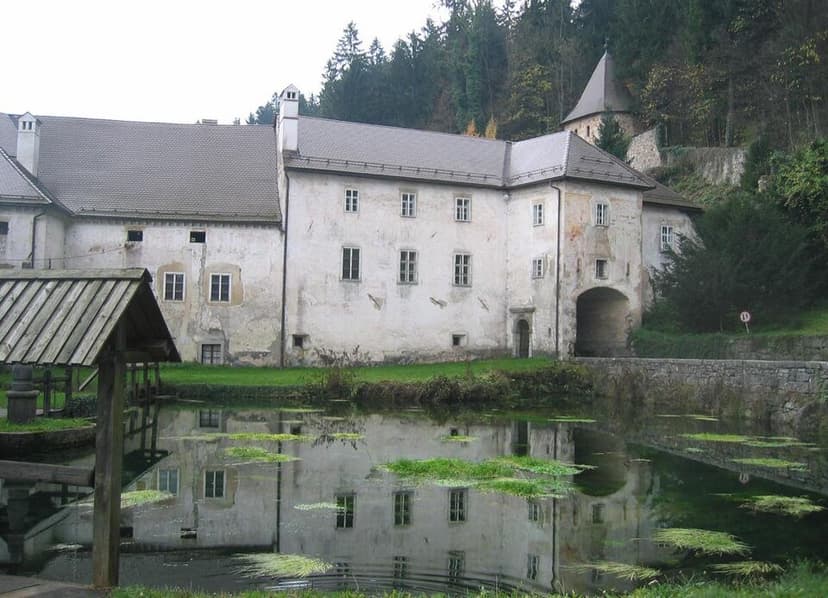
Bistra
Bistra is a settlement in Slovenia, best known for the Bistra Charterhouse, the first monastery in Carniola, founded in 1260. This complex, also referred to as "Bistra Castle," operated as a monastery until its dissolution in 1782. Today, the site houses the Technical Museum of Slovenia, featuring collections related to various technical fields and historical vehicles.