
Nikolje Rudničko Monastery
Nikolje Rudničko Monastery is a Serbian Orthodox monastery established in 1425 by nobleman Nikola Dorjenović. It flourished as a spiritual and cultural center in the 18th century and underwent significant renovations, including the addition of a bell tower in 1817 and a reconstruction of the temple in 1850. Despite periods of damage and looting by the Turks, the monastery has maintained its importance throughout its history.
Key Facts
- ›Founded in 1425 by nobleman Nikola Dorjenović.
- ›Located in Donja Šatornja, Western Serbia, near Topola.
- ›Experienced significant monastic life in the late 15th and early 16th centuries.
- ›Underwent major renovation in the 17th century, suggesting a prior period of damage and abandonment.
- ›Served as an important spiritual and cultural center in the 18th century.
- ›A monumental bell tower was added in 1817, and the temple was reconstructed in 1850.
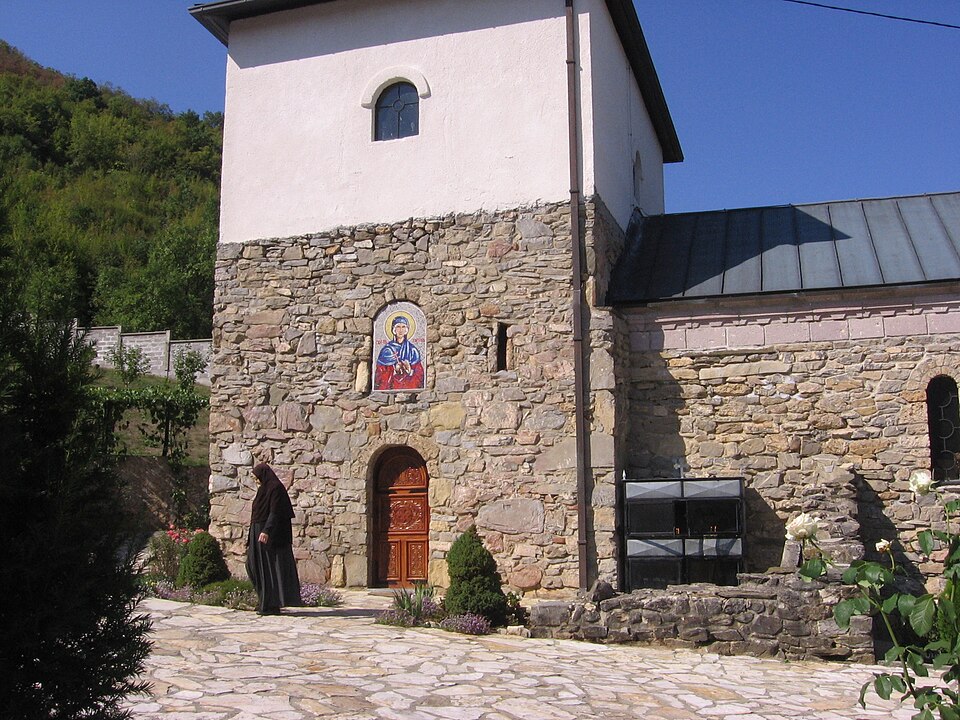
Monumental Bell Tower Built In 1817, Reconstructed Temple With Painted Icons
Nikola Dorjenović, Stefan Lazarević, Joakim Vujić, žIvko Pavlović, Ilija Stoicević, Risto Nikolić
- Founded In 1425.
- Developed Monastic Life In the Second Half of the Fifteenth and Early Sixteenth Century.
- Major Renovation In the Seventeenth Century.
- Damaged and Abandoned For A Short Period Before the 17th-Century Renovation.
- Targeted By Turks For Burning and Looting.
- Monumental Bell Tower Built In 1817.
- Temple Reconstruction In 1850.
About Nikolje Rudničko Monastery
Nikolje Rudničko Monastery is a significant Serbian Orthodox monastic complex situated in Donja Šatornja, Western Serbia, approximately 12 kilometers from Topola. Its history is rooted in the medieval Serbian state, establishing it as a site of enduring religious and cultural importance.
History and Development
The monastery's foundation dates back to 1425, established by Nikola Dorjenović, a nobleman associated with despot Stefan Lazarević. Historical records etched into the church's facade suggest a vibrant monastic life during the late 15th and early 16th centuries. The monastery experienced periods of hardship, indicated by a major renovation in the 17th century, which implies it may have been damaged and abandoned prior to this work. Despite facing repeated destruction and looting by Ottoman forces, Nikolje Rudničko persisted as a spiritual center.
In the 18th century, the monastery evolved into a prominent spiritual and cultural hub within its region. The early 19th century saw further architectural development with the construction of a monumental bell tower in 1817. The mid-19th century marked a significant restoration of the temple itself, completed in 1850 by painters Živko Pavlović and Ilija Stoicević, with the iconostasis adorned by the work of iconographer Risto Nikolić.
Significance
Nikolje Rudničko Monastery stands as a testament to the resilience of religious institutions through periods of conflict and change. Its long history, marked by foundational nobility, periods of flourishing monastic activity, and crucial restorations, underscores its role in the religious and cultural landscape of Serbia.
Source: Wikipedia ↗
Frequently Asked Questions
When was Nikolje Rudničko Monastery founded?
The monastery was founded in 1425 by Nikola Dorjenović, a nobleman serving under despot Stefan Lazarević. This marks the beginning of its long history as a religious institution.
What is the historical significance of Nikolje Rudničko Monastery?
Nikolje Rudničko Monastery was an important spiritual and cultural hub in its region during the 18th century. Despite facing destruction and looting by the Turks, it endured and was renovated multiple times.
Has the monastery undergone significant renovations?
Yes, the monastery has seen several major renovations. A significant one occurred in the 17th century, and in 1850, the temple itself was reconstructed by painters Živko Pavlović and Ilija Stoicević.
Are there any notable architectural additions to the monastery?
A monumental bell tower was constructed in the west part of the temple in 1817. The temple's reconstruction in 1850 also involved significant artistic contributions with the painting of icons for the iconostasis by Risto Nikolić.
Related Monasteries

Ajdanovac Monastery
Ajdanovac Monastery is a Serbian Orthodox monastery situated in south-east Serbia on the slopes of Jastrebac. Its origins likely date to the period after the Ottoman invasion of the Balkans in 1485. After serving as a parish church, it was re-established as a monastery in 1936, following renovations in 1887.

Bođani Monastery
Bođani Monastery is the oldest Serbian Orthodox monastery in the Bačka region of Vojvodina, Serbia, founded in 1478. According to tradition, it was established by a merchant named Bogdan who regained his sight after washing in a local spring. The monastery has undergone numerous reconstructions due to damage from wars, fires, and floods, with the current church dating to 1722. It is renowned for its Baroque architecture and extensive frescoes by Hristofor Žefarović, which are considered a significant contribution to Serbian art.

Bogovađa Monastery
Bogovađa Monastery is a Serbian Orthodox monastery situated in Bogovađa, near Lajkovac, central Serbia. It holds a historical significance as a center of learning and has undergone numerous renovations throughout its existence. The monastery's origins trace back to the 15th century, with its current structures reflecting reconstructions and additions from the late 18th and mid-19th centuries.