
Muckleford Grange
England·Hamlet
Muckleford Grange is a hamlet located within the village of Bradford Peverell in Dorset, England. Situated by the south bank of the River Frome, it is part of a rural landscape characterized by low chalk hills. The area has historical significance, with remnants of a 1st-century Roman aqueduct passing through it.
Key Facts
- ›Muckleford Grange is a hamlet within the village of Bradford Peverell.
- ›The village is located in the English county of Dorset.
- ›It is situated near the south bank of the River Frome.
- ›The area is known for its low chalk hills on the dip slope of the Dorset Downs.
- ›A Roman aqueduct from the 1st century once ran through the vicinity.

Remnants of A 1st-Century Roman Aqueduct
- A 1st-Century Roman Aqueduct Ran Through the Area.
About Muckleford Grange
Muckleford Grange is a hamlet located within the village of Bradford Peverell in the English county of Dorset. This rural settlement is situated by the south bank of the River Frome, nestled among the low chalk hills characteristic of the dip slope of the Dorset Downs. The area's history stretches back to Roman times, with evidence of a 1st-century Roman aqueduct that once traversed the landscape, connecting Notton to the Roman town of Durnovaria, now known as Dorchester.
The hamlet is part of a wider parish that, according to the 2011 census, had a population of 357 residents. The A37 road, a significant transport link between Dorchester and Yeovil, passes to the north of the village, crossing the River Frome's water meadows. The Frome Valley Trail, a long-distance footpath, also winds its way through the village, offering scenic routes for walkers. While Muckleford Grange itself is a hamlet, the nearby St Mary's parish church in Bradford Peverell is a grade II* listed building, rebuilt in 1850 in a 13th/14th-century style, retaining some fittings from its earlier structure.
Source: Wikipedia ↗
Frequently Asked Questions
Where is Muckleford Grange located?
Muckleford Grange is a hamlet situated within the village of Bradford Peverell in the English county of Dorset. It lies by the south bank of the River Frome, a few miles north-west of Dorchester.
What is the historical significance of the area around Muckleford Grange?
The area has ancient roots, with a Roman aqueduct from the 1st century passing through the location of the modern village. This aqueduct followed a route from Notton to the Roman town of Durnovaria (modern Dorchester).
What is the landscape like around Muckleford Grange?
The landscape is characterized by low chalk hills on the dip slope of the Dorset Downs. The village is sited by the River Frome, with water meadows near the A37 road.
Related Monasteries
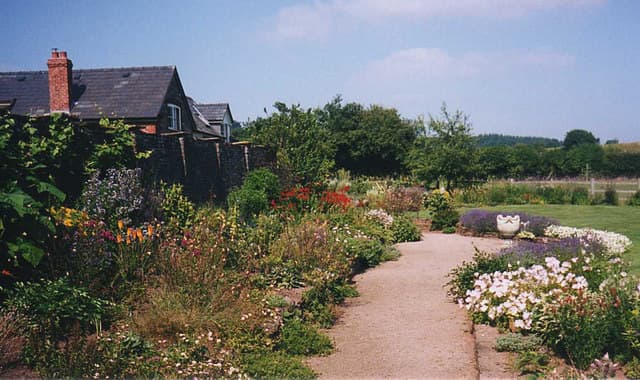
Abbey Dore
Abbey Dore is a village and civil parish in Herefordshire, England, notable for Dore Abbey, a 12th-century Cistercian monastery. The abbey, which underwent significant expansion in the 13th century, forms the core of the village's historical identity. The village's name, adopted in the 18th century, combines 'abbey' with the river name 'Dore'.

Abbotsbury Abbey
Abbotsbury Abbey was a Benedictine monastery founded in the 11th century by Orc and his wife Tola, becoming a significant local power center. Despite periods of misfortune, including the Black Death and coastal raids, the abbey was dissolved in 1539. Today, remnants of the abbey and associated structures like St. Catherine's Chapel are managed by English Heritage.
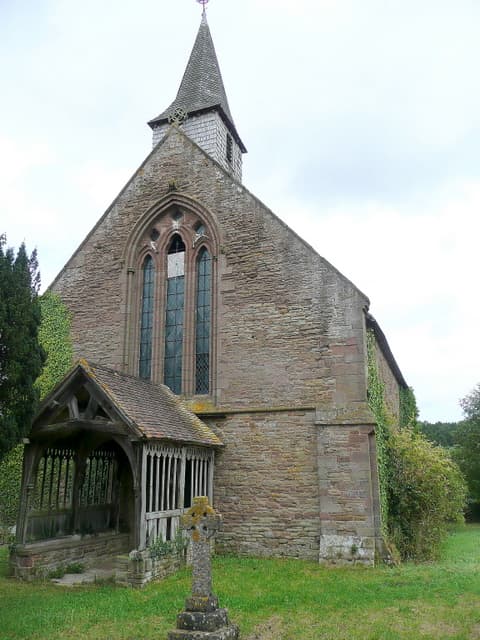
Aconbury Priory
Aconbury Priory was an Augustinian priory located in Herefordshire, England, founded in the early 13th century. The priory's church, still standing today, was initially constructed in 1230. While the conventual buildings have largely vanished, remnants of the east and north walls survived the dissolution.