
Monastery of Saint Sava
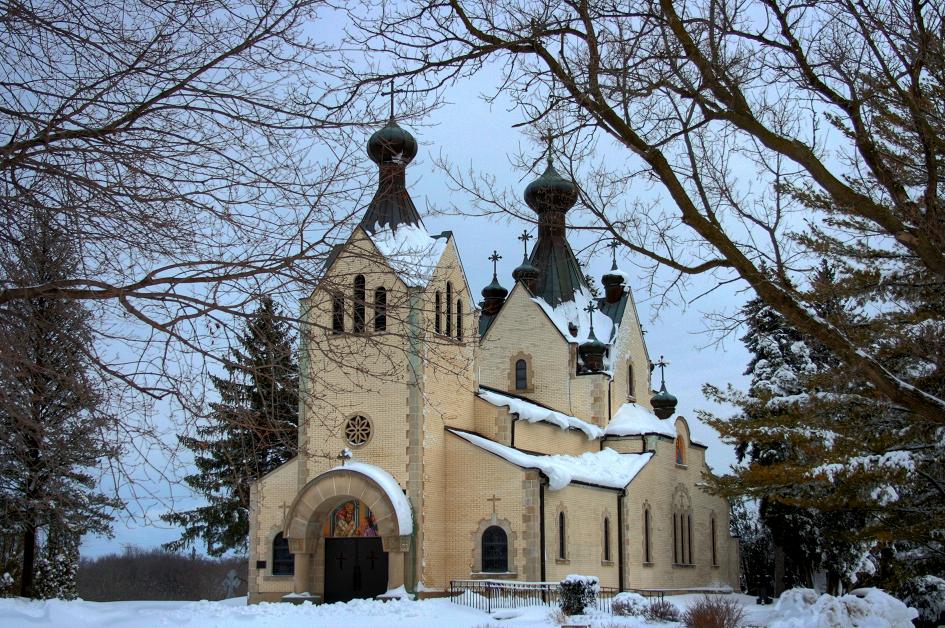
The Saint Sava Serbian Orthodox Monastery and Seminary in Libertyville, Illinois, was established in 1923 by Bishop Saint Mardarije as an educational institution for Serbian Orthodox theology. It later served as a refuge for Serbs during World War II and became a focal point for a significant schism within the Serbian Orthodox Church in North America. The monastery is also known as the final resting place, until 2013, of Peter II of Yugoslavia, the last king of Yugoslavia.
Key Facts
- ›Founded in 1923 by Bishop Saint Mardarije.
- ›Serves as a professional school of theology for the Serbian Orthodox Church.
- ›Became an American refuge for Serbs during World War II.
- ›Was the burial site of Peter II of Yugoslavia from 1970 to 2013.
- ›Listed on the National Register of Historic Places.
- ›Houses a library with 8,000 titles.
Library of 8,000 Titles, Seminary of Theology
Srpski Pravoslavni Manastir Svetog Save
Saint Mardarije, Dionisije Milivojević, Patriarch German, Peter Ii of Yugoslavia, Josip Broz Tito
- Founded As A Serbian Orthodox School
- Served As An American Refuge For Serbs During World War Ii
- Subject of A Church Schism In 1964
- Site of Peter Ii of Yugoslavia's Funeral
About Monastery of Saint Sava
The Monastery of Saint Sava, officially the Saint Sava Serbian Orthodox Monastery and Seminary, is a significant Eastern Orthodox Christian institution located in Libertyville, Illinois. Founded in 1923 by Bishop Saint Mardarije, its primary purpose was to serve as a school of theology for the Serbian Orthodox Church. The monastery's history is marked by its role as a refuge for Serbs during World War II and its involvement in a notable schism within the Serbian Orthodox Church in North America, which began in 1964 and involved disputes over jurisdiction and administration.
Historical Context and Development
The establishment of the Saint Sava Monastery was a key development in organizing the Serbian Orthodox presence in the United States. Bishop Saint Mardarije envisioned it as a center for spiritual and educational growth. The monastery's grounds also became a place of historical significance for the Yugoslav monarchy when Peter II, the last king of Yugoslavia, lived there in exile. His final resting place was at the monastery from 1970 until his remains were moved to Serbia in 2013, an event attended by over 10,000 people.
Educational Mission and Library
As a professional school of theology, the Saint Sava Serbian Orthodox Seminary offers a five-year program of study. The curriculum is comprehensive, encompassing biblical studies, church history, theology, canon law, philosophy, and liturgical practices. Students also engage with the Serbian language and Church Slavonic. The seminary is supported by a substantial library containing 8,000 titles, which serves as a crucial resource for its students and scholars.
Architectural and Cultural Significance
The monastery is recognized for its historical and cultural importance, being listed on the National Register of Historic Places. While specific architectural styles are not detailed, its designation suggests notable construction and preservation efforts. Its role in preserving Serbian Orthodox traditions and serving as a spiritual and educational hub underscores its lasting impact on the Serbian diaspora in North America.
Source: Wikipedia ↗
Frequently Asked Questions
When was the Monastery of Saint Sava founded?
The monastery was founded in 1923 by Bishop Saint Mardarije. It was established as a Serbian Orthodox school.
What is the significance of the Monastery of Saint Sava?
It is a professional school of theology for the Serbian Orthodox Church and served as an American refuge for Serbs during World War II. It was also the burial site for the last Yugoslav king, Peter II.
What is the Monastery of Saint Sava's connection to Peter II of Yugoslavia?
Peter II of Yugoslavia, the last king of Yugoslavia, lived at the monastery after being exiled and wished to be buried there. His remains were interred at the monastery from 1970 until their repatriation to Serbia in 2013.
Has the monastery been involved in any significant church disputes?
Yes, the monastery was central to a schism within the Serbian Orthodox Church in North America following the defrocking of Bishop Dionisije Milivojević in 1964. This led to the formation of two separate church bodies.
What kind of education is offered at the Saint Sava Serbian Orthodox Seminary?
The seminary offers a five-year program covering theological subjects such as the Bible, church history, dogma, canon law, and philosophy. Students also study Serbian and Church Slavonic.
Related Monasteries

Monastery of Saint Herman of Alaska
The Saint Herman of Alaska Monastery is an Eastern Orthodox Christian monastery located in Platina, California, under the jurisdiction of the Serbian Orthodox Eparchy of Western America. Founded in 1968 by Seraphim Rose and Herman Podmoshensky, it is known for its monastics' ascetic lives and its significant role in publishing Orthodox Christian literature in English. The monastery also publishes a bimonthly periodical, "The Orthodox Word," and an annual church calendar through its publishing house, Saint Herman Press.

New Gračanica Monastery
New Gračanica Serbian Orthodox Monastery, located in Third Lake, Illinois, is a significant center for the Serbian Orthodox Eparchy of New Gračanica and Midwestern America. Consecrated in 1984, it is an architectural replica of the original Gračanica Monastery in Kosovo, albeit on a larger scale. The monastery is known for its richly decorated interior, featuring extensive frescoes by artist Fr. Theodore Jurewicz.
Saint Herman of Alaska Monastery
Saint Herman of Alaska Monastery is an Eastern Orthodox Christian monastery located in Platina, California, under the jurisdiction of the Serbian Orthodox Eparchy of Western America. Founded in 1968 by Seraphim Rose and Herman Podmoshensky with the blessing of Bishop John Maximovitch, the monastery is known for its ascetic lifestyle and significant contributions to Orthodox literature in English through its publishing house, Saint Herman Press. It also hosts pilgrims and publishes the periodical 'The Orthodox Word'.