
Innsbruck
Innsbruck, the historic capital of the Austrian state of Tyrol, originated as a strategic medieval crossing point over the Inn River. It rose to prominence as a Habsburg residence, notably under Emperor Maximilian I, who endowed the city with significant architectural landmarks. Situated in a picturesque valley surrounded by the Alps, Innsbruck is renowned as an international winter sports center and has hosted multiple Olympic Games.
Key Facts
- ›Founded as a strategic crossing point over the Inn River in the Middle Ages.
- ›Became a Habsburg residence and a significant political and cultural hub, especially under Emperor Maximilian I.
- ›Hosted the Winter Olympics in 1964 and 1976, and the Winter Paralympics in 1984 and 1988.
- ›Known for its location in a broad valley between the Karwendel Alps and served by the Nordkette mountain range.
- ›Features landmarks such as the Golden Roof (Goldenes Dachl) and the Imperial Palace (Hofburg).

Gothic, Renaissance, Baroque
Golden Roof, Imperial Palace, Court Church, Ambras Castle, Nordkette Mountain Range, Hofgarten, University of Innsbruck
Oenipons, Oeni Pontum, Oeni Pons
Emperor Maximilian I, Andreas Hofer, Ferdinand Ii, Archduke of Austria, Douglas Adams
- Establishment of Roman Army Station Veldidena
- Acquisition By the Counts of Andechs
- Passage To the Counts of Tyrol
- Became Capital of Tyrol
- Emperor Maximilian I Resided In Innsbruck
- Establishment of Regular Postal Service To Mechelen
- Ferdinand Ii, Archduke of Austria Ruled Over Tyrol
- University Founded
- Tyrolean Rebellion Led By Andreas Hofer
- Temporary Incorporation Into the Kingdom of Bavaria
- Restored To Austrian Rule After the Congress of Vienna
- Seat of Government Temporarily Moved To Innsbruck During the 1848 Revolution
- Allied Air Raid
- Occupation By Italian Forces
- Annexation By Nazi Germany
- Dachau Concentration Camp Subcamps Established During Wwii
- Twenty-Two Air Raids During Wwii
- Recognition of Euroregion Tyrol-South Tyrol-Trentino
About Innsbruck
Innsbruck, the capital of Austria's Tyrol state, is a city whose history is deeply intertwined with its strategic location and its role as a Habsburg stronghold. Originating as a vital medieval crossing point over the Inn River, its name literally means 'bridge over the Inn.' The city's historical significance was cemented when it came under Habsburg control in 1363 and later became a favored residence for Emperor Maximilian I, who left an indelible mark on its architectural landscape with iconic structures like the Golden Roof.
History and Development
The area’s inhabitation dates back to the Stone Age, with Roman presence noted in the 4th century at the army station Veldidena, which protected a key commercial route. The city's strategic importance grew as it controlled a crucial passage over the Alps via the Brenner Pass. By the 15th century, Innsbruck had evolved into a significant center of European politics and culture, benefiting from the imperial court's presence. During this era, a regular postal service was established, and notable collections were amassed at Schloss Ambras. The city also saw the establishment of the first opera house north of the Alps and its own university in 1669. Innsbruck experienced periods of change, including temporary incorporation into Bavaria during the Napoleonic Wars, where it became a focal point for Tyrolean resistance led by Andreas Hofer. Following the Congress of Vienna, Austrian rule was restored.
Modern Significance and Geography
Innsbruck's setting in a broad valley, flanked by the Karwendel Alps to the north and other mountain ranges to the south, has established it as a premier international winter sports destination. It has proudly hosted the Winter Olympic Games twice (1964 and 1976) and the Winter Paralympics twice (1984 and 1988), along with the first Winter Youth Olympic Games in 2012. The city is characterized by its blend of historical architecture, such as the Imperial Palace and the Court Church, and its modern infrastructure, including the architecturally distinctive Hungerburgbahn funicular designed by Zaha Hadid. Its economy thrives on tourism, supported by its natural alpine setting and rich cultural heritage.
Source: Wikipedia ↗
Frequently Asked Questions
What is the historical significance of Innsbruck's name?
The name Innsbruck translates to 'bridge over the Inn'. This reflects its origins as a crucial strategic crossing point on the Inn River during the Middle Ages, which facilitated trade and communication.
When did Innsbruck become part of the Habsburg empire?
Innsbruck came under Habsburg control in 1363. It later became an important residence for Emperor Maximilian I, who significantly contributed to the city's architectural development.
What major sporting events has Innsbruck hosted?
Innsbruck is a renowned winter sports center and has hosted the Winter Olympics twice (1964 and 1976), the Winter Paralympics twice (1984 and 1988), and the first Winter Youth Olympic Games in 2012. It is also scheduled to host the 2027 Winter Deaflympics.
What are some of Innsbruck's key historical buildings and monuments?
Notable landmarks include the Golden Roof (Goldenes Dachl), the Imperial Palace (Hofburg), the Court Church (Hofkirche) with Maximilian I's cenotaph, and Ambras Castle. The Old Town (Altstadt) also retains much of its historic character.
How has Innsbruck been affected by major historical conflicts?
During the Napoleonic Wars, Innsbruck served as the center of Andreas Hofer's administration after Tyrolean victories. In World War II, it was the site of Dachau concentration camp subcamps and suffered heavy damage from air raids.
Related Monasteries

Kremsmünster Abbey
Kremsmünster Abbey is a historic Benedictine monastery in Kremsmünster, Upper Austria, founded in 777 AD. Renowned for its rich history, significant library, and architectural grandeur, it has been a center of learning and religious observance for over a millennium. Despite facing periods of decline and destruction, the abbey was consistently re-established and flourished, particularly after adopting reforms and undergoing extensive Baroque renovations.
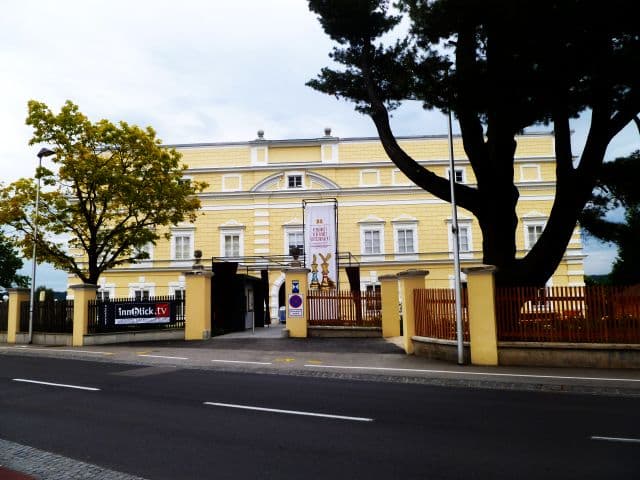
Mattighofen
Mattighofen is a town in Upper Austria, known for its historical ties to Bavarian and Austrian rule, and its modern significance as the headquarters of the KTM brand. The town received its town privileges in 1986, marking a more recent development in its long history that includes a documented imperial palace in the 8th century.

Michaelbeuern Abbey
Michaelbeuern Abbey is a Benedictine monastery located in Dorfbeuern, Austria, with a history stretching back to at least 736. Having experienced periods of crisis and reconstruction, it flourished from the 17th century, marked by Baroque architectural additions and academic pursuits. Today, it operates as a vibrant educational and cultural center, maintaining an active monastic community and engaging in various business ventures.