
Hull Charterhouse
Hull Charterhouse was originally a Carthusian monastery and almshouse established in Kingston upon Hull, England. While the priory was destroyed in 1538 during the Dissolution of the Monasteries, the almshouse building has a history of destruction and rebuilding, notably during the English Civil War and in 1780. Today, the site continues to function as an almshouse with an attached chapel.
Key Facts
- ›Established as a Carthusian monastery and almshouse outside the walls of Kingston upon Hull.
- ›The priory was destroyed in 1538.
- ›The hospital building was demolished before the First Siege of Hull during the English CIVIL War.
- ›The current almshouse buildings date from reconstructions in 1645 and 1780.
- ›The site includes an 18th-century burial ground and was designated a conservation area in 1975.
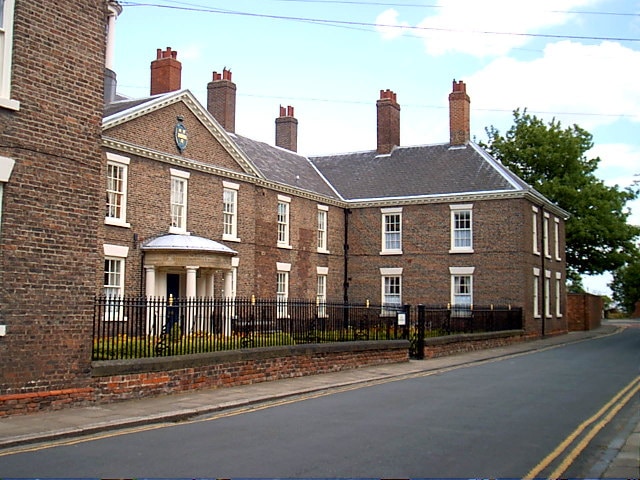
Almshouse, Chapel, 18th-Century Burial Ground
Maison Dieu
William De La Pole, Michael De La Pole, Alice Chaucer, Henrietta Whiteford Rrc
Dissolution of the Monasteries, English Civil War, First Siege of Hull
About Hull Charterhouse
Hull Charterhouse, also known in historical contexts as the Maison Dieu, was a significant religious and charitable institution in Kingston upon Hull, England. Originally founded as a Carthusian monastery and later functioning as an almshouse, its history is marked by both destruction and remarkable resilience.
History and Development
The site's religious association dates back to the time of Edward I. William de la Pole established a hospital, the Maison Dieu, around 1350. His son, Michael de la Pole, completed the foundation of a monastery dedicated to Saint Michael for thirteen Carthusian monks in 1377. The monastery's income in 1535 was substantial, but despite surviving the Dissolution of the Lesser Monasteries Act, the priory itself was suppressed and destroyed in 1538. The hospital, however, had a different fate. Though rendered to the Crown in 1506, it was restored in 1553 and became known as the Charterhouse. During the English Civil War, the hospital building was demolished before the First Siege of Hull to prevent its use by besieging forces. It was subsequently rebuilt in 1645, with further additions including cells and a chapel between 1663 and 1673. The structure underwent another significant rebuilding in 1780 and was extended in 1803. By the 1860s, the hospital was caring for 70 pensioners. The Master's House, thought to incorporate parts of the 1650 hospital, was damaged in the Second World War and restored in 1950. Both the Charterhouse and Master's House are listed buildings.
Present Day
As of 2002, Hull Charterhouse continued its long-standing tradition of serving as an almshouse. The 1.65-hectare area around the Charterhouse, designated a conservation area in 1975, also encompasses a Victorian board school, Charterhouse School, and an 18th-century burial ground, reflecting the layered history of the site. The buildings remain in use, continuing their charitable function to the present day.
Source: Wikipedia ↗
Frequently Asked Questions
When was Hull Charterhouse founded?
While there was a religious house on the site from the time of Edward I, William de la Pole established a hospital known as the Maison Dieu around 1350. His son, Michael de la Pole, completed the foundation of a Carthusian monastery in 1377.
What happened to the original priory?
The priory was suppressed in 1538 during the Dissolution of the Monasteries and subsequently destroyed.
Has the almshouse building always been there?
The original hospital building was demolished before the First Siege of Hull during the English Civil War. It was rebuilt in 1645 and again in 1780, with further extensions in 1803.
Does Hull Charterhouse still operate as an almshouse?
Yes, as of 2002, Hull Charterhouse continued to function as an almshouse, with buildings that remain in use to the present day.
Is the Charterhouse School related to the monastery?
The nearby Charterhouse School is a Victorian board school built in 1881, separate from the original monastic foundation. It later became an annexe of Hull College.
Related Monasteries

Beauvale Priory
Beauvale Priory, also known as Beauvale Charterhouse, was a Carthusian monastery founded in 1343 in Beauvale, Nottinghamshire. It was the third of nine Carthusian houses established in England and played a potential role in late medieval English mysticism. The priory was dissolved in 1539 following the refusal of its monks to accept King Henry VIII's supremacy, leading to the martyrdom of its prior, Robert Lawrence, and other Carthusians.

Bisham Abbey
Bisham Abbey is a historic Grade I listed manor house in Berkshire, England, built around a former monastery. Originally a community house for Knights Templar, it later served various royal purposes and was a priory for Augustinian Canons before being dissolved and refounded as a Benedictine abbey. Today, the site functions as a National Sports Centre, offering extensive athletic facilities and also serving as a wedding and conference venue.

Coventry Charterhouse
Coventry Charterhouse, also known as St. Anne's Priory, is a historic Carthusian monastery founded in 1381. While the monastery ceased operations during the Dissolution of the Monasteries, the current building incorporates significant medieval remains, including unique wall paintings. After centuries of private ownership and various uses, it has been preserved and opened to the public as a center for arts and culture.