
Hardehausen Abbey
Christian·Germany·Educational facility·12th century
Hardehausen Abbey was a Cistercian monastery founded in 1140 near Warburg, Germany. It played a significant role in the Cistercian order, establishing several daughter houses. After being secularized in 1803 and experiencing periods of dissolution and reconstruction, its buildings were repurposed for educational activities by the Archdiocese of Paderborn starting in 1945. The site now houses youth and adult education centers.
Key Facts
- ›Founded on May 28, 1140, by Bishop Bernhard I of Paderborn as a daughter house of Kamp Abbey.
- ›Established three daughter houses: Marienfeld Abbey (1185), Bredelar Abbey (1196), and Scharnebeck Abbey (1243).
- ›Suffered looting and destruction during the Thirty Years' War.
- ›Reconstructed between 1680 and 1750, receiving its present form.
- ›Secularized in 1803; the church was demolished in 1812.
- ›Re-established briefly in 1927 but dissolved by the Nazi government in 1938.
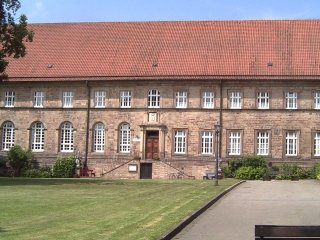
Jugendhaus Hardehausen, Landvolkshochschule Anton Heinen
Kloster Hardehausen
Meinwerk, Bishop of Paderborn, Bernhard I, Bishop of Paderborn
- Founded In 1140
- Church Dedicated In 1165
- Looted and Destroyed During the Thirty Years' War
- Secularized In 1803
- Church Demolished In 1812
- Briefly Re-Founded In 1927
- Dissolved By the National Socialist Government In 1938
About Hardehausen Abbey
Hardehausen Abbey, known in German as Kloster Hardehausen, is a former Cistercian monastery situated near Warburg in the Höxter district of North Rhine-Westphalia, Germany. Its history stretches back to 1140 when it was founded by Bishop Bernhard I of Paderborn as a daughter house of Kamp Abbey. The abbey's initial construction was completed with the dedication of its church in 1165.
Historical Significance and Development
During its active monastic period, Hardehausen Abbey was a significant foundation, responsible for establishing three daughter houses: Marienfeld Abbey in 1185, Bredelar Abbey in 1196, and Scharnebeck Abbey in 1243. The abbey faced considerable hardship, including being looted and destroyed during the Thirty Years' War. Subsequent reconstruction between 1680 and 1750 gave the monastery its present form.
Secularization and Modern Use
The abbey's monastic life came to an end with its secularization in 1803, leading to the expulsion of the monks and the eventual demolition of the church in 1812. The buildings and grounds were later briefly re-established as a Cistercian monastery in 1927 but were dissolved by the National Socialist government in 1938. Since 1945, the former monastery has been repurposed for educational purposes by the Archdiocese of Paderborn, now housing the Jugendhaus Hardehausen (Youth House) and the Landvolkshochschule Anton Heinen (Adult Education Center).
Source: Wikipedia ↗
Frequently Asked Questions
When was Hardehausen Abbey founded?
Hardehausen Abbey was founded on May 28, 1140. Construction of the church was completed with its dedication in 1165.
What religious order was Hardehausen Abbey part of?
Hardehausen Abbey was a Cistercian monastery. It was founded as a daughter house of Kamp Abbey, which is also a Cistercian institution.
What happened to Hardehausen Abbey after its secularization?
After being secularized in 1803, the monks were expelled, and the contents of the abbey were sold. The church was demolished in 1812, and the estates were rented out as state property.
What is the current use of the former Hardehausen Abbey site?
Since 1945, the former monastery has been used for the educational activities of the Archdiocese of Paderborn. It now houses the Jugendhaus Hardehausen and the Landvolkshochschule Anton Heinen.
Did Hardehausen Abbey have any daughter houses?
Yes, Hardehausen Abbey was instrumental in establishing several daughter houses. These included Marienfeld Abbey in 1185, Bredelar Abbey in 1196, and Scharnebeck Abbey in 1243.
Related Monasteries

Ballenstedt
Ballenstedt is a town in Saxony-Anhalt, Germany, historically significant as the seat of the Ascanian dynasty. It was home to a Benedictine monastery founded in 1123, which was later secularized and became part of a Baroque ducal residence. The town is situated at the northern edge of the Harz Mountains and lies on the Romanesque Road.

Bebenhausen Abbey
Bebenhausen Abbey is a former Cistercian monastery in Baden-Württemberg, Germany, notable for its historical significance as a wealthy monastic institution and its later transformation into a royal hunting retreat and palace. Established in the late 12th century, it flourished for centuries before its dissolution during the Reformation, later serving as a Protestant seminary and a site for post-war political deliberations. The complex showcases a blend of Cistercian austerity, Gothic expansion, and later Renaissance and Baroque influences, alongside significant royal additions.

Chemnitz
Chemnitz is a historically significant industrial city in Saxony, Germany, known for its textile manufacturing and innovation. Founded around a Benedictine monastery in the 12th century, it grew into a major economic center, even being dubbed "the Saxon Manchester." The city experienced substantial development and changes throughout its history, including a period from 1953 to 1990 when it was renamed Karl-Marx-Stadt.