
Gräfrath
Germany·District of Solingen·12th century
Gräfrath was historically the site of an abbey that existed from 1185 to 1803. Located in the German federal state of North Rhine-Westphalia, this district of Solingen was once a center for iron, steel, and weaving industries. Today, it is a residential area known for its historical abbey site.
Key Facts
- ›The abbey in Gräfrath was in existence for over 600 years.
- ›Its operational period spanned from 1185 to 1803.
- ›Historically, iron, steel production, and weaving were significant economic activities in the area.
- ›Gräfrath is a district within the city of Solingen.
- ›It is situated in the German federal state of North Rhine-Westphalia.
- ›The district is located approximately 23 kilometers east of Düsseldorf.
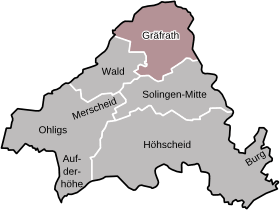
Graefrath
Abbey Operated From 1185 To 1803.
About Gräfrath
Gräfrath is a district within the city of Solingen, located in the German federal state of North Rhine-Westphalia. Historically, the area is noted for being the site of an abbey that was active for over six centuries, from 1185 until 1803. During its existence, Gräfrath was also an area where key industries such as iron and steel production, along with weaving, played significant roles in its economy.
Historical Context
The presence of an abbey from the late 12th century until the early 19th century marks Gräfrath's most prominent historical characteristic. While specific details about the abbey's order, architecture, or daily life are not extensively documented, its long period of operation suggests a sustained religious and community presence. Following the abbey's dissolution in 1803, the area transitioned, with its industrial activities in iron, steel, and weaving contributing to its economic identity.
Modern Significance
Today, Gräfrath functions as a district of Solingen, situated approximately 23 kilometers east of Düsseldorf. While the historical abbey is no longer operational, the legacy of its past is an intrinsic part of the district's identity. The area's historical economic drivers, such as metalworking and textiles, also reflect the industrial heritage of the wider Solingen region.
Source: Wikipedia ↗
Frequently Asked Questions
When was the abbey in Gräfrath founded?
Historical records indicate that the abbey in Gräfrath was founded in 1185. It served as a religious institution for several centuries.
What was the historical significance of Gräfrath?
Gräfrath was historically significant as the location of an abbey that operated for over 600 years. It was also an area where iron, steel, and weaving were important economic activities.
Where is Gräfrath located?
Gräfrath is a district of Solingen, situated in the German federal state of North Rhine-Westphalia. It lies about 23 kilometers east of Düsseldorf.
What happened to the abbey in Gräfrath?
The abbey in Gräfrath ceased to exist in 1803. The precise reasons for its dissolution are not detailed in the provided historical accounts.
Related Monasteries

Abbenrode
Abbenrode is a village in the Harz district of Saxony-Anhalt, Germany, which was once an independent municipality before being incorporated into Nordharz in 2010. Historically, it was the site of a Benedictine nunnery established around 1145, which was devastated during the German Peasants' War and later dissolved. The village is situated north of the Harz mountains near the Ecker creek and the border with Lower Saxony.

Altzella Abbey
Altzella Abbey was a significant Cistercian monastery founded in 1162 near Nossen, Saxony, Germany. It served as the primary burial place for the Wettin margraves of Meissen from 1190 to 1381, housing their tombs within its church and the later Andreaskapelle. Though secularized in 1540 and largely demolished, its remaining structures and surrounding park now serve as a cultural site, featuring ruins, restored buildings, and gardens.

Ballenstedt
Ballenstedt is a town in Saxony-Anhalt, Germany, historically significant as the seat of the Ascanian dynasty. It was home to a Benedictine monastery founded in 1123, which was later secularized and became part of a Baroque ducal residence. The town is situated at the northern edge of the Harz Mountains and lies on the Romanesque Road.