
Old Sarum Cathedral
Old Sarum Cathedral was a significant Catholic cathedral located at Old Sarum, England, serving as the seat of the bishops of Salisbury during the early Norman period. It is notable as the original source of the Sarum Rite and was the precursor to the modern Salisbury Cathedral. Though only its foundations remain today, its history spans from its construction in the late 11th century to its dismantling in the 13th century.
Key Facts
- ›The cathedral was initiated shortly after Bishop Herman was translated to Old Sarum in 1075, uniting the dioceses of Sherborne and Ramsbury.
- ›It was consecrated on April 5, 1092, by Bishop Saint Osmund, though it suffered damage from a storm shortly after.
- ›Roger of Salisbury rebuilt and enlarged the cathedral around 1120, introducing patterned stone flooring.
- ›The cathedral was moved and dismantled, with its materials used to construct the present Salisbury Cathedral, consecrated in 1220.
- ›Excavations were conducted by the Society of Antiquaries of London between 1909 and 1915.
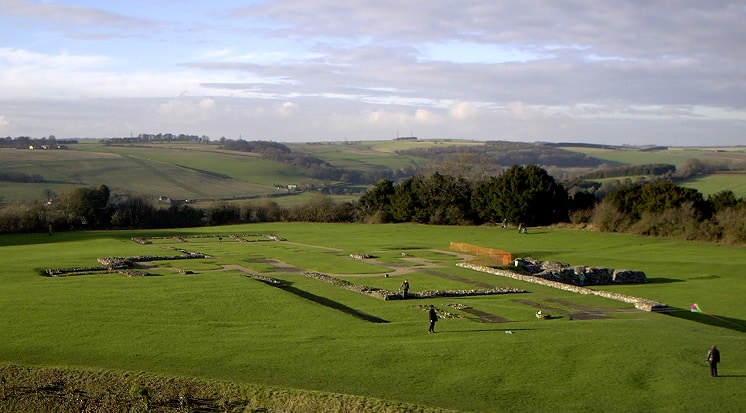
Cruciform Shape, Seven-Bay Nave With Cross-Shaped Piers, Central Crossing Tower, Six Altars, Sarum Rite
About Old Sarum Cathedral
Old Sarum Cathedral was a significant Catholic cathedral that stood at the historic site of Old Sarum, England, serving as the primary seat for the bishops of Salisbury during the early Norman period. Its construction marked a new ecclesiastical center in the region, and it is historically important as the origin of the Sarum Rite, a liturgical tradition that influenced church practices across England and beyond. Although the cathedral itself no longer stands, its foundations remain as a testament to its past importance, located approximately two miles north of its 13th-century successor, Salisbury Cathedral.
History and Construction
The establishment of the cathedral at Old Sarum followed the Norman conquest, with the translation of Bishop Herman to the area in 1075. This move unified the former dioceses of Sherborne and Ramsbury, creating a new bishopric. Construction of the cathedral began shortly thereafter. It was consecrated on April 5, 1092, under Bishop Saint Osmund. The building suffered damage from a storm just days after its consecration, but it was later significantly rebuilt and enlarged by Roger of Salisbury around 1120. This reconstruction included the introduction of patterned green and white stone flooring in the new sections.
Description and Dismantling
At its largest, the Norman cathedral measured 185 feet (56 m) in length. It featured a standard cruciform shape with a seven-bay nave, cross-shaped piers, an apse, and a central crossing tower, along with several peripheral chapels. The cathedral housed six altars, including the high altar and others dedicated to various saints. However, by the late 12th and early 13th centuries, the site at Old Sarum was deemed too exposed and lacking in resources. Bishop Herbert Poore received permission to relocate the cathedral, and its stones were transported to a new site to construct the present Salisbury Cathedral, the consecration of which took place in 1220. The dismantling of Old Sarum Cathedral was a gradual process, with its materials being repurposed for the new edifice and its close walls.
Excavation and Legacy
While the physical structure of Old Sarum Cathedral has largely vanished, its historical and liturgical legacy endures. The site underwent excavation campaigns, notably by the Society of Antiquaries of London between 1909 and 1915, which uncovered much about its layout and construction. The relics of Saint Osmund were eventually translated to Salisbury Cathedral in 1457, further connecting the two sites. Today, the remaining foundations at Old Sarum are recognized as a Grade I listed monument, preserving the memory of this early Norman cathedral and its pivotal role in the history of the Church in England.
Source: Wikipedia ↗
Frequently Asked Questions
When was Old Sarum Cathedral built?
Construction of Old Sarum Cathedral began shortly after the translation of Bishop Herman in 1075. It was consecrated in 1092, and significant rebuilding and enlargement were completed around 1120 by Roger of Salisbury.
Where was Old Sarum Cathedral located?
The cathedral was situated at Old Sarum, a fortified hilltop site in England, about 2 miles north of the current Salisbury Cathedral.
What is the significance of Old Sarum Cathedral?
It served as the seat for the bishops of Salisbury during the early Norman period and is recognized as the origin of the Sarum Rite, an important liturgical tradition in medieval England.
What remains of Old Sarum Cathedral today?
Only the foundations of the Norman cathedral remain at the Old Sarum site. These foundations are located in the north-west quadrant of the circular outer bailey.
Why was the cathedral moved from Old Sarum?
Bishop Herbert Poore sought to move the cathedral due to the Old Sarum site being described as 'barren, dry, and solitary, exposed to the rage of the wind' and lacking a sufficient water supply. The move led to the construction of the new Salisbury Cathedral.
Related Cathedrals

Salisbury Cathedral
Salisbury Cathedral, officially the Cathedral Church of the Blessed Virgin Mary, is a leading example of Early English Gothic architecture in England. Constructed remarkably quickly between 1220 and 1258, it features a unity of design unusual for medieval cathedrals, culminating in England's tallest spire. It holds significant historical artifacts, including an original copy of Magna Carta, and boasts Britain's largest cathedral close.

Canterbury
Canterbury Cathedral is a magnificent Gothic cathedral located in Canterbury, England, and a UNESCO World Heritage Site. It is the seat of the Archbishop of Canterbury, the primate of all England and the symbolic leader of the Anglican Communion, making it a globally significant religious center. The cathedral is renowned for its stunning architecture, rich history, and vibrant musical tradition, attracting a million visitors annually.

Chester Cathedral
Chester Cathedral is the mother church of the Diocese of Chester, located in Chester, England. Originally the abbey church of a Benedictine monastery dedicated to Saint Werburgh, it is now dedicated to Christ and the Blessed Virgin Mary and has served as the seat of the bishop of Chester since 1541. The cathedral showcases a rich history of architectural styles, from Norman to Perpendicular Gothic, and has undergone significant restoration throughout its existence.