
Marseille Cathedral
Marseille Cathedral, also known as La Major, is a Roman Catholic cathedral located in Marseille, France, and a national monument. It exists in two parts: a surviving 12th-century Romanesque choir and nave bay, and a much larger 19th-century structure built in Byzantine and Roman Revival styles. The current cathedral, consecrated in 1897, is one of the largest in France and serves as the seat of the Archdiocese of Marseille.
Key Facts
- ›The current Marseille Cathedral was constructed between 1852 and 1896 on the site of earlier cathedrals dating back to the 5th century.
- ›It was built on an enormous scale in Byzantine and Roman Revival architectural styles.
- ›The foundation stone was laid by Emperor Napoleon III in 1852.
- ›The cathedral has a length of 142 meters and its main cupola reaches a height of 70 meters.
- ›It has a seating capacity of 3,000 and covers a total area of 7,680 square meters, making it one of the largest cathedrals in France.
- ›Marseille Cathedral was consecrated in 1897 and designated as a minor basilica in 1896.

- Surviving 12th-Century Romanesque Choir and Nave Bay
- Massive Byzantine and Roman Revival Structure
- Main Cupola
- Significant Seating Capacity and Floor Area
LéOn Vaudoyer, Henri-Jacques EspéRandieu
About Marseille Cathedral
Marseille Cathedral: A Monument of Faith and Architecture
Marseille Cathedral, officially known as Cathédrale Sainte-Marie-Majeure de Marseille, and often referred to as La Major, stands as a significant Roman Catholic religious site and a national monument within the city of Marseille, France. Its history is layered, with remnants of a much earlier 12th-century Romanesque structure existing alongside a grander 19th-century edifice. The cathedral today is the seat of the Archdiocese of Marseille, a testament to centuries of Christian presence and architectural evolution in the region.
Historical Development and Architectural Styles
The current, much larger cathedral was constructed between 1852 and 1896, built upon the site that had hosted cathedrals for Marseille since the 5th century. This grand undertaking was executed in the Byzantine and Roman Revival styles, envisioned by architects Léon Vaudoyer and Henri-Jacques Espérandieu. The scale of the "Nouvelle Major" is impressive, measuring 142 meters in length with a main cupola reaching 70 meters in height. It was designed to accommodate 3,000 worshippers and covers a vast 7,680 square meters, positioning it among the largest cathedrals in France. In contrast, a portion of the earlier cathedral, known as the "Vieille Major," survives, comprising the choir and one bay of the nave, and showcases a simple 12th-century Romanesque style.
Significance and Designation
Marseille Cathedral was granted the title of minor basilica in 1896, with its consecration taking place in 1897. The foundation stone for the new structure was laid by Emperor Napoleon III himself in 1852, highlighting its national importance. The cathedral has been recognized for its historical and architectural value, listed as a monument since 1906. It is crucial not to confuse it with the more famous basilica of Notre-Dame de la Garde, also located in Marseille.
Source: Wikipedia ↗
Frequently Asked Questions
What is Marseille Cathedral called in French?
Marseille Cathedral is known in French as Cathédrale Sainte-Marie-Majeure de Marseille, or more commonly Cathédrale de La Major or simply La Major.
When was the current Marseille Cathedral built?
Construction of the current Marseille Cathedral began in 1852, with the first service held in 1893 and completion in 1896. It was consecrated in 1897.
What are the architectural styles of Marseille Cathedral?
The current Marseille Cathedral is built in the Byzantine and Roman Revival styles. A small part of the older cathedral remains, built in the Romanesque style.
How large is Marseille Cathedral?
Marseille Cathedral is 142 meters long, with its main cupola standing 70 meters high. It can accommodate 3,000 people and covers a total area of 7,680 square meters.
What is the significance of Marseille Cathedral?
It serves as the seat of the Archdiocese of Marseille and is a national monument of France. Its impressive scale and architectural styles make it one of the largest cathedrals in the country.
Related Cathedrals
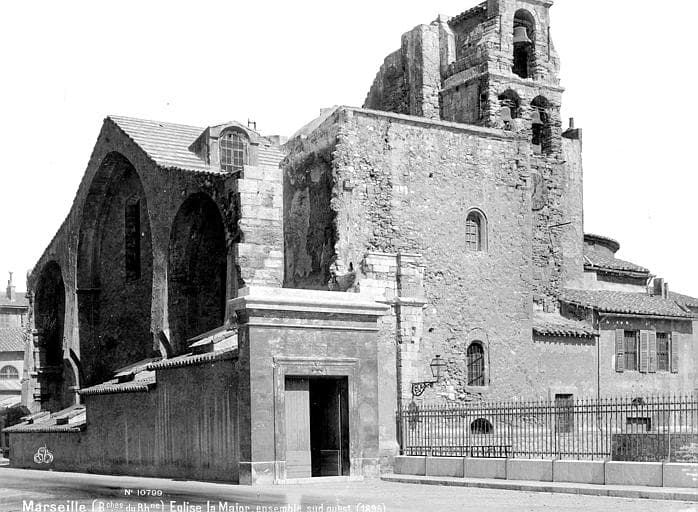
Vieille Major
Marseille Cathedral, also known as La Major, is a Roman Catholic cathedral and minor basilica located in Marseille, France. It is the seat of the Archdiocese of Marseille and one of the largest cathedrals in the country, notable for its immense scale and its construction on a site used for cathedrals since the 5th century.

Cathedral of St. John the Divine
The Cathedral of St. John the Divine in New York City is the largest church in North America and the cathedral of the Episcopal Diocese of New York. Construction began in 1892, and despite numerous interruptions and design changes, it remains an unfinished masterpiece, showcasing a blend of architectural styles. It serves as a significant landmark and venue for events, reflecting its ongoing role in the city's cultural and religious life.

London Orthodox Cathedral
Saint Sophia Cathedral, consecrated in 1882, is a prominent Greek Orthodox church in London's Bayswater area. It was established to serve the growing Greek community and has since become a significant religious and cultural center, even serving as the cathedral for the Greek government in exile during World War II.