
Cathedral Basilica of the Immaculate Conception
Archdiocese of Mobile·Catholic·United States
The Cathedral Basilica of the Immaculate Conception in Mobile, Alabama, is the mother church of the Archdiocese of Mobile and the seat of its archbishop. Established in 1703, it holds the distinction of being the first parish established on the Gulf Coast. The current cathedral structure, dedicated to Our Lady of the Immaculate Conception, has undergone numerous constructions, renovations, and restorations since its initial consecration in 1850, reflecting its enduring significance in the region's religious and architectural history.
Key Facts
- ›The Cathedral Parish was established on July 20, 1703, making it the first parish on the Gulf Coast.
- ›The current cathedral structure's cornerstone was laid in 1835, with its initial consecration occurring in 1850.
- ›The cathedral suffered significant damage from a gunpowder explosion in 1865 and a fire in 1954.
- ›Classical portico, towers, and interior enhancements have been added and restored over its history.
- ›In 1962, the cathedral was elevated to the status of a minor basilica by Pope John XXIII.
- ›The building measures 50 meters (164 ft) in length and 27 meters (90 ft) in width, with towers reaching 31 meters (103 ft).
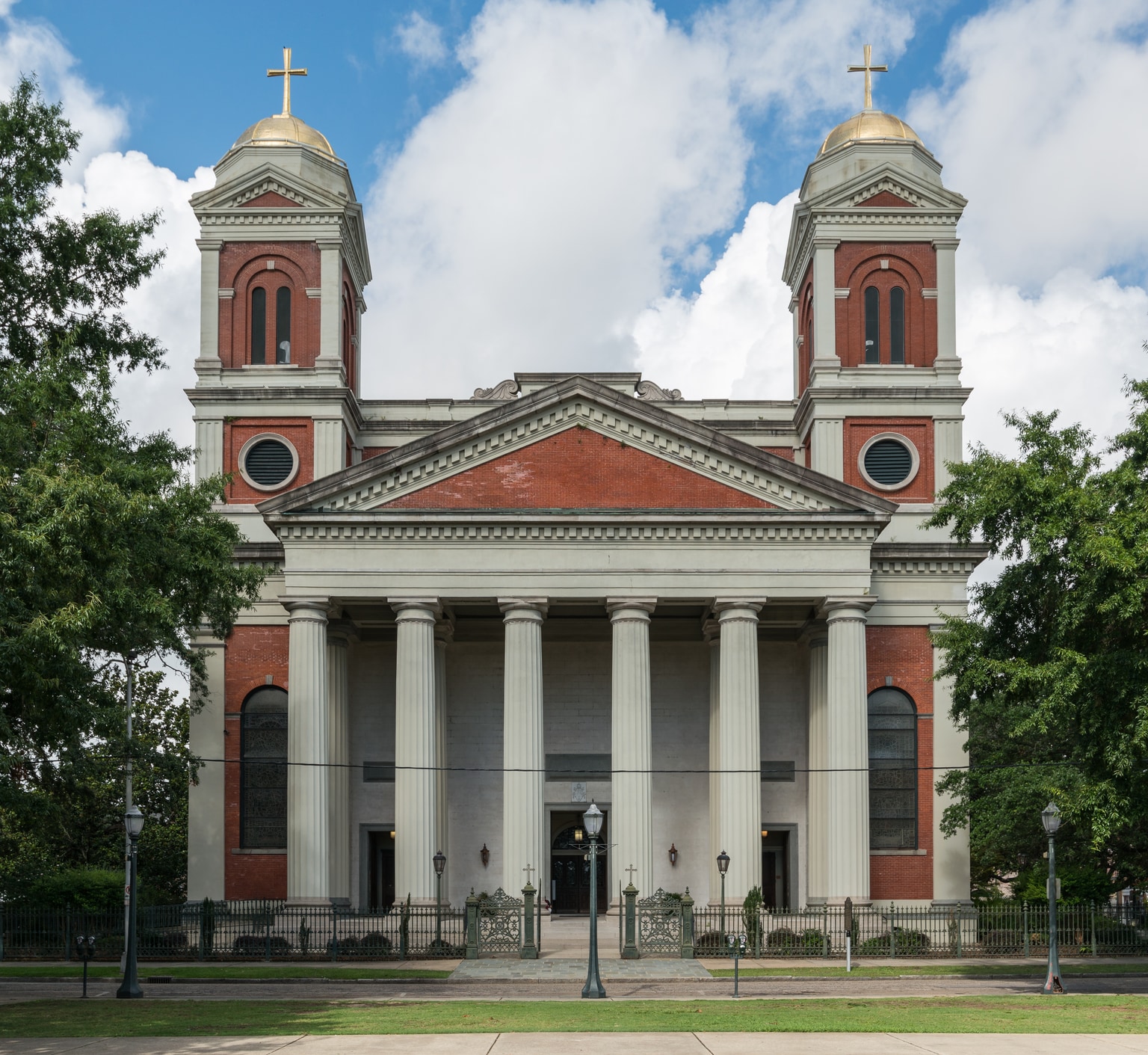
Roman Basilica
- Classical Portico With Eight Doric Columns
- Twin Towers
- Stained Glass Windows By Franz Mayer & Co.
- Bronze Baldachin Above the Altar
- Coffer Ceiling With Fleur-De-Lis and Shamrock Motifs
- Mural of the Tree of Jesse
Claude Beroujon
About Cathedral Basilica of the Immaculate Conception
The Cathedral Basilica of the Immaculate Conception, located in Mobile, Alabama, is the principal church of the Archdiocese of Mobile and serves as the seat of its archbishop. Its origins trace back to July 20, 1703, when the Cathedral Parish was established by Bishop Jean-Baptiste de la Croix de Chevrières de Saint-Vallier of Quebec, marking it as the first parish founded on the Gulf Coast.
History and Construction
Following the relocation of the Mobile settlement in 1711, a new parish church known as Notre Dame de la Mobile was built. During the Spanish occupation in 1781, the parish officially adopted the name Immaculate Conception. When the Diocese of Mobile was erected in 1829, Bishop Michael Portier's initial 'cathedral' was a modest wooden structure. Portier initiated the construction of a more substantial cathedral, enlisting architect Claude Beroujon for a Roman basilica design. The cornerstone was laid in 1835, but financial crises, notably the Panic of 1837, led to significant delays. The cathedral was finally consecrated in 1850, though without its planned portico and towers due to funding limitations.
The cathedral's history is marked by resilience through various events. At the close of the American Civil War in 1865, a nearby ammunition depot explosion caused considerable damage to its north-facing windows. In the 1870s, Bishop John Quinlan oversaw the addition of a classical portico with eight Doric columns, and the two towers were completed in 1884 under Bishop Jeremiah O'Sullivan. A US Navy plane crash in 1946 struck the South Tower.
Fire, Restoration, and Modifications
A devastating fire in 1954, caused by a homeless man sheltering in the basement, severely damaged the cathedral's interior. The blaze destroyed eight large stained glass windows, the cathedra, pulpit, and pipe organ. Following the fire, Bishop Thomas Toolen arranged for the repair of the stained glass windows in Munich and commissioned new mahogany furnishings and a replacement organ. He also added a large bronze baldachin above the altar.
In recognition of its significance, Pope John XXIII elevated the cathedral to the status of a minor basilica in 1962. The sanctuary was later modified in the 1970s to align with liturgical changes from the Second Vatican Council, including moving the altar forward and repositioning the cathedra. Hurricane Frederic in 1979 necessitated the replacement of wooden crosses on the steeples with aluminum replicas.
The most recent comprehensive restoration effort, led by Archbishop Oscar Hugh Lipscomb in the 2000s, involved repairing the cast-iron fence, cleaning and repairing the exterior, and an extensive interior overhaul. This included the installation of a coffer ceiling decorated with fleur-de-lis and shamrock motifs, new lighting, a revised color scheme, and white marble flooring in the aisles. The heart pine floors under the pews were refinished, and the coats-of-arms of Mobile's bishops and archbishops were embedded in the main aisle floor. A mural of the Tree of Jesse was also installed above the pipe organ.
Architectural Details and Dimensions
The cathedral is situated on South Claiborne Street in Mobile, facing east towards the Mobile River and overlooking Cathedral Square. The building is laid out on an east-west axis, measuring approximately 50 meters (164 ft) in length and 27 meters (90 ft) in width. The interior ceiling reaches a height of 18 meters (60 ft), while its twin towers rise to 31 meters (103 ft).
Stained Glass Windows
The cathedral's stained glass windows were crafted by Franz Mayer & Co. in Munich, Germany, with installations beginning in 1890 and concluding in 1910. Some windows were remade by the same company after the 1954 fire. The twelve main windows, each approximately 2.4 meters (8 ft) wide and 7.0 meters (23 ft) tall, depict significant events from the life of Mary and Jesus. Additional stained glass is found flanking the portico and in the foyer doors, featuring various saints and religious scenes.
Source: Wikipedia ↗
Frequently Asked Questions
When was the Cathedral Basilica of the Immaculate Conception established?
The Cathedral Parish was established on July 20, 1703, making it the first parish established on the Gulf Coast. The current cathedral structure's cornerstone was laid in 1835.
What is the architectural style of the Cathedral Basilica of the Immaculate Conception?
The cathedral was designed with a Roman basilica style by architect Claude Beroujon. It features a classical portico with eight Doric columns, and its towers were completed later.
Has the cathedral ever been damaged?
Yes, the cathedral has experienced significant damage. In 1865, a nearby gunpowder explosion shattered its windows, and in 1954, a fire caused extensive damage to the interior, destroying stained glass windows, the cathedra, pulpit, and organ.
What are some notable features of the cathedral?
Notable features include a classical portico with Doric columns, twin towers, stained glass windows created by Franz Mayer & Co. in Munich, a bronze baldachin above the altar, and interior elements added during recent restorations, such as a coffer ceiling and marble flooring.
When was the cathedral designated as a minor basilica?
Pope John XXIII elevated the Cathedral Basilica of the Immaculate Conception to the status of a minor basilica in 1962. The Pope's personal coat-of-arms is installed above the cathedral entrance.
Related Cathedrals

Basilica of the Co-Cathedral of the Sacred Heart
The Basilica of the Co-Cathedral of the Sacred Heart is a prominent cathedral church and minor basilica in Charleston, West Virginia. It serves as a co-cathedral for the Catholic Diocese of Wheeling-Charleston, sharing episcopal duties with the Cathedral of St. Joseph in Wheeling. Its history traces back to the mid-19th century with the establishment of the first parish and has undergone several phases of construction and renovation, culminating in its designation as a basilica in 2009.

Basilica of St. Francis Xavier (Old Cathedral)
The Basilica of St. Francis Xavier, also known as the Old Cathedral, is a historic Catholic church in Vincennes, Indiana, and the oldest Catholic parish in the state, established around 1734. It served as the first cathedral for the Diocese of Vincennes from 1834 to 1898 and was elevated to the status of a minor basilica by Pope Paul VI in 1970, recognizing its significant historical role in the development of Catholicism in Indiana.

Cathedral Basilica of Saint Francis of Assisi
The Cathedral Basilica of Saint Francis of Assisi is the mother church of the Archdiocese of Santa Fe, located in downtown Santa Fe, New Mexico. Originally constructed between 1869 and 1887, it was designed in the Romanesque Revival style, a significant departure from the surrounding adobe architecture. The cathedral is notable for its historical significance, architectural features, and its role as a center of Catholic worship in the region.