
Ajaccio Cathedral
Ajaccio Cathedral, officially the Cathedral of Our Lady of the Assumption of Ajaccio, is a Roman Catholic cathedral in Ajaccio, Corsica. It serves as the ecclesiastical seat for the Bishop of Ajaccio and is a significant historical site, notably as the baptismal church of Napoleon Bonaparte. The cathedral is celebrated for its Baroque/Mannerist architecture and its dedication to the Virgin Mary.
Key Facts
- ›Constructed between 1577 and 1593, replacing an earlier cathedral destroyed in 1553.
- ›Attributed to Italian architect Giacomo della Porta.
- ›Napoleon Bonaparte was baptized here on July 21, 1771.
- ›Designated a monument historique (national heritage site of France) since October 30, 1906.
- ›Features an ocher Baroque façade in the style of the Counter-Reformation.
- ›Houses notable chapels including our Lady of Mercy and our Lady of the Rosary, and artworks by Domenico Tintoretto and Eugène Delacroix.
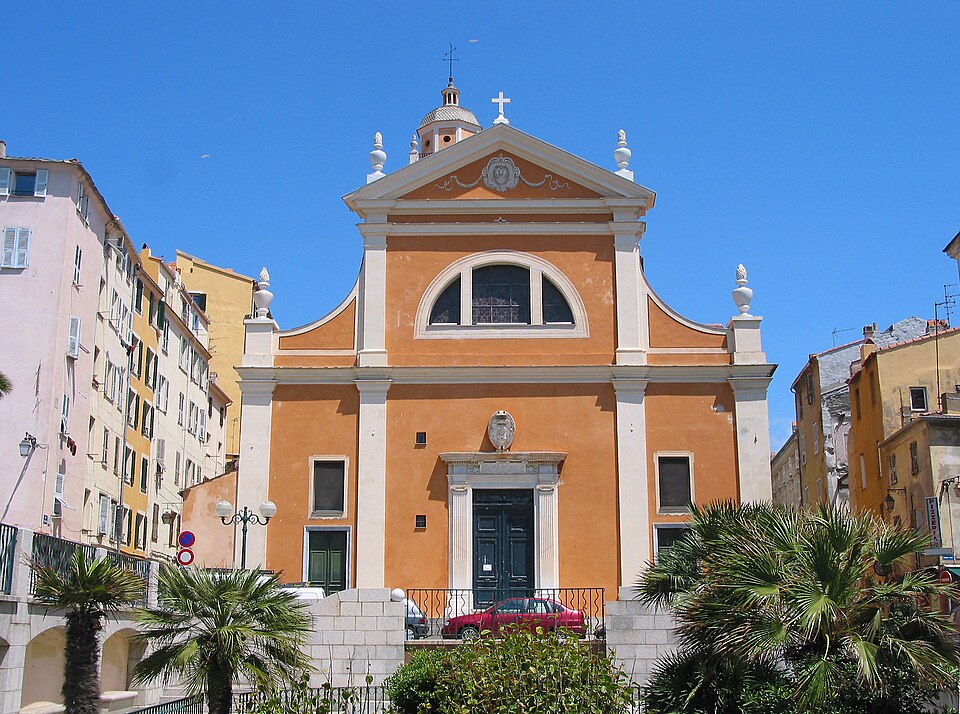
Baptismal Church of Napoleon Bonaparte, Ocher Baroque FaçAde, Chapel of Our Lady of Mercy, Chapelle De La Vierge De La MiséRicorde, Chapel of Our Lady of the Rosary, Chapelle De Notre-Dame Du Rosaire, Chapel of the Madonna of Pianto, Chapelle De La Madonna De Pianto, Murals By Domenico Tintoretto, the Triumph of Religion By EugèNe Delacroix, Pipe Organ By Aristide Cavaillé-Coll
Giacomo Della Porta
About Ajaccio Cathedral
Ajaccio Cathedral, officially known as the Cathedral of Our Lady of the Assumption of Ajaccio (Cathédrale Notre-Dame de l'Assomption de Ajaccio), is a prominent Roman Catholic church situated in Ajaccio, Corsica. It holds the distinction of being the ecclesiastical seat for the Bishop of Ajaccio and is dedicated to the Virgin Mary. The cathedral's architecture is characterized by its Baroque and Mannerist influences, with a notable ocher façade that reflects the style of the Counter-Reformation.
History and Construction
The construction of the present cathedral took place between 1577 and 1593, under the direction of Italian architect Giacomo della Porta. This new structure was built to replace the former Cathedral of Saint-Croix, which was demolished in 1553 to facilitate urban defense improvements. The final stone was laid in 1593 by Giulio Giustiniani, who had been made bishop by Pope Sixtus V. The cathedral holds a special place in history as the site where Napoleon Bonaparte was baptized on July 21, 1771. His connection to the cathedral is further underscored by his deathbed wish to be buried there with his ancestors.
Architectural Significance and Interior Features
Ajaccio Cathedral's interior is designed in a Latin cross plan, with a modest transept covered by a dome. The central nave, while high and wide, is relatively short, featuring barrel vault arches reminiscent of the Renaissance. The building includes two aisles that extend from the entrance to the transept, divided by seven chapels situated between two rows of three columns.
Among its notable interior elements is the marble baptismal font, engraved with Giustiniani's coat of arms and bearing a gold inscription in Latin: "Heic baptisatus Magnus Imperator" (Here is baptised the Great Emperor). The altar, made of polychrome marble, was originally from the Church of the Suffragio in Lucca and was gifted to the cathedral by Elisa Bonaparte, Napoleon's sister, in 1809. The tabernacle, dating from the cathedral's construction period, is noted for its unusual style.
The cathedral features several prominent side chapels. The Chapel of Our Lady of Mercy (Chapelle de la Vierge de la Miséricorde), established in 1752, honors the Virgin Mary, the patron saint of Ajaccio, and boasts a marble altar designed by Genoese sculptors. The Chapel of Our Lady of the Rosary (Chapelle de Notre-Dame du Rosaire), from 1765, contains a stucco altar and representations of the Mysteries of the Rosary. The small 18th-century Chapel of the Madonna of Pianto (Chapelle de la Madonna de Pianto) houses murals by Domenico Tintoretto and Eugène Delacroix's "The Triumph of Religion."
Furthermore, Ajaccio Cathedral is equipped with a large pipe organ, originally built in 1849 by Aristide Cavaillé-Coll and later restored and electrified. The cathedral was recognized for its historical and architectural importance when it was designated a monument historique, a national heritage site of France, on October 30, 1906.
Source: Wikipedia ↗
Frequently Asked Questions
When was Ajaccio Cathedral built?
The present cathedral was constructed between 1577 and 1593. It was built to replace a previous cathedral that was destroyed in 1553.
Who was baptized at Ajaccio Cathedral?
Napoleon Bonaparte was baptized at Ajaccio Cathedral on July 21, 1771. He expressed a wish to be buried there on his deathbed.
What architectural style is Ajaccio Cathedral?
Ajaccio Cathedral is primarily in the Baroque/Mannerist architectural style. Its exterior features an ocher Baroque façade designed in the style of the Counter-Reformation.
What notable features are inside Ajaccio Cathedral?
Inside, the cathedral has a Latin cross layout with a dome over the transept. It contains a marble baptismal font with an inscription noting Napoleon's baptism, a polychrome marble altar donated by Elisa Bonaparte, and several prominent side chapels.
Is Ajaccio Cathedral a protected heritage site?
Yes, Ajaccio Cathedral has been a monument historique, a national heritage site of France, since October 30, 1906.
Related Cathedrals

Acireale Cathedral
Acireale Cathedral, officially the Cathedral of Maria Santissima Annunziata, is a significant Roman Catholic cathedral located in Acireale, Sicily. It serves as the seat of the Bishop of Acireale and is a notable example of ecclesiastical architecture, incorporating elements from various historical periods.

Angers Cathedral
Angers Cathedral, officially Cathédrale Saint-Maurice d'Angers, is a Catholic cathedral in Angers, France, serving as the seat of the Bishops of Angers. Renowned for its blend of Romanesque and Gothic architectural styles, it also features significant Baroque elements and an exceptional collection of stained-glass windows, some dating back to the late 12th century.

Acerno Cathedral
Acerno Cathedral, also known as Duomo di Acerno or Concattedrale di San Donato, is a Roman Catholic cathedral dedicated to Saint Donatus of Arezzo, located in Acerno, Campania, Italy. It served as the seat of the Bishop of Acerno from the 11th century until the bishopric was united with Salerno in 1818, eventually becoming a co-cathedral in the Archdiocese of Salerno-Campagna-Acerno. The present structure, begun in 1575, has undergone significant restoration after damage from earthquakes and fire.