
Sayadaw U Paṇḍita
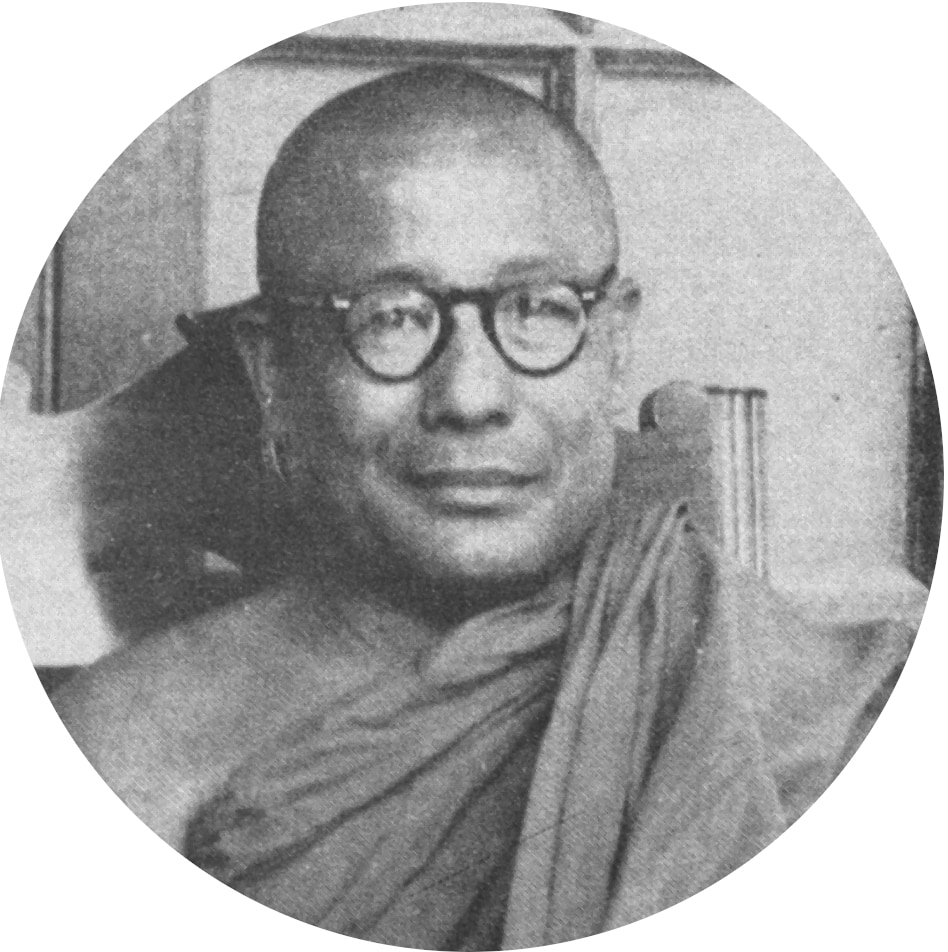
Sayadaw U Paṇḍita was a highly respected master of Vipassanā meditation within the Theravada Buddhist tradition of Myanmar. As a successor to Mahāsi Sayādaw, he played a significant role in training numerous Western teachers and students in the Mahāsi style of meditation. He was also the abbot of the Paṇḍitārāma Meditation Center in Yangon and an erudite scholar of the Pali Tipiṭaka.
Key Facts
- ›Born in Insein, Rangoon (now Yangon) in 1921.
- ›Ordained as a novice at age twelve and fully ordained at age twenty.
- ›Achieved the Dhammācariya degree in 1952 after passing rigorous government examinations.
- ›Began Vipassanā practice under Mahāsi Sayādaw in 1950.
- ›Became the guiding teacher of the Mahasi Meditation Center after Mahāsi Sayādaw's death in 1982.
- ›Founded the Paṇḍitārāma Meditation Center in Yangon in 1991.
Important Relationships
- Mahāsi Sayādaw
- In This Very Life: Liberation Teachings of the Buddha
- Way To the Happiness and Peace: Understanding the Basics of Insight Meditation
- Timeless Wisdom - Teachings On the Satipatthana Vipassana Meditation Practice
- On the Path To Freedom
- PaṇḍItāRāMa Meditation Center, Yangon
- MahāSi Meditation Center, Yangon
- Insight Meditation Society , Barre, Massachusetts
MahāSi SayāDaw
Pali
Ordained Monk
Vipassanā Master
About Sayadaw U Paṇḍita
Sayadaw U Paṇḍita (1921–2016) was a highly influential master of Vipassanā meditation within the Theravada Buddhist tradition of Myanmar. He is recognized as a successor to the renowned Mahāsi Sayādaw and played a pivotal role in disseminating the Mahāsi style of Vipassanā meditation, particularly to Western students and teachers.
Life and Teachings
Born U Paṇḍita in Insein, Rangoon (now Yangon) in 1921, he entered monastic life as a novice at age twelve and was fully ordained at twenty. He dedicated decades to scriptural study, passing rigorous government examinations to earn the Dhammācariya (Dhamma teacher) degree in 1952. His personal Vipassanā practice began under the guidance of Mahāsi Sayādaw in 1950.
In 1955, U Paṇḍita transitioned from scriptural studies to teaching meditation at the Mahasi Meditation Center. Following Mahāsi Sayādaw's passing in 1982, he assumed the role of guiding teacher (Ovādacariya) for the Mahasi Meditation Center. In 1991, he established his own center, the Paṇḍitārāma Meditation Center in Yangon, which has since expanded with branches in Myanmar, Nepal, Australia, Singapore, the United Kingdom, and the United States.
Sayadaw U Paṇḍita gained significant recognition in the West after leading a retreat at the Insight Meditation Society in Barre, Massachusetts, in 1984. This and subsequent retreats were attended by many senior Western meditation teachers in the Mahāsi tradition. His teachings from 1984 were later compiled into the book In This Very Life.
His teaching method was characterized by its rigor and precision in guiding self-examination. He taught Satipaṭṭhāna, or Vipassanā, emphasizing the foundational importance of Buddhist ethics. As an erudite scholar, he was also deeply versed in the Pali Tipiṭaka, the Theravāda Canon. Until his death at the age of 94 in 2016, he continued to lead retreats and offer Dhamma talks, though he rarely gave interviews.
Source: Wikipedia ↗
Frequently Asked Questions
Who was Sayadaw U Paṇḍita?
Sayadaw U Paṇḍita was a prominent Theravada Buddhist master from Myanmar, renowned for his expertise in Vipassanā meditation. He was a key successor to Mahāsi Sayādaw and played a crucial role in transmitting the Mahāsi style of meditation to Western practitioners.
What tradition did Sayadaw U Paṇḍita follow?
Sayadaw U Paṇḍita trained and taught within the Theravada Buddhist tradition. He was a successor to Mahāsi Sayādaw and a teacher at the Mahasi Meditation Center before founding his own center.
When and where did Sayadaw U Paṇḍita teach?
Sayadaw U Paṇḍita taught extensively from 1955 onwards, initially at the Mahasi Meditation Center and later at his own Paṇḍitārāma Meditation Center in Yangon, founded in 1991. He also gained recognition in the West after conducting retreats in the United States starting in 1984.
What is Sayadaw U Paṇḍita known for in his teaching style?
Sayadaw U Paṇḍita was recognized for his rigorous and precise method of self-examination in Vipassanā meditation. He emphasized the importance of Buddhist ethics as a foundational element and was also a scholar of the Pali Tipiṭaka.
What are some notable works or teachings attributed to Sayadaw U Paṇḍita?
Talks given by Sayadaw U Paṇḍita in 1984 were compiled into the book *In This Very Life*. Other works include *Way to the Happiness and Peace*, *Timeless Wisdom - Teachings on the Satipatthana Vipassana Meditation Practice*, and *On the Path to Freedom*.
Related Buddhists
Sayadaw U Sīlānanda
Sayadaw U Sīlānanda was a prominent Burmese Buddhist monk, Vipassana meditation scholar, and the first rector of the International Theravada Buddhist Missionary University. He is recognized for his extensive scholarship in Pali and Buddhist scriptures, and for authoring numerous influential works on meditation and Buddhist doctrine in both Burmese and English.
Panditarama Sayadaw
Sayadaw U Paṇḍita was a highly respected master of Vipassanā meditation within the Theravada Buddhist tradition of Myanmar. As a successor to Mahāsi Sayādaw, he trained numerous Western meditation teachers and students in the Mahāsi style. He was the abbot of the Paṇḍitārāma Meditation Center in Yangon and was known for his rigorous and precise approach to self-examination.
Maha Bodhi Ta Htaung Sayadaw
Maha Bodhi Ta Htaung Sayadaw, born Toe Kywe, was the founding abbot of Maha Bodhi Ta Htaung in Myanmar. He is renowned for planting thousands of Bodhi trees and constructing numerous pagodas and Buddha statues. His influential teachings emphasize compassion, mindfulness, and ethical conduct, guiding followers towards spiritual prosperity and Nibbana.