
Mingun Sayadaw
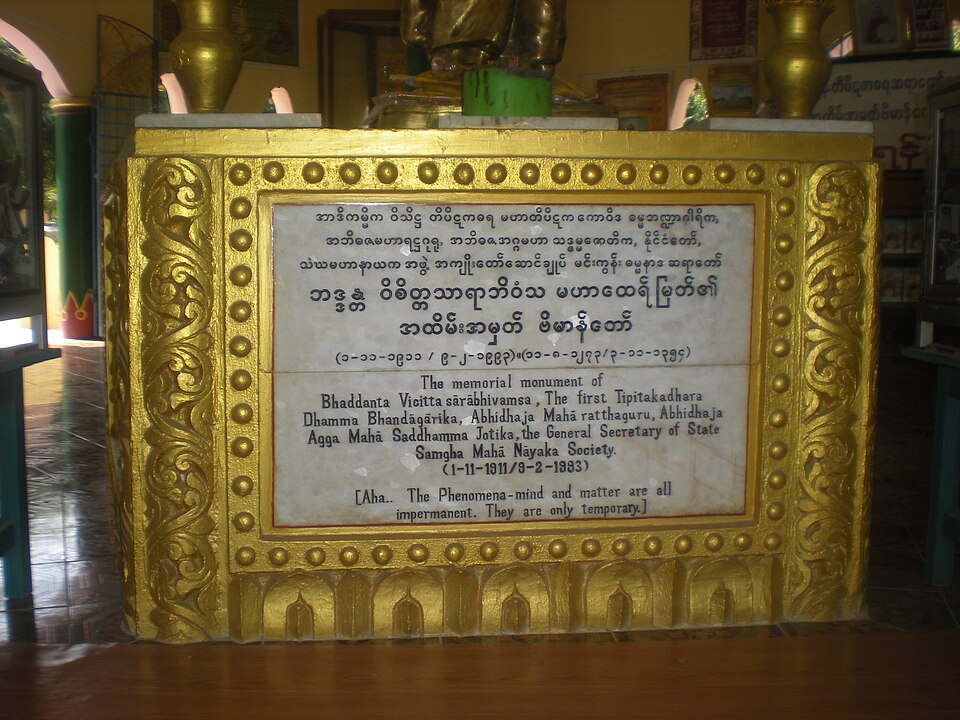
The Venerable Mingun Sayadaw U Vicittasārābhivaṃsa was a highly respected Burmese Theravāda Buddhist monk, renowned for his exceptional memory and pivotal role in the Sixth Buddhist Council. He is remembered for his extensive writings, audio recordings of sacred texts, and his material legacy which includes a hospital for religious individuals and the State Pariyatti Sasana University.
Key Facts
- ›Born Maung Khin in 1911 in British Burma, he was raised by his grandfather and began monastic education at age 5.
- ›He gained fame for his ability to recite Buddhist prayers and texts from memory, earning the nickname 'the Book Man'.
- ›Mingun Sayadaw served as the 'Chief Respondent' at the Sixth Buddhist Council (1954-1956), meticulously recalling details from the Tripitaka.
- ›His major literary work is 'the Great Chronicles of Buddhas', a 6-volume treatise completed between 1956 and 1969.
- ›He initiated the construction of the Jīvitadāna Sāsana Specialized Health Center and was instrumental in establishing the State Pariyatti Sasana University.
- ›In 1985, he was recognized by Guinness World Records for his extraordinary human memory, reciting 16,000 pages of Buddhist canonical text.
Important Relationships
- U Nu
- Sixth Buddhist Council
- Mahasi Sayadaw
the Great Chronicles of Buddhas
Kyipin Village, Myingyan Township, Mandalay Province, Mandalay, Mingun, Sagaing Division, Yangon
Pali
Bhikkhu
Record Holder
About Mingun Sayadaw
Mingun Sayadaw U Vicittasārābhivaṃsa (1911–1993)
The Venerable Mingun Sayadaw U Vicittasārābhivaṃsa, born Maung Khin, was a highly influential Burmese Theravāda Buddhist monk recognized globally for his extraordinary memory and his pivotal role in the Sixth Buddhist Council. He was nicknamed "The Book Man" due to his unparalleled ability to recall vast amounts of Buddhist canonical text.
Life and Historical Context
Born in 1911 in Kyipin Village, British Burma, Mingun Sayadaw began his monastic education at the age of five. His early life was marked by a deep thirst for knowledge, leading him to read widely beyond religious texts. He was ordained as a monk and later received the monastic name Shin Vicittasara. His academic prowess was evident through his consistent success in various religious examinations, culminating in the rare title of Pahtamakyaw and the suffix Abhivamsa. From 1950 to 1953, he passed the state-conducted Tipitakadhara Selection Examination, becoming the first monk awarded the title of Tipitakadhara, signifying his role as a Keeper and Guardian of the Tipitaka.
Contributions and Major Work
Mingun Sayadaw played a critical role in the Sixth Buddhist Council (1954–1956), serving as the "Chief Respondent." His exceptional memory allowed him to recall exact passages from the Tripitaka, contributing significantly to the council's proceedings and the perpetuation of Buddha Sāsanā. Following the council, he dedicated himself to literary pursuits, producing his magnum opus, "The Great Chronicles of Buddhas," a six-volume treatise completed between 1956 and 1969. He also left a significant spiritual legacy through his numerous writings and audio recordings of sacred texts.
Material Legacy and Later Life
Beyond his spiritual and intellectual contributions, Mingun Sayadaw was instrumental in initiating material projects for the welfare of the religious community. He advocated for the construction of hospitals and schools instead of decorative features in monasteries. He was the driving force behind the establishment of the Jīvitadāna Sāsana Specialized Health Center in Mandalay and headed the committee for the construction of the State Pariyatti Sasana University. In his later years, despite fragile health, he continued to preach and engage in religious activities until his passing on February 9, 1993. His death was marked by a state funeral attended by national leaders and a large number of devotees.
Source: Wikipedia ↗
Frequently Asked Questions
What is Mingun Sayadaw best known for?
Mingun Sayadaw is best known for his extraordinary memory, his significant contributions to the Sixth Buddhist Council, and his extensive literary and audio works preserving Theravāda Buddhist teachings. He was nicknamed 'The Book Man' due to his remarkable recall abilities.
What was Mingun Sayadaw's role in the Sixth Buddhist Council?
During the Sixth Buddhist Council, held from 1954 to 1956, Mingun Sayadaw played a crucial role as the 'Chief Respondent'. He was responsible for answering questions concerning the Vinaya, the section of the Tripitaka dealing with monastic disciplinary rules, demonstrating an exceptional ability to recall exact texts, pages, and lines.
What are Mingun Sayadaw's most important written works?
His most significant literary achievement is the 6-volume treatise titled 'The Great Chronicles of Buddhas,' which he wrote between 1956 and 1969 at the request of the government. He also produced numerous other writings and audio recordings of sacred Buddhist texts.
What material legacy did Mingun Sayadaw leave behind?
Mingun Sayadaw's material legacy includes the founding of the Jīvitadāna Sāsana Specialized Health Center, a 100-bed hospital for religious individuals in Mandalay, and his leadership in establishing the State Pariyatti Sasana University in Mandalay.
When and where was Mingun Sayadaw born and when did he die?
Mingun Sayadaw was born on November 1, 1911, in Kyipin Village, Mandalay Province, British Burma. He passed away on February 9, 1993, in Mandalay.
Related Buddhists
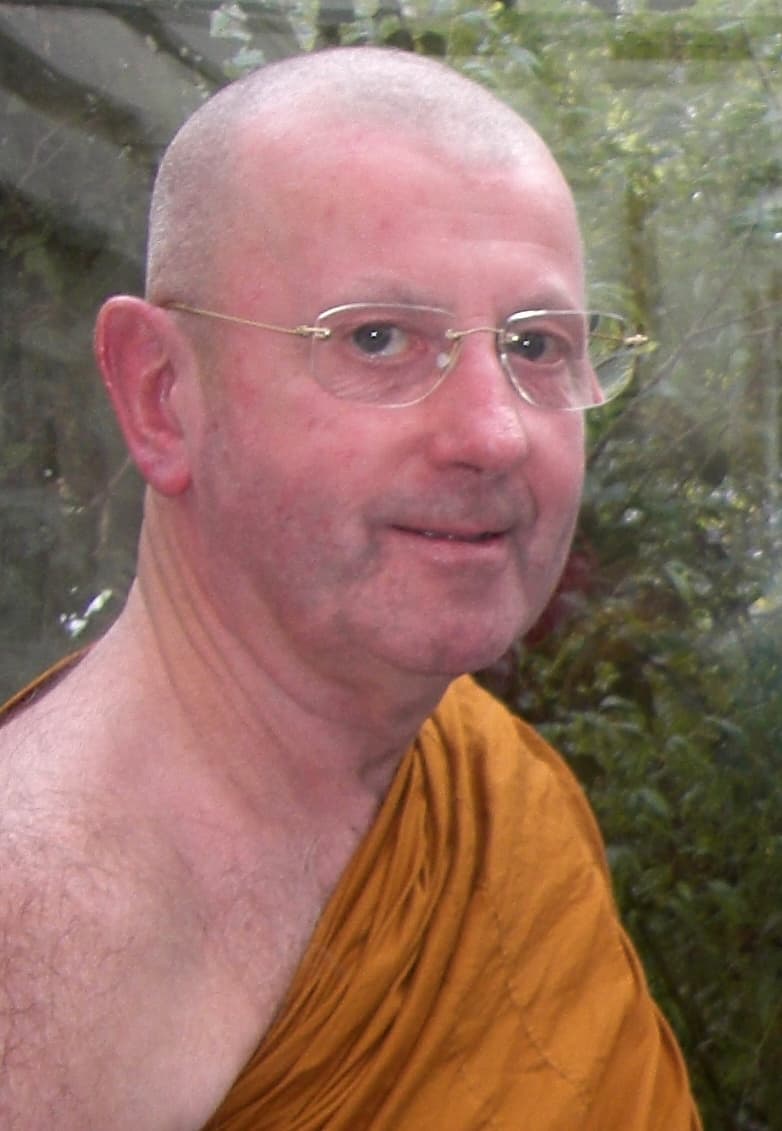
Ajahn Khemadhammo
Ajahn Khemadhammo OBE is a Theravāda Buddhist monk and a founder of the Thai Forest Tradition in the West. Originally a professional actor, he was ordained in Thailand and later established the Forest Hermitage in Warwickshire, UK. He is widely recognized for his extensive Buddhist prison chaplaincy work and has received numerous honors for his contributions to Buddhism and society.

Gotamī
Venerable Gotamī, born Martina Catania, is an Italian Theravāda Buddhist nun, author, and meditation teacher. Ordained in 2022, she is known for teaching the Dhamma in multiple languages and for her writings on Buddhist principles and the role of women in Buddhism. She currently resides in Sri Lanka, where she is actively involved in religious outreach and has published an autobiography.
Sunlun Sayadaw
Sunlun Sayadaw was a prominent Burmese monk and meditation master who, despite not having extensive scriptural studies, developed profound insight through dedicated meditation practice. He is celebrated for his teachings on Samatha, Vipassana, and Paṭṭhāna meditation, offering spiritual guidance to monks, nuns, and laypeople alike. His physical body's preservation after death has become a significant point of veneration.