
Faxian
China·Chinese Buddhism·Male·5th century
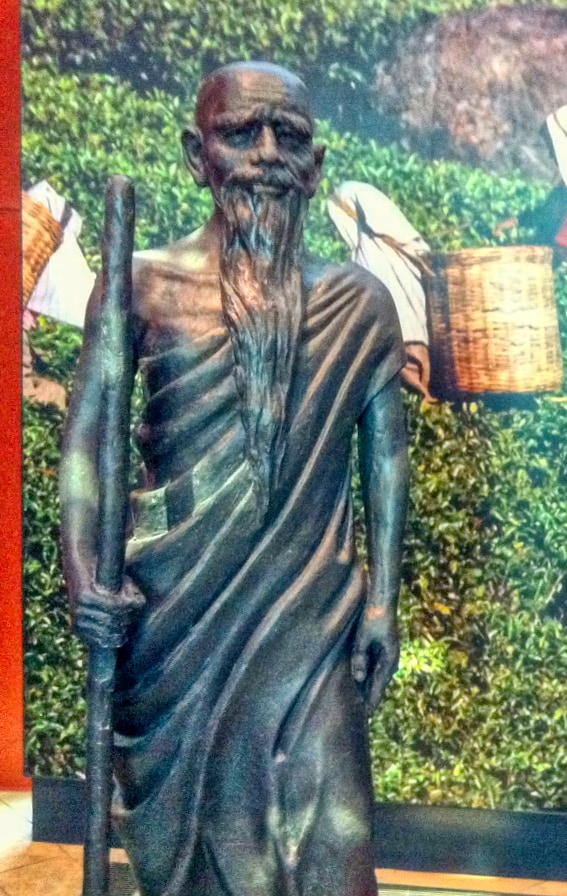
Faxian was a Chinese Buddhist monk, translator, and traveler who journeyed from China to India in the late 4th and early 5th centuries CE to obtain Buddhist scriptures. His meticulously documented pilgrimage, known as the Foguoji or Record of the Buddhist Kingdoms, provides valuable insights into early Buddhism and the cultures of Central, South, and Southeast Asia. Upon his return, Faxian translated the Sanskrit texts he collected, significantly influencing the development of East Asian Buddhism.
Key Facts
- ›Undertook a significant pilgrimage to India on foot from 399 to 412 CE, starting at approximately age 60.
- ›Authored the "Foguoji" (Record of the Buddhist Kingdoms), a crucial historical and ethnographic account of early Buddhism.
- ›Visited key Buddhist sites in India including Kapilvastu, Bodh Gaya, and Kushinagar.
- ›Collected and translated numerous Sanskrit Buddhist texts into Chinese, enriching East Asian Buddhist traditions.
- ›His journey and writings offer a terminus ante quem for many historical names, events, and Buddhist ideas.
- ›Returned to China with a large collection of Sanskrit manuscripts and images.
Important Relationships
- Buddha-bhadra
Foguoji
Chang'An, Zhangye, Pataliputra, Kapilvastu, Bodh Gaya, Benares, Shravasti, Kushinagar, Sri Lanka, Java, Mount Lao, Nanjing
Chinese, Sanskrit
Novice Monk Vows, Full Buddhist Orders
Traveler, Scholar, Translator, Monk
About Faxian
Faxian (337–c. 422 CE), whose birth surname was Gong and who later adopted the name Faxian meaning "Splendor of Dharma," was a Chinese Buddhist monk and translator. He is renowned for his arduous overland journey from China to India, undertaken in his early sixties, to obtain Buddhist scriptures. His pilgrimage, which lasted from 399 to 412 CE, involved traversing the Silk Road and spending a decade in India.
Life and Historical Context
Born in Shanxi during the Later Zhao dynasty, Faxian was ordained as a novice monk at the age of three due to a family history of infant mortality. He later joined the Buddhist monastic orders and, driven by a desire for complete Buddhist texts, set out from Chang'an in 399 CE with four companions. The journey was perilous, requiring him to cross deserts and rugged mountain passes. He entered India from the northwest and visited numerous sites associated with the Buddha, including Kapilvastu, Bodh Gaya, and Benares, during the reign of Chandragupta II.
Faxian learned Sanskrit and collected a substantial number of Buddhist texts and images. His memoirs offer a unique glimpse into the Hinayana, Mahayana, and Theravada traditions of Indian Buddhism in the 5th century. After his stay in India, he traveled to Sri Lanka before facing severe storms on his return voyage, which eventually led him to land on the coast of what is now Shandong, China.
Major Contributions
Faxian's most significant contribution is his travelogue, the "Foguoji" or "Record of the Buddhist Kingdoms." This work is a crucial independent historical record detailing early Buddhism, societal customs, and the geography of Central, South, and Southeast Asia at the turn of the 5th century. Upon his return, Faxian dedicated himself to translating the Sanskrit scriptures he had collected into Chinese. These translations were instrumental in advancing East Asian Buddhism and serve as critical dating markers for historical texts, names, and events.
Important Relationships
Faxian worked with the Indian Sramana Buddha-bhadra in Nanjing to translate some of the scriptures he brought back from India. His travels and writings provided valuable context for later Chinese pilgrims and scholars interested in Buddhism. He died in Nanjing around 422 CE, having spent his final decade translating Buddhist sutras.
Source: Wikipedia ↗
Frequently Asked Questions
Who was Faxian?
Faxian was a Chinese Buddhist monk and translator who lived from 337 to around 422 CE. He is renowned for his arduous journey to India in search of Buddhist scriptures and for his detailed account of his travels.
What was the purpose of Faxian's journey to India?
The primary purpose of Faxian's journey was to locate and acquire authentic Buddhist scriptures, particularly complete copies of the Vinaya-pitaka. He also sought to deepen his understanding of Buddhist practices and history in its land of origin.
What is the "Foguoji" or "Record of the Buddhist Kingdoms"?
The "Foguoji" is Faxian's written memoir detailing his pilgrimage from China to India and Southeast Asia. It is a significant independent record of early Buddhism, offering valuable information on the geography, culture, and religious practices of the regions he visited.
When did Faxian travel to India and how long did it take?
Faxian began his journey in 399 CE and returned in 412 CE, with approximately 10 years spent in India. The entire expedition, including travel time, lasted about 13 years.
What was the impact of Faxian's translations?
Faxian's translations of Sanskrit Buddhist texts into Chinese had a profound influence on the development of East Asian Buddhism. They provided crucial texts that enriched Buddhist scholarship and practice in China and beyond.
Which Buddhist traditions did Faxian observe in India?
Faxian's memoirs mention the Hinayana and emerging Mahayana traditions, as well as the splintering and dissenting Theravada sub-traditions prevalent in 5th-century Indian Buddhism.
Related Buddhists
Buddhaghosa
Buddhaghosa was a 5th-century Indian Theravādin Buddhist commentator, translator, and philosopher, renowned for his comprehensive synthesis of older Sinhala commentaries. His seminal work, the Visuddhimagga, has been the principal text on meditation and has shaped the orthodox understanding of Theravādin scriptures for centuries. He is widely recognized as the most significant philosopher and commentator of the Theravāda school.

Chandragomin
Chandragomin was an influential Indian Buddhist lay scholar and poet known for his philosophical writings and the play Lokānanda. Active during the 5th century, he was a teacher at Nalanda Monastic University and is recognized for his contributions to grammar and his devotional works to the goddess Tara. The Tibetan tradition holds him in high regard, believing he once challenged Chandrakirti.

Batuo
Buddhabhadra, known in Chinese as Batuo, was an Indian Buddhist monk and the first abbot of the Shaolin Monastery. He traveled to China in the 5th century CE to spread Buddhism, emphasizing strict monastic discipline and deep meditation. His profound spiritual insights earned him the patronage of Emperor Xiaowen of Northern Wei, who ordered the construction of the Shaolin Monastery for him.