
Aṅgulimāla
Aṅgulimāla is a significant figure in Buddhism, known as a ruthless brigand who underwent a profound transformation after encountering the Buddha. His story exemplifies the redemptive power of Buddhist teachings and the Buddha's skill in guiding individuals toward spiritual awakening. Today, Aṅgulimāla is revered as a patron saint of childbirth and is associated with fertility in various Buddhist cultures.
Key Facts
- ›Originally named Ahiṃsaka, he became known as Aṅgulimāla ('finger necklace') after killing nearly a thousand people for their fingers.
- ›His conversion to Buddhism was facilitated by the Buddha's direct intervention and teachings.
- ›After becoming a monk, he is credited with enabling a difficult childbirth through an 'act of truth'.
- ›Aṅgulimāla is considered a symbol of spiritual transformation and the possibility of change for anyone.
- ›His story is found in various Buddhist traditions and languages, including Pali, Sanskrit, Tibetan, and Chinese.
- ›He is widely regarded as the patron saint of childbirth and associated with fertility.

Important Relationships
- Gautama Buddha
- King Pasenadi
- Aṅgulimāla's mother
- Aṅgulimāla's teacher
SāVatthī, Kosala, JāLinī Forest
Gautama Buddha
Pali
Monastic Vows
Patron Saint, Symbol of Transformation
About Aṅgulimāla
Aṅgulimāla is a significant figure in Buddhist tradition, particularly within the Theravāda school, celebrated for his profound transformation from a notorious brigand to a devout follower of the Buddha. His story is a powerful illustration of the redemptive capacity of Buddhist teachings and the Buddha's adeptness as a spiritual guide.
Life and Historical Context
Originally named Ahiṃsaka, Aṅgulimāla was born in Sāvatthī. He was a bright and intelligent youth who, after excelling in his studies under a renowned teacher, was manipulated by jealous fellow students. To complete his education, his teacher demanded a gruesome tribute: a thousand human fingers. Driven by this command, Ahiṃsaka became a ruthless brigand, earning the name Aṅgulimāla ('finger necklace') for his macabre practice of wearing the severed fingers of his victims. His violence led to widespread fear, abandoned villages, and eventually, a royal hunt by King Pasenadi of Kosala.
Conversion and Enlightenment
The pivotal moment in Aṅgulimāla's life occurred when the Buddha intervened. Foreseeing that Aṅgulimāla was about to commit his thousandth murder, which would seal his fate to an irredeemable hell, the Buddha appeared to prevent him from killing his own mother. Through a display of supernatural power and profound teachings, the Buddha stopped Aṅgulimāla in his tracks, highlighting the contrast between the Buddha's stillness and Aṅgulimāla's unrestrained violence. Struck by guilt and the Buddha's courage, Aṅgulimāla renounced his life of crime, took monastic vows, and joined the Buddhist order at Jetavana monastery.
Legacy and Significance
Even after becoming a monk, Aṅgulimāla faced the repercussions of his past karma, including being attacked by those who remembered his atrocities. However, he bore these torments with equanimity, understanding them as the inevitable results of his past actions. The Buddha taught that Aṅgulimāla, despite his terrible deeds, had attained Nirvana, underscoring the potential for universal spiritual liberation. His story is a cornerstone for understanding Buddhist principles of karma, transformation, and compassion. Furthermore, Aṅgulimāla is widely venerated as a patron saint of childbirth, with a protective verse attributed to him (Aṅgulimāla paritta) recited to ensure safe deliveries. His narrative continues to inspire discussions on justice, rehabilitation, and the possibility of profound personal change.
Source: Wikipedia ↗
Frequently Asked Questions
Who was Aṅgulimāla before his conversion?
Aṅgulimāla, originally named Ahiṃsaka, was a ruthless brigand who terrorized the region by killing nearly a thousand people. His cruel actions led to entire villages being abandoned and the king dispatching an army to capture him.
How did Aṅgulimāla encounter the Buddha?
The Buddha intervened when Aṅgulimāla was about to commit matricide, which would have made him irredeemable. The Buddha then used his supernatural powers to outrun Aṅgulimāla and engaged him in a dialogue that led to his conversion.
What is Aṅgulimāla known for after becoming a monk?
After joining the monastic order, Aṅgulimāla is known for an 'act of truth' that helped a woman safely deliver her child during a difficult labor. This event led to him being seen as the patron saint of childbirth.
Is Aṅgulimāla's story historically accurate?
While Aṅgulimāla is a significant figure in Buddhist tradition, scholars debate the historicity of the detailed accounts. Some theories suggest his story may be allegorical or a composite of historical encounters and legendary embellishments.
Why is Aṅgulimāla's transformation considered significant in Buddhism?
Aṅgulimāla's story is a prime example of the Buddha's teaching's redemptive power, demonstrating that even individuals who have committed terrible deeds can achieve enlightenment and spiritual transformation.
Related Buddhists
Charles Henry Allan Bennett
Charles Henry Allan Bennett was an English Buddhist monk, ordained as Bhikkhu Ananda Metteyya, and a significant figure in introducing Buddhism to England in the early 20th century. He was also an early friend and influential teacher to occultist Aleister Crowley, whom he guided in esoteric practices. Bennett established the first Buddhist Mission in the UK and co-founded international Buddhist organizations, dedicating himself to spreading Buddhist teachings in the West.
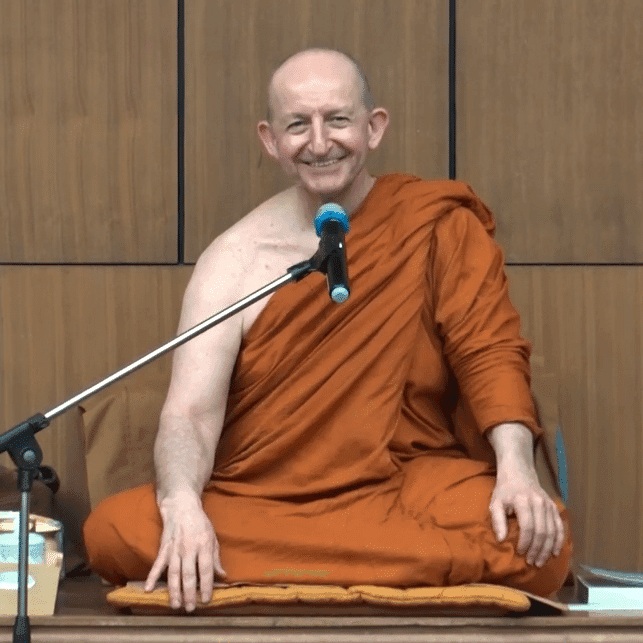
Ajahn Amaro
Ajahn Amaro is a British-American Theravāda Buddhist monk and teacher, known for his role as abbot of Amaravati Buddhist Monastery in England. Inspired by the Thai Forest Tradition and the teachings of Ajahn Chah, he emphasizes the practice of Buddhist ethics, concentration, and insight meditation as a means to alleviate suffering. He was instrumental in the establishment of Abhayagiri Monastery in California.
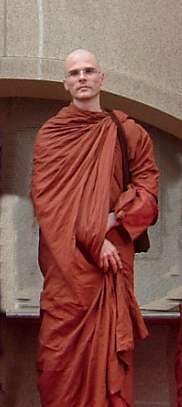
Bhikkhu Anālayo
Bhikkhu Anālayo is a contemporary Buddhist monk, scholar, and meditation teacher, born in Germany in 1962. He is renowned for his extensive comparative studies of early Buddhist texts preserved across various traditions, contributing significantly to the understanding of early Buddhist thought and practice. His work often focuses on meditation, historical developments, and textual analysis, making him a key figure in modern Buddhist scholarship.