
Wat Bophit Phimuk
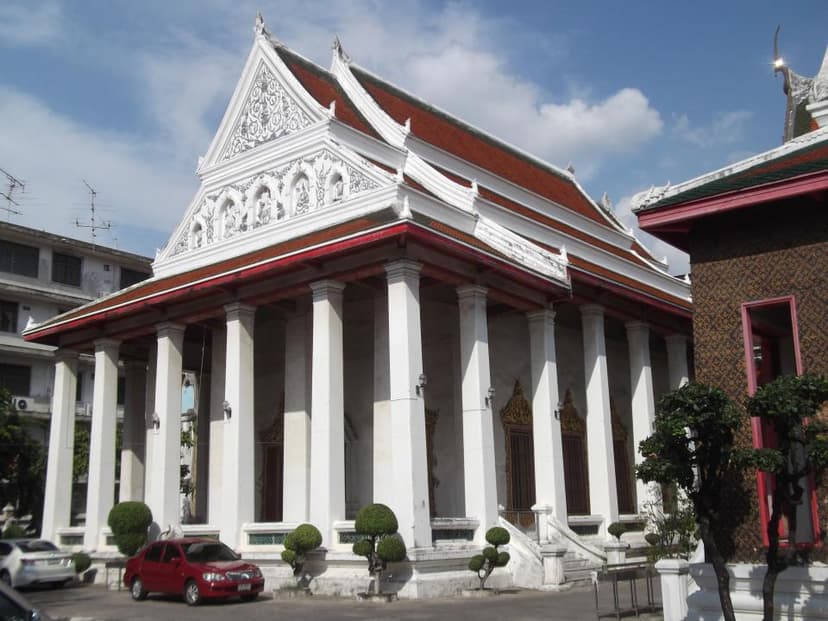
Wat Bophit Phimuk is a significant second-grade royal temple in Bangkok, Thailand, located in the bustling Chinatown area. Originally an ancient civil temple known as "Wat Teen Lane" or "Wat Choeng Lane" due to its muddy surroundings near the Chao Phraya River, it was renovated and renamed by King Phutthayotfa Chulalok (Rama I) in honor of Prince Anurak Devesh. The temple has undergone several restorations and architectural modifications throughout its history, reflecting a blend of Thai and Chinese influences.
Key Facts
- ›It is classified as a second-grade royal temple in Bangkok.
- ›The temple's original name was "Wat Teen Lane" or "Wat Choeng Lane" due to its location in a muddy area.
- ›It has existed since the Ayutthaya period and was renovated during the reign of King Phutthayotfa Chulalok (Rama I).
- ›Architectural styles at the temple show a combination of Thai and Chinese influences.
- ›The main hall enshrines the principal Buddha statue, "Phra Sam Phuttha Bophit," in the Māravijaya posture.

Important Relationships
- King Phutthayotfa Chulalok (Rama I)
- Prince Anurak Devesh
- King Phutthaloetla Naphalai (Rama II)
- King Nangklao (Rama III)
- King Mongkut (Rama IV)
- Phra Sam Phuttha Bophit
- Teak Wooden Pavilion With Royal Emblem Design
- Monks' Dwellings With Thai and Chinese Architectural Styles
- Renovated and Renamed During the Reign of King Phutthayotfa Chulalok .
- Used As A Graveyard During A Cholera Epidemic In the Reign of King Phutthaloetla Naphalai .
- Wood Structures Replaced By Masonry Buildings In the Reign of King Nangklao .
- Restored and A Teak Pavilion Added In the Reign of King Mongkut .
Thai, Chinese
About Wat Bophit Phimuk
Wat Bophit Phimuk is a significant second-grade royal temple located in Bangkok, Thailand, situated in the vibrant area often referred to as Chinatown. Its location is near the foot of Phra Pok Klao Bridge, placing it on the periphery of the Chakkrawat and Wang Burapha Phirom sub-districts.
Historical Origins and Development
This temple has a history stretching back to the Ayutthaya period, originally known by the names "Wat Teen Lane" or "Wat Choeng Lane." These names are attributed to its proximity to the east bank of the Chao Phraya River, an area historically characterized by abundant mud. The exact founder of the temple remains unrecorded, but historical assumptions suggest its construction occurred after the reign of King Narai, as it does not appear on Thonburi maps from that era.
During the reign of King Phutthayotfa Chulalok (Rama I), around 1781, Prince Anurak Devesh undertook a comprehensive renovation of the temple. In recognition of this effort, the king bestowed upon it the name Wat Bophit Phimuk, a gesture to honor his cousin. The temple's history is marked by further significant developments: during the reign of King Phutthaloetla Naphalai (Rama II), it served as a burial site during a severe cholera epidemic. Later, under King Nangklao (Rama III), the original wooden structures were replaced with masonry buildings. King Mongkut (Rama IV) initiated another restoration, which included the addition of a teak wooden pavilion designed with the King's emblem and guarded by mythical creatures. The temple's monks' dwellings reflect a distinct combination of Thai and Chinese architectural influences.
Religious Significance and Features
The principal Buddha statue housed within Wat Bophit Phimuk's main hall is known as "Phra Sam Phuttha Bophit." This revered statue is depicted in the Māravijaya posture, symbolizing the Buddha's ultimate victory over temptation and the attainment of enlightenment. As a second-grade royal temple, Wat Bophit Phimuk holds a notable position within Bangkok's religious landscape, continuing to serve as an active center of worship and a testament to the enduring architectural and spiritual heritage of Thailand.
Source: Wikipedia ↗
Frequently Asked Questions
What is Wat Bophit Phimuk's historical significance?
Wat Bophit Phimuk is an ancient temple dating back to the Ayutthaya period. It was renovated and officially named by King Phutthayotfa Chulalok (Rama I) in honor of Prince Anurak Devesh, establishing its status as a royal temple.
What was Wat Bophit Phimuk called before it was renamed?
Before being named Wat Bophit Phimuk, the temple was known as "Wat Teen Lane" or "Wat Choeng Lane." This name originated from its location near the Chao Phraya River, in an area characterized by an abundance of mud.
What are the architectural styles found at Wat Bophit Phimuk?
The temple exhibits a blend of Thai and Chinese architectural styles, particularly evident in the monks' dwellings. King Mongkut (Rama IV) also commissioned a teak wooden pavilion with designs incorporating the royal emblem.
What is the main Buddha statue at Wat Bophit Phimuk?
The principal Buddha statue enshrined within the main hall is named "Phra Sam Phuttha Bophit." It is depicted in the Māravijaya posture, symbolizing the Buddha's victory over temptation.
Has Wat Bophit Phimuk been affected by significant historical events?
Yes, during the reign of King Phutthaloetla Naphalai (Rama II), an epidemic of cholera led to many bodies being piled in the temple's graveyard, similar to other temples like Wat Saket.
Related Buddhist Temples
Wat Chakkrawat
Wat Chakkrawat, formerly known as Wat Sam Pluem, is a historic Buddhist monastery located in Bangkok's Chinatown. It holds significance as an ancient temple established during the early days of the Rattanakosin Kingdom, predating the development of the Yaowarat road, and was later designated a royal temple.

Wat Chana Songkhram
Wat Chana Songkhram, meaning "temple of victory of war," is a significant second-class royal monastery in Bangkok, Thailand. Originally an ancient temple predating the Rattanakosin period, it was renovated and established as a center for Mon monks and soldiers, later renamed to commemorate Thai victories over the Burmese. It is now promoted as a key site for Buddhist pilgrimage.

Wat Hua Lamphong
Wat Hua Lamphong is a Royal Buddhist temple of the third class located in Bangkok, Thailand. It holds significance as a renovated site celebrating King Bhumibol Adulyadej's Golden Jubilee, featuring the royal seal extensively in its design. The temple's layout includes unique raised ubosot and viharn structures, alongside shrines and monastic living quarters.