
St James Basilica
United States·Jamestown·Diocese of Fargo
St. James Basilica is a Latin Catholic parish church and minor basilica located in Jamestown, North Dakota. Originally serving as a cathedral for the short-lived Diocese of Jamestown in the late 19th century, the current Gothic Revival structure was consecrated in 1914 and elevated to minor basilica status in 1988. It is recognized for its significant architectural features and its role in the religious history of the region.
Key Facts
- ›The present church building was designed in the Gothic Revival style by the Hancock Brothers of Fargo.
- ›Construction of the current basilica began in 1910 and was completed in 1914.
- ›It was consecrated by Bishop James O'Reilly on November 29, 1914.
- ›St. James Church was elevated to the rank of a minor basilica by Pope John Paul II on October 26, 1988.
- ›The basilica has a seating capacity of 650, with an additional 100 spaces in the choir loft.
- ›The church building was listed on the National Register of Historic Places in 1982 as St. James Catholic Church.
Gothic Revival
James
Hancock Brothers
About St James Basilica
St. James Basilica
St. James Basilica is a significant Latin Catholic parish church and a designated minor basilica located in Jamestown, North Dakota, within the Diocese of Fargo. Its history is intertwined with the development of Catholicism in the region, having once served as the cathedral for the Diocese of Jamestown in the late 19th century before the see was transferred to Fargo.
History and Significance
The foundation of Catholic presence in Jamestown dates back to the 1870s, with the first Mass celebrated in 1879. A nascent congregation met in various locations until the first church building was completed in 1882. This structure briefly held cathedral status when Pope Leo XIII established the Diocese of Jamestown in 1889. However, the challenges of administering the diocese from Jamestown led to its relocation to Fargo by 1891.
By the early 20th century, the need for a larger place of worship became apparent. The current basilica's construction commenced in 1910, following a Gothic Revival design by the Hancock Brothers of Fargo. This impressive edifice was consecrated on November 29, 1914. Further renovations and modernization occurred between 1956 and 1958, transforming the basement into a parish hall and updating the interior.
Architectural Features
The basilica is characterized by its cross-shaped plan, measuring 140 by 50 feet, with a transept spanning 70 feet. The building stands 42 feet high, and its prominent twin towers reach 125 feet, capped with gold-leaf crosses. The exterior is faced with rock-faced granite, Hebron brick, and trimmed with Bedford stone. The interior features stained glass windows depicting scenes from the life of Christ, installed by the Pittsburgh Plate Glass Company in 1918. The church can accommodate approximately 650 worshippers, with an additional 100 in the choir loft.
Basilica Designation
A pivotal moment in its history occurred on October 26, 1988, when Pope John Paul II elevated St. James Church to the status of a minor basilica. The formal dedication liturgy for this honor took place on July 23, 1989. The Apostolic Brief recognizing its basilica status is preserved within the church. The building was also recognized for its historical importance when it was listed on the National Register of Historic Places in 1982 as St. James Catholic Church.
Source: Wikipedia ↗
Frequently Asked Questions
When was the current St. James Basilica built?
The current church building, designed in the Gothic Revival style, began construction in 1910 and took four years to complete. It was consecrated on November 29, 1914.
What is the architectural style of St. James Basilica?
The basilica is designed in the Gothic Revival style. Its exterior features Hebron brick with trims of Bedford stone, and its cross-shaped structure is complemented by twin towers flanking the main facade.
Has St. James Basilica ever served as a cathedral?
Yes, a previous church building completed in 1882 briefly served as the cathedral for the Diocese of Jamestown when it was established by Pope Leo XIII in 1889. The diocese was later moved to Fargo.
When was St. James Basilica designated as a minor basilica?
St. James Church was elevated to the rank of a minor basilica by Pope John Paul II on October 26, 1988. The dedication liturgy was presided over by Bishop James S. Sullivan on July 23, 1989.
What are the dimensions and capacity of St. James Basilica?
The basilica is a cross-shaped structure measuring 140 by 50 feet, with a transept of 70 feet. The building itself is 42 feet high, and the twin towers are 125 feet tall. It has a seating capacity of 650, with space for an additional 100 in the choir loft.
Related Basilicas
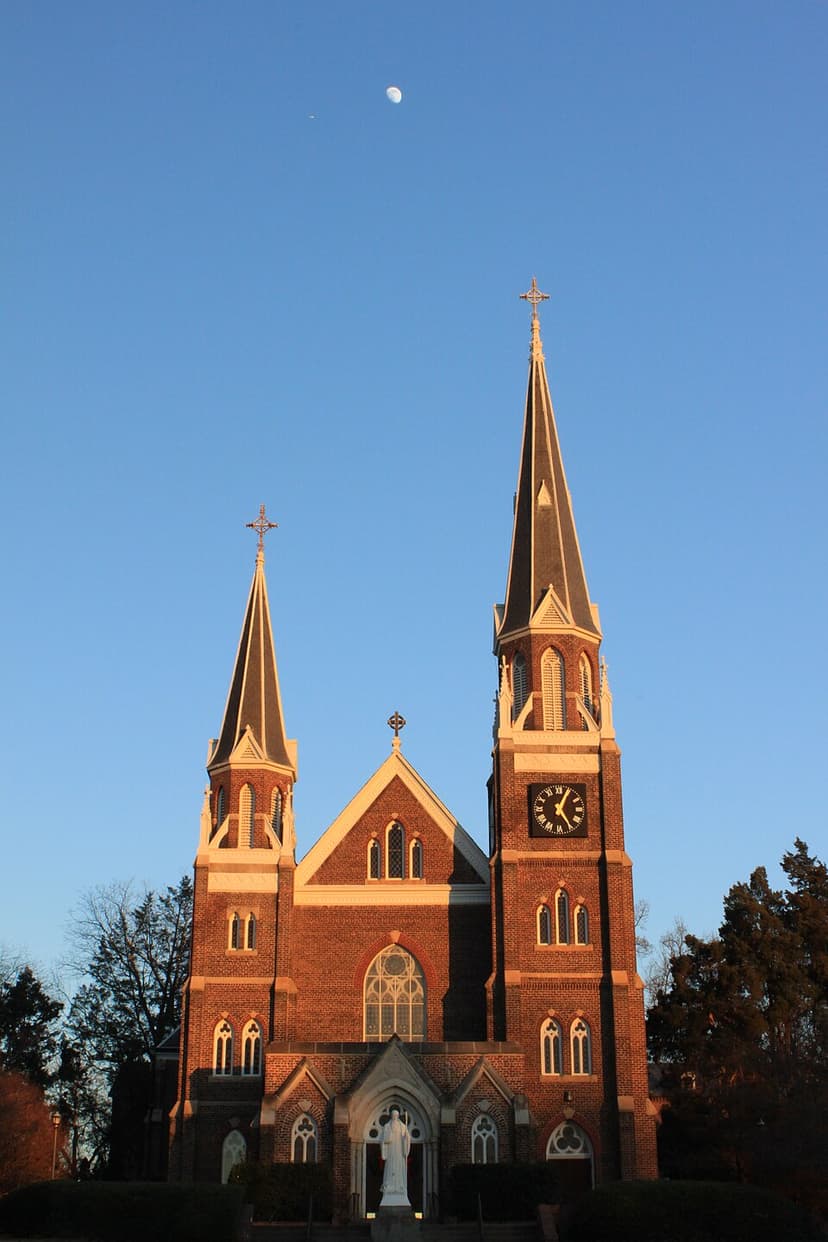
Abbey Basilica of Our Lady Help of Christians (Belmont Abbey)
The Abbey Basilica of Our Lady Help of Christians, located at Belmont Abbey in North Carolina, is a significant Catholic religious site. Originally established as a monastery and educational institution, it was elevated to the status of an abbey and later designated as a minor basilica. The basilica is notable for its Gothic Revival architecture and its historical role in education and religious administration in the region.
Basilica and National Shrine of Our Lady of Lebanon
The Basilica and National Shrine of Our Lady of Lebanon is a minor basilica of the Maronite Catholic Church situated in North Jackson, Ohio. It serves as a significant spiritual center for Maronites in the United States, mirroring the original shrine in Harissa, Lebanon. The basilica was dedicated in 1965 and later elevated to minor basilica status by Pope Francis in 2014.

Basilica and Shrine of Our Lady of Perpetual Help
The Basilica and Shrine of Our Lady of Perpetual Help, also known as The Mission Church, is a Roman Catholic basilica located in Boston, Massachusetts. It was elevated to the status of Minor Basilica in 1954 and is renowned for its shrine dedicated to Our Mother of Perpetual Help, which has been a site of reported miracles and votive offerings since its inception. The Redemptorist priests have ministered to the parish since its founding in 1870.