
St Cleophas Church
Palestinian Territories·Al-Qubeiba
St. Cleophas Church, also known as the Basilica of St. Cleophas, is a Franciscan Catholic church located in Al-Qubeiba, West Bank. It is a significant site as it is one of the main locations identified with Emmaus, where Jesus is believed to have appeared to two disciples after his resurrection. The current church was rebuilt by the Franciscans in the early 20th century after the original structures fell into ruin.
Key Facts
- ›The site of St. Cleophas Church is identified as one of the primary candidates for the biblical Emmaus.
- ›The Franciscans adopted the site in 1335 and began an annual pilgrimage.
- ›A basilica was built on the supposed house of Cleophas, which has been destroyed and rebuilt multiple times throughout history.
- ›The church was in ruins by the 19th century before being restored by the Franciscans.
- ›It was awarded the status of a minor basilica in 1919.
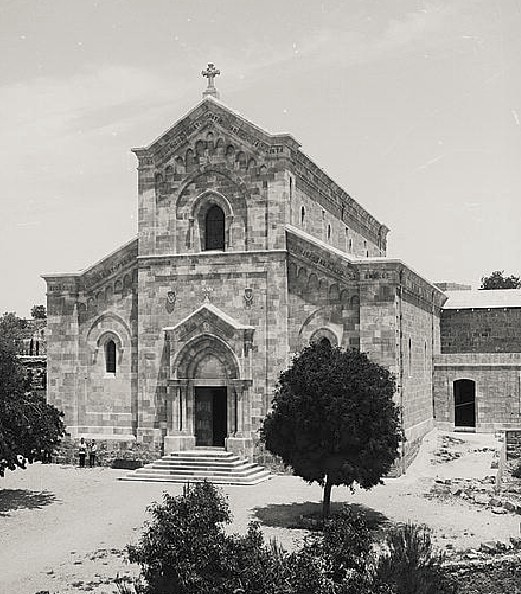
Cleophas
Franciscans
About St Cleophas Church
St. Cleophas Church
St. Cleophas Church, also known as St. Cleopas Church, Emmaus Church, or the Basilica of St. Cleophas, is a Franciscan Catholic church situated in the Palestinian village of Al-Qubeiba, located in the West Bank. This site holds significant religious importance as it is identified as one of the primary locations associated with the biblical event of Emmaus, where, according to the New Testament, Jesus appeared to two of his disciples shortly after his resurrection.
History and Significance
The village of El-Qubeibeh was first proposed as the site of Emmaus in 1280. The area was known to be on a Roman road, and Crusaders discovered a Roman fortress there in 1099, which was then called Castellum Emmaus. The Franciscans adopted the site in 1335, initiating an annual pilgrimage. A basilica, featuring a vaulted choir and an apse, was constructed on the supposed house of Cleophas. This structure, along with its predecessors on the site, endured multiple destructions throughout history, including periods of rebuilding and demolition.
By the 19th century, the church was in ruins, with its nave largely destroyed. The Franciscan Custody of the Holy Land revived the annual pilgrimage in 1852. In 1861, the Marquise Pauline de Nicolay purchased the ruins and donated them to the Franciscans. Following permission granted by Sultan Abdul Hamid II in 1902, the Franciscans rebuilt their church. The temple was officially recognized with the status of a minor basilica in 1919.
Source: Wikipedia ↗
Frequently Asked Questions
Where is St. Cleophas Church located?
St. Cleophas Church is located in the Palestinian village of Al-Qubeiba in the West Bank.
Why is St. Cleophas Church significant?
The site is significant because it is one of the main locations identified with Emmaus, a biblical town where Jesus is said to have revealed himself to two disciples after his resurrection.
Who currently manages St. Cleophas Church?
The church is a Franciscan Catholic church, meaning it is managed by the Franciscan order.
When was St. Cleophas Church designated a minor basilica?
The temple was awarded the status of minor basilica in 1919.
What was the history of the site before the current church?
The site was suggested as Emmaus in 1280 and was on a Roman road where Crusaders found a fortress. A basilica was built on the supposed house of Cleophas, which suffered multiple destructions before the church fell into ruins by the 19th century.
Related Basilicas

"Old" Basilica of Our Lady of Guadalupe
The Insigne y Nacional Basílica de Santa María de Guadalupe, commonly known as the Basilica of Our Lady of Guadalupe, is a prominent Catholic church in Mexico City dedicated to the Virgin Mary under her invocation as Our Lady of Guadalupe. It is one of the most visited Marian shrines in the world, attracting an estimated twenty million pilgrims annually, with a significant portion visiting around December 12th, the feast day of Our Lady of Guadalupe. The sanctuary complex includes the older church, now referred to as the Old Basilica, built in the early 18th century, and the modern New Basilica constructed in the 1970s to accommodate the growing number of devotees.

"Old" Basilica of Our Lady of La Vang
The "Old" Basilica of Our Lady of La Vang is a significant Marian shrine located in Quảng Trị Province, Vietnam, associated with a reported apparition of the Virgin Mary during a period of Christian persecution. Pope John XXIII elevated the shrine to the status of a Minor Basilica in 1961, making it a focal point for Catholic devotion in Vietnam.

Abbatial Basilica of SS Peter and Paul
The Abbatial Basilica of SS Peter and Paul, also known as Dendermonde Abbey, is a Benedictine monastery in Dendermonde, Belgium. It played a significant role in the Liturgical Movement in Belgium during the late 19th and early 20th centuries. The current basilica structure was consecrated in 1902 and designated a basilica in 1939.