
San Sebastian Church
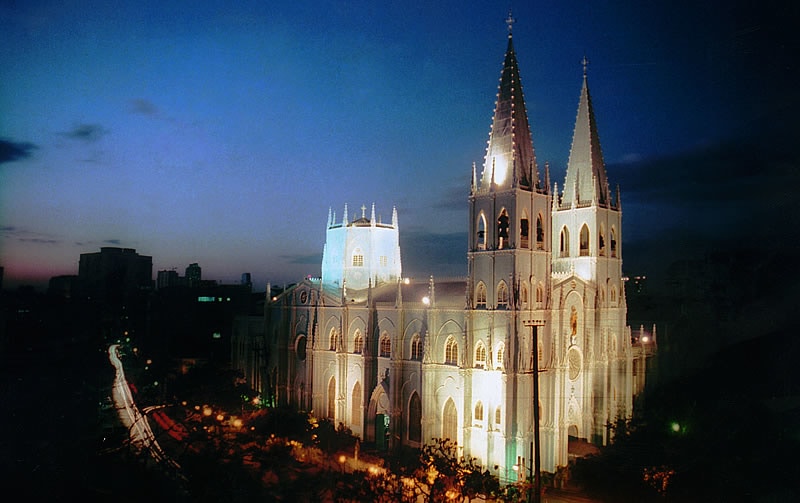
The San Sebastian Church, officially the Minor Basilica and Parish of Saint Sebastian, is a historic Roman Catholic minor basilica located in Manila, Philippines. It is renowned as the Philippines' only all-steel church and an exceptional example of Gothic Revival architecture, having been designated a National Historical Landmark and a National Cultural Treasure.
Key Facts
- ›The current steel structure was completed in 1891, designed by Genaro Palacios to be resistant to earthquakes and fires.
- ›Prefabricated steel sections were manufactured in Belgium and transported to the Philippines in eight shipments.
- ›It was elevated to the status of a minor basilica by Pope Leo XIII on June 24, 1890.
- ›The church's interior features faux marble and jasper finishes, trompe-L'œIL paintings, and Gothic-inspired confessionals and altars.
- ›San Sebastian Church was declared a National Historical Landmark in 1973 and a National Cultural Treasure in 2011.
- ›The basilica was placed on the World Monuments Fund's watchlist of endangered sites in 1998 and again in 2010.
Gothic Revival, Earthquake Baroque
Sebastian
Our Lady of Mount Carmel
Order of Augustinian Recollects
Genaro Palacios
About San Sebastian Church
The San Sebastian Church, formally known as the Minor Basilica and Parish of Saint Sebastian, is a significant religious and architectural landmark in Manila, Philippines. It is distinguished as the country's sole all-steel church and is celebrated for its Gothic Revival architecture, earning it designations as a National Historical Landmark and a National Cultural Treasure.
History and Construction
The history of San Sebastian Church is marked by a series of structures that were destroyed by natural calamities. The current edifice, completed in 1891, was conceived by parish priest Esteban Martínez and designed by Spanish architect Genaro Palacios. Palacios envisioned a church that could withstand earthquakes and fires, leading to the innovative plan for a prefabricated steel structure. The steel components were manufactured in Belgium and shipped to Manila, with assembly beginning in 1890 under the supervision of Belgian engineers. The church was consecrated on August 16, 1891, by Bernardino Nozaleda y Villa OP, the 25th Archbishop of Manila.
Architectural Significance
San Sebastian Church is a remarkable example of Gothic Revival architecture, with its design drawing inspiration from the Burgos Cathedral in Spain. The structure features two openwork towers and steel vaulting. The interior is noted for its faux finishes that mimic marble and jasper, achieved through the work of artists like Lorenzo Rocha and Isabelo Tampinco. Trompe-l'œil paintings adorn the walls and ceiling, and the confessionals, pulpit, and altars were designed by Lorenzo Guerrero and Rocha. The church's unique design includes a base shaped like a ship's hull, intended to allow it to sway during earthquakes.
Preservation and Recognition
Despite its robust construction, San Sebastian Church has faced challenges related to rust and corrosion due to its proximity to Manila Bay. Restoration efforts have been undertaken, including significant work in the 1980s and ongoing phases addressing dome corrosion, waterproofing, and facade integrity. The church was declared a National Historical Landmark in 1973 and a National Cultural Treasure in 2011. It was also included in the Philippines' Tentative List for UNESCO World Heritage Site designation, though it was later removed. Concerns have been raised about potential threats to its heritage status from proposed adjacent high-rise developments.
Notable Features
Among the notable elements within San Sebastian Church is the ivory statue of Our Lady of Mount Carmel, which has a long history of resilience. The church also houses six holy water fonts crafted from Romblon marble. The basilica is under the care of the Order of Augustinian Recollects, who also manage the adjacent San Sebastian College-Recoletos.
Source: Wikipedia ↗
Frequently Asked Questions
What is the architectural style of San Sebastian Church?
San Sebastian Church is primarily an example of Gothic Revival architecture. Its design also incorporates elements of Earthquake Baroque, creating a unique fusion of styles.
Why is San Sebastian Church made of steel?
The church was designed to be resistant to earthquakes and fires, which had destroyed previous structures on the site. Steel was chosen as the primary building material for its durability and resilience.
What is significant about San Sebastian Church's construction?
The entire structure is made of prefabricated steel sections manufactured in Belgium and assembled on-site. It is the only all-steel church in the Philippines and is noted for its innovative engineering for its time.
Has San Sebastian Church ever been considered for UNESCO World Heritage status?
Yes, San Sebastian Church was included in the Philippines' Tentative List for possible designation as a World Heritage Site. However, it was later removed due to structural decay and concerns over adjacent construction.
What notable relics or artworks are housed in San Sebastian Church?
Above the main altar is the ivory statue of Our Lady of Mount Carmel, which has a long history of surviving disasters. The interior also features trompe-l'œil paintings of saints and martyrs, and intricately designed altars and confessionals.
Who was involved in the design and construction of San Sebastian Church?
The design was by Spanish architect Genaro Palacios, with Belgian engineers supervising the assembly of the prefabricated steel. Local artisans and artists like Lorenzo Rocha and Eusebio García contributed to the interior finishes and statues.
Related Basilicas

Basilica and Archdiocesan Shrine of Santo Niño de Tondo
The Minor Basilica of Santo Niño de Tondo, also known as the Archdiocesan Shrine of Santo Niño de Tondo Parish, is a significant Roman Catholic minor basilica located in Tondo, Manila, Philippines. Established by the Augustinian Order, it is dedicated to the Child Jesus and houses an ivory image of the Santo Niño that arrived from Acapulco, Mexico. Its elevation to minor basilica status by Pope Leo XIV in 2025 marks a key moment in its long history.

Basilica of Our Lady of the Pillar (Santa Cruz Church)
The Minor Basilica of Our Lady of the Pillar, also known as Santa Cruz Parish, is a significant Roman Catholic church in Manila, Philippines. Originally established by the Jesuits in the early 17th century, it has undergone multiple reconstructions, with the current structure completed in 1957. The basilica is notable as the motherhouse of Filipino Sacramentinos and hosts important archdiocesan celebrations, including the Feast of Corpus Christi.

Basilica of the National Shrine of Jesus Nazareno (Quiapo Church)
The Minor Basilica and National Shrine of Jesus Nazareno, commonly known as Quiapo Church, is a significant Catholic basilica and national shrine located in Manila, Philippines. It is renowned for housing the venerated and reputedly miraculous statue of the Jesús Nazareno, attracting millions of devotees annually, particularly during its major feast day on January 9th.