
Our Lady of the Cape Basilica, Cap-de-la-Madeleine
Canada·Trois-Rivières
The Basilica of Notre-Dame-du-Cap, located in Trois-Rivières, Quebec, Canada, is a significant national shrine dedicated to the Blessed Virgin Mary. It draws thousands of Catholic pilgrims annually and is recognized as one of Canada's six national shrines, holding the status of a minor basilica.
Key Facts
- ›The site's history began with a small wooden church built in 1659.
- ›A fieldstone church replaced the wooden structure in 1720, utilizing its hand-hewn beams.
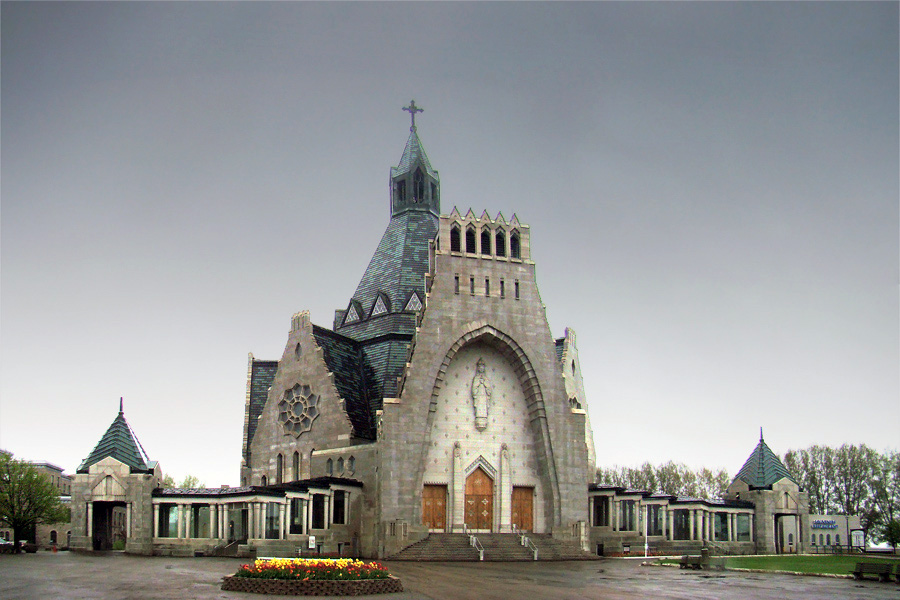
- ›The current basilica was inaugurated in 1964, designed by architect Adrien Dufresne.
- ›It houses a Casavant organ with 5,425 pipes and stained glass windows by Father Jan Tillemans.
- ›Pope Pius X authorized the canonical coronation of our Lady of the Cape in 1904.
- ›The Missionary Oblates of Mary Immaculate have been the guardians of the shrine since 1902.
Modern
Missionary Oblates of Mary Immaculate
Adrien Dufresne
About Our Lady of the Cape Basilica, Cap-de-la-Madeleine
Basilica of Notre-Dame-du-Cap
The Basilica of Notre-Dame-du-Cap, officially known as the Basilica of Notre-Dame-du-Cap, is a prominent minor basilica and Canada's national shrine to the Blessed Virgin Mary, situated in Trois-Rivières, Quebec. It is one of the country's six national shrines and attracts thousands of Catholic pilgrims each year.
History and Development
The origins of the site trace back to a small wooden church built in 1659. This was replaced by a fieldstone church in 1720, which incorporated materials from the earlier structure. The parish experienced periods of neglect but was revitalized in 1867 by Father Luc Desilets, who reintroduced and promoted the praying of the Rosary. A significant challenge in constructing a new church was overcome in 1879 when an ice bridge was built over the St. Lawrence River, enabling the transport of building materials. The people attributed this success to the intercession of the Blessed Mother.
The third church, dedicated to Sainte-Marie-Madeleine, was completed in 1880. Following a promise, the older stone church was dedicated to Our Lady, Queen of the Most Holy Rosary, becoming the site of the first pilgrimage in 1883. The Missionary Oblates of Mary Immaculate became the custodians of the shrine in 1902, establishing a Way of the Rosary with bronze statues depicting the mysteries of the Rosary. In recognition of its spiritual importance, Pope Pius X authorized the canonical coronation of Our Lady of the Cape in 1904. The present basilica was inaugurated in 1964 and officially designated as a minor basilica, with the Missionary Oblates continuing their stewardship.
Architecture and Features
The church completed in 1888 was demolished in 1963 to make way for the current basilica's plaza. The present basilica, designed by architect Adrien Dufresne, opened in 1964 and has a capacity of up to 1,660 people. Its design is characterized by reinforced concrete arches. The basilica features a Casavant organ comprising 5,425 pipes and is adorned with stained glass windows created by Dutch Oblate Father Jan Tillemans.
Religious Significance
As Canada's national shrine to the Blessed Virgin Mary, Notre-Dame-du-Cap serves as a major pilgrimage destination. Its history is deeply intertwined with devotion to the Rosary, and it continues to be a center for Catholic worship and spiritual reflection. The basilica welcomed a visit from Pope John Paul II in September 1984, further highlighting its national and religious importance. Father Janssoone, a key figure in the shrine's development, was declared blessed by Pope John Paul II in 1988.
Source: Wikipedia ↗
Frequently Asked Questions
When was the first church built at Cap-de-la-Madeleine?
The very first church in the district of Cap-de-la-Madeleine was a small wooden structure that was constructed in 1659. This original building served the early community before being replaced.
What is the significance of the ice bridge in the basilica's history?
In March 1879, an ice bridge was constructed over the St. Lawrence River to transport building materials for a new church. This feat, attributed to the intercession of the Blessed Mother, allowed construction to proceed despite challenging winter conditions.
Who designed the current basilica?
The present basilica, which was inaugurated in 1964, was designed by architect Adrien Dufresne. The structure features reinforced concrete arches and can accommodate a large number of people.
What religious order is associated with the shrine?
The Missionary Oblates of Mary Immaculate became the guardians of the shrine in 1902. They continue to manage the shrine and have been instrumental in developing its pilgrimage sites, such as the Way of the Rosary.
Has the basilica received any papal visits?
Yes, Pope John Paul II visited the Basilica of Notre-Dame-du-Cap in September 1984. During his visit, he also declared Father Janssoone blessed.
Related Basilicas

Basilica of our Lady of Perpetual Help
The Basilica of Our Lady of Perpetual Help, located in Labrador City, Newfoundland and Labrador, Canada, is a Roman Catholic minor basilica. Originally built as a church and later serving as a cathedral for the Diocese of Labrador City–Schefferville, it was officially designated a basilica by Pope Benedict XVI in 2007. It is notable for its postmodern architecture and its history as a significant religious center in the region.

Basilica Cathedral of Mary Queen of the World and St James
The Basilica Cathedral of Mary Queen of the World and St James is a minor basilica in Montreal, Quebec, Canada, serving as the seat of the Roman Catholic Archdiocese of Montreal. It is notable for its design, which is a scale model of St. Peter's Basilica in Rome, and for its historical significance, including its connection to the Canadian Papal Zouaves.

Basilica of Our Lady Immaculate
The Basilica of Our Lady Immaculate is a significant Roman Catholic minor basilica located in Guelph, Ontario, Canada. Constructed between 1876 and 1888, it is renowned as the masterpiece of architect Joseph Connolly and is celebrated for its Gothic Revival architecture and skilled decorative craftsmanship. The basilica holds historical importance as a landmark and a spiritual center for its large congregation.