
National Shrine of the Little Flower Basilica
United States·Royal Oak·Archdiocese of Detroit
The National Shrine of the Little Flower Basilica is a Catholic church in Royal Oak, Michigan, renowned for its striking Art Deco architecture. Constructed between 1931 and 1936, its development was largely funded by the radio ministry of Father Charles Coughlin. The church was designated a minor basilica by Pope Francis in 2015 and is recognized as a national shrine by the United States Bishops' Conference.
Key Facts
- ›Construction of the current building occurred between 1931 and 1936, following the destruction of an earlier structure by fire.
- ›The shrine is named in honor of Saint Thérèse of Lisieux, also known as 'the Little Flower'.
- ›Its construction was funded by the proceeds of Father Charles Coughlin's radio ministry.
- ›The architecture is characterized by a lavish zig-zag Art Deco style, featuring extensive sculptural work.
- ›The Charity Crucifixion Tower, completed in 1931, includes a 28-foot high sculpture of Christ on the cross by Rene Paul Chambellan.
- ›Pope Francis designated the Shrine as a minor basilica on January 31, 2015.
Art Deco
Henry J. Mcgill, Rene Paul Chambellan, Corrado Parducci, Beatrice Wilczynski, Robert Rambusch, Mario Agustin Locsin Y Montenegro
About National Shrine of the Little Flower Basilica
The National Shrine of the Little Flower Basilica is a significant Catholic church located in Royal Oak, Michigan, in the United States. It is widely recognized for its distinctive and lavish Art Deco architecture, particularly its zig-zag motifs and elaborate sculptural details. The current structure was built in two stages between 1931 and 1936, with its construction being notably funded by the radio ministry of Father Charles Coughlin, who famously broadcast from its tower.
History and Dedication
The church was founded in 1925 and named in honor of Saint Thérèse of Lisieux, often referred to as 'the Little Flower'. The initial wooden structure, built in a predominantly Protestant area, faced adversity, including a cross burning by the Ku Klux Klan shortly after its opening. A fire in March 1936 destroyed this original building, spurring the completion of the more substantial new edifice.
During World War II, the church and its records were subject to an FBI raid due to Father Coughlin's controversial support for Nazi policies. In a testament to its religious importance, Pope Francis officially designated the Shrine as a minor basilica on January 31, 2015. The United States Bishops' Conference had previously declared it a national shrine in 1998.
Architectural Significance
The basilica's architecture is a prime example of the Art Deco style. A prominent feature is the Charity Crucifixion Tower, completed in 1931, which boasts integrated figural sculptures by Rene Paul Chambellan, including a commanding 28-foot high figure of Christ on the cross. This sculpture, executed by Italian stone carver Enrico Liva, was intended as a symbol of resilience against those who sought to harm the church. The tower also incorporates symbols of the Four Evangelists and depictions of the Seven Last Words from the Cross, along with other religious imagery.
The main building is constructed from granite and limestone, showcasing extensive exterior and interior sculptural work by Corrado Parducci, including a lectern and Stations of the Cross. Hand-painted murals by Beatrice Wilczynski adorn the interior, and stones carved with the names and official flowers of each U.S. state are set into the exterior walls. The octagonal nave is designed to seat 3,000 people on two levels, with the altar positioned centrally. The octagonal baptismal font was a collaboration between liturgical artists Robert Rambusch and Mario Agustin Locsin y Montenegro.
Source: Wikipedia ↗
Frequently Asked Questions
When was the National Shrine of the Little Flower Basilica built?
The current building's construction began in 1931 and was completed in 1936. An earlier structure on the site was built in 1926 and destroyed by fire in 1936.
What is the architectural style of the shrine?
The basilica is well-known for its execution in the lavish zig-zag Art Deco style. This includes a prominent limestone tower and extensive sculptural work on both the exterior and interior.
Who funded the construction of the basilica?
The construction of the church was funded by the proceeds of the radio ministry of Father Charles Coughlin. He broadcast from its tower in the 1930s.
What religious significance does the National Shrine of the Little Flower Basilica hold?
It is named in honor of Saint Thérèse of Lisieux, known as 'the Little Flower'. It was designated a national shrine by the United States Bishops' Conference in 1998 and a minor basilica by Pope Francis in 2015.
What is the significance of the Charity Crucifixion Tower?
Completed in 1931, the tower features integrated figural sculptures, including a large figure of Christ on the cross. It was built as a defiant response to the Ku Klux Klan, intended as a 'cross they could not burn'.
Related Basilicas
Basilica of the National Shrine of the Little Flower
The Basilica of the National Shrine of the Little Flower, also known as Our Lady of Mount Carmel and St. Thérèse Church, is a historic Catholic church in San Antonio, Texas. Dedicated to St. Thérèse of Lisieux, it is a significant minor basilica in the United States, celebrated for its art, craftsmanship, and relics, constructed during the Great Depression as a testament to faith.

Basilica of St Therese of the Child Jesus
The Basilica of St Therese of the Child Jesus is a Roman Catholic minor basilica located in Cairo, Egypt, dedicated to Thérèse of Lisieux. Constructed in 1931-1932, it serves as a significant pilgrimage site, with hundreds of votive tablets in its crypt attesting to the saint's intercession. The basilica holds importance for both Egyptian Catholics and Copts.
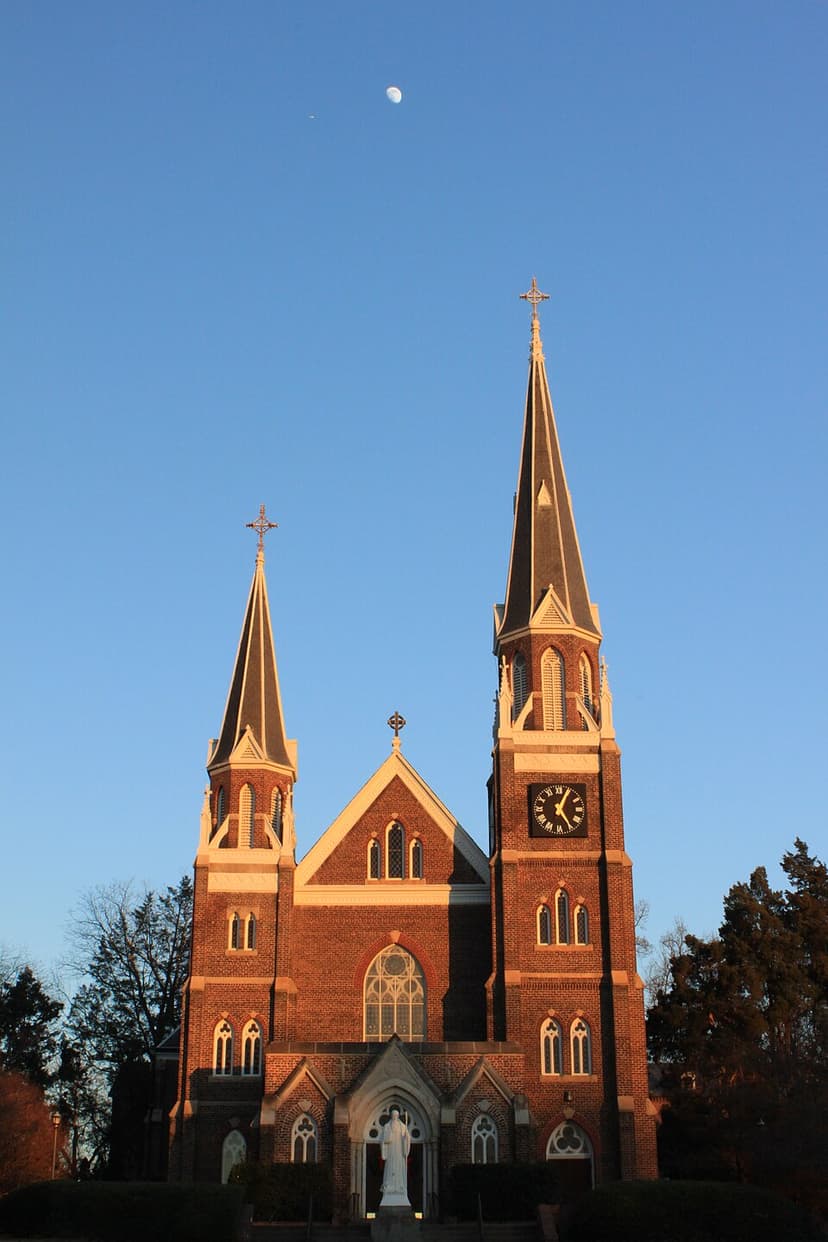
Abbey Basilica of Our Lady Help of Christians (Belmont Abbey)
The Abbey Basilica of Our Lady Help of Christians, located at Belmont Abbey in North Carolina, is a significant Catholic religious site. Originally established as a monastery and educational institution, it was elevated to the status of an abbey and later designated as a minor basilica. The basilica is notable for its Gothic Revival architecture and its historical role in education and religious administration in the region.