
Cathedral Basilica of St Sigismund
Poland·Płock·Płock
Płock Cathedral, officially the Cathedral of the Blessed Virgin Mary of Masovia, is a significant Roman Catholic cathedral in Płock, Poland. It is renowned for its Romanesque origins and as a key historical monument containing the tombs of several Polish monarchs, making it a site of considerable national importance.
Key Facts
- ›The bishopric in Płock was founded around 1075.
- ›The current Romanesque cathedral was rebuilt after 1129 and consecrated in 1144.
- ›It houses the tombs of several Polish rulers, including Władysław I Herman and Bolesław III Wrymouth.
- ›Following a fire in 1530, it was reconstructed in the Renaissance style between 1531–1535.
- ›In 2018, Płock Cathedral was designated a Historic Monument of Poland.
- ›The original bronze doors, created around 1150, are now located in Novgorod, Russia.
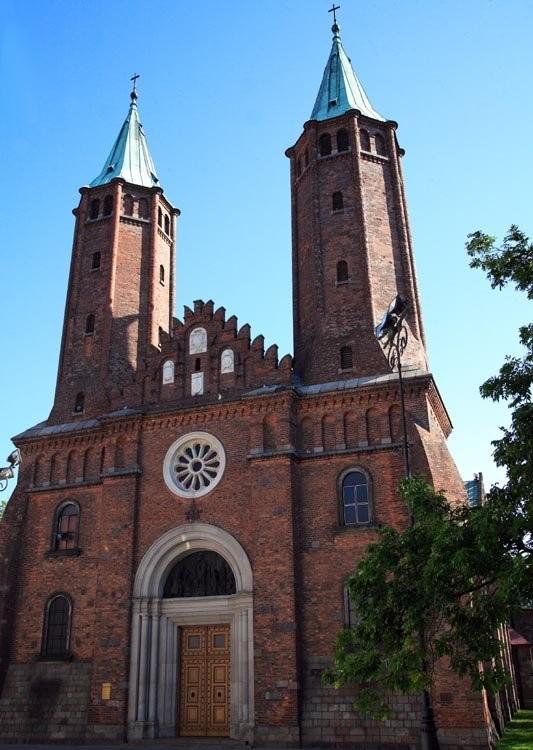
Romanesque, Renaissance, Gothic
Bernardino De Gianotis, Giovanni Cini Da Siena, Philippo Da Fiesole, Giovanni Battista of Venice, Stefan Szyller
About Cathedral Basilica of St Sigismund
Płock Cathedral: A Monument of Polish History and Faith
Płock Cathedral, officially known as the Cathedral of the Blessed Virgin Mary of Masovia, stands as a paramount historical and religious edifice in Płock, Poland. Its significance is deeply rooted in its long history, dating back to the founding of the bishopric in Płock around 1075. The current Romanesque structure, a testament to 12th-century architecture, was rebuilt after 1129 and consecrated in 1144. It is recognized not only for its architectural importance but also as a crucial repository of Polish history, housing the tombs of several Polish monarchs.
Historical and Architectural Evolution
The cathedral's history is marked by significant events, including royal burials and reconstructions. The first definite reference to the cathedral dates to 1102 with the burial of Władysław I Herman. The Romanesque cathedral, built after 1129 by Prince Bolesław III Wrymouth and Bishop Aleksander of Malonne, was consecrated in 1144. Its original bronze doors, crafted around 1150, are now in Russia, though a replica exists within the cathedral. A devastating fire in 1530 led to a major reconstruction between 1531 and 1535, transforming the building into the first large Renaissance-style cathedral in Poland. This Renaissance phase, influenced by Roman basilicas, incorporated granite ashlar from the earlier Romanesque structure. Further modifications in the late 16th century, attributed to Giovanni Battista of Venice, added a spacious choir and western towers, lending the exterior a character akin to North Italian brick churches and local late Gothic styles.
Royal Tombs and National Heritage
Płock Cathedral holds particular importance as the burial site for numerous Polish rulers, including Władysław I Herman, Bolesław III Wrymouth, Bolesław IV the Curly, Konrad I of Masovia, and Bolesław II of Masovia. The Royal Chapel features a marble sarcophagus containing the tombs of Władysław I Herman and his son, Bolesław III Wrymouth. These royal interments underscore the cathedral's central role in the history of the Polish monarchy. In recognition of its historical, artistic, scientific, material, and landscape values, the Cathedral and its surrounding Tumskie Hill were officially declared a Historic Monument of Poland by the President of Poland in 2018, solidifying its status as a protected national treasure.
Source: Wikipedia ↗
Frequently Asked Questions
What is the official name of Płock Cathedral?
The official name of Płock Cathedral is the Cathedral of the Blessed Virgin Mary of Masovia. It is also commonly referred to as Płock Cathedral.
When was Płock Cathedral originally built?
The present Romanesque cathedral was built after 1129, following earlier structures. It was consecrated in 1144 as the Church of the Blessed Virgin Mary.
Who is buried in Płock Cathedral?
Płock Cathedral contains the tombs of several Polish monarchs, including Władysław I Herman and his son Bolesław III Wrymouth. Other notable burials include Dukes of Masovia and bishops.
What architectural styles are present in Płock Cathedral?
The cathedral exhibits Romanesque architecture from its original construction. Following a fire in 1530, it was rebuilt in the Renaissance style, with later modifications including additions between 1560 and a re-design of the front elevation in 1903.
What is the significance of the bronze doors mentioned in relation to Płock Cathedral?
The original bronze doors of the Romanesque cathedral, created around 1150, featured figurative bas-reliefs. Although now housed in Novgorod, Russia, a bronze replica of these doors was made in the 1980s and is present in the cathedral.
Related Basilicas

Archcathedral Basilica of the Assumption
The Archcathedral Basilica of the Assumption of the Blessed Virgin Mary, also known as Białystok Cathedral, is a significant Roman Catholic cathedral located in Białystok, Poland. Designed by Józef Pius Dziekoński, it is the main church of the Archdiocese of Białystok and was granted basilica status in 1985. The basilica is a prominent example of Vistula-Baltic Gothic architectural style and features impressive dimensions, including two towers reaching 72.5 meters.

Basilica of the Blessed Virgin Mary and St Bartholomew the Apostle
The Basilica of the Blessed Virgin Mary and St Bartholomew the Apostle is a Roman Catholic church located in Piekary Śląskie, Poland. Originally a church from the fourteenth century, the current Neo-Romanesque structure was completed in 1849. It was elevated to the status of minor basilica by Pope John XXIII in 1962, signifying its importance within the Catholic Church.

Basilica and National Shrine of Our Lady of Consolation
The Basilica and National Shrine of Our Lady of Consolation is a Roman Catholic basilica in Carey, Ohio, dedicated to the Blessed Virgin Mary under the title of Our Lady of Consolation. It serves as a significant national shrine and a site for an annual pilgrimage, particularly for Roman Catholics of Middle Eastern origin, commemorating the Feast of the Assumption of Mary. The shrine is administered by the Order of Saint Francis and was elevated to the status of a Minor Basilica in 1971.