
Basilica of the Visitation, Mariánska hora
Slovakia·Levoča
The Basilica of the Visitation of the Blessed Virgin Mary, located on Mariánska hora in Levoča, Slovakia, is a significant pilgrimage site. Its current form was constructed between 1906 and 1922, and it has a history of religious devotion dating back to at least the 13th century. The basilica was elevated to the status of a Basilica Minor by Pope John Paul II in 1984.
Key Facts
- ›The site has hosted a chapel since at least the 13th century, with early mentions in chronicles from 1247.
- ›The current basilica's construction took place between 1906 and 1922, designed by architect Anton Müller.
- ›Pope John Paul II designated the church as a Basilica Minor in 1984.
- ›The basilica is the destination of an annual major pilgrimage, drawing a large number of participants.
- ›It is part of the European Association of Marian Pilgrimage Sites, a designation received in 2005.
- ›A Greek Orthodox chapel stands adjacent to the basilica.
Anton MüLler
About Basilica of the Visitation, Mariánska hora
Basilica of the Visitation of the Blessed Virgin Mary
The Basilica of the Visitation of the Blessed Virgin Mary, also known in Slovak as Bazilika navštívenia Panny Márie, is a prominent pilgrimage church situated atop Mariánska hora (Marian Hill) above Levoča, Slovakia. This revered site has a history of religious significance stretching back to at least the 13th century, with the location possibly serving as a refuge during historical invasions and being associated with a hospital.
Historical Development
The earliest records indicate a chapel existed on Mariánska hora by 1247, attracting pilgrims and undergoing repairs in the early 14th century. This chapel was enlarged and rebuilt in 1470, a form later depicted in art by Master Paul of Levoča. A Baroque structure replaced this in 1766, but the church subsequently declined after Emperor Joseph II banned pilgrimages in 1787. Significant repairs began in 1820, and during the 19th century, the site was enhanced with an organ and Marian statues.
The Present Basilica
The foundation stone for the current basilica was laid in 1903, with construction designed by architect Anton Müller. The building process faced challenges, including poor materials and the collapse of the new tower in 1908, leading to its completion in 1922. A significant event in its modern history occurred in 1984 when Pope John Paul II elevated the church to the status of a Basilica Minor. He personally visited the site on July 3, 1995, a pilgrimage that drew an estimated 650,000 attendees.
Significance and Recognition
Mariánska hora remains a vital pilgrimage destination, with its annual pilgrimage on or around July 2nd continuing to attract substantial numbers of faithful. In recognition of its importance, Levoča and Mariánska hora were admitted to the European Association of Marian Pilgrimage Sites on October 3, 2005. Adjacent to the basilica, a Greek Orthodox chapel, consecrated in 1858, also stands as a testament to the diverse religious heritage of the region.
Source: Wikipedia ↗
Frequently Asked Questions
Where is the Basilica of the Visitation of the Blessed Virgin Mary located?
The basilica is situated on Mariánska hora (Marian Hill), a hill overlooking the town of Levoča in Slovakia. It stands at an elevation of 781 meters above sea level.
What is the history of the site before the current basilica?
A chapel has existed on the site since at least the 13th century. It was enlarged and rebuilt in 1470, and later replaced by a Baroque building in 1766. The current structure's foundation stone was laid in 1903.
When was the basilica designated a Basilica Minor?
The church was officially upgraded to a Basilica Minor by Pope John Paul II in 1984, following a request from the local bishop.
Is the basilica a popular pilgrimage destination?
Yes, the basilica is the destination of an annual major pilgrimage, traditionally held on or around July 2nd, the Feast of the Visitation. This pilgrimage still draws a very large number of participants.
Has the basilica been visited by any Popes?
Pope John Paul II visited the site on July 3, 1995. Approximately 650,000 pilgrims gathered for this occasion.
What architectural styles are present in the basilica?
The current basilica was built between 1906 and 1922 in its present form. Earlier structures on the site included a chapel and a Baroque building, but the primary architectural style of the current basilica is not explicitly detailed in historical accounts.
Related Basilicas

Cathedral Basilica of Our Lady of Seven Sorrows
The Cathedral Basilica of Our Lady of Seven Sorrows is a significant Roman Catholic church located in Navrongo, Ghana, serving as the seat for the Diocese of Navrongo–Bolgatanga. Originally built in 1906 and expanded in 1920, its elevation to a minor basilica in 2006 recognized its historical, artistic, and pastoral importance, making it one of Ghana's oldest churches. The basilica is notable for its unique mud-brick construction and interior decorations reflecting local life and Christian themes.
Cathedral Shrine of Our Lord and the Virgin of the Miracle
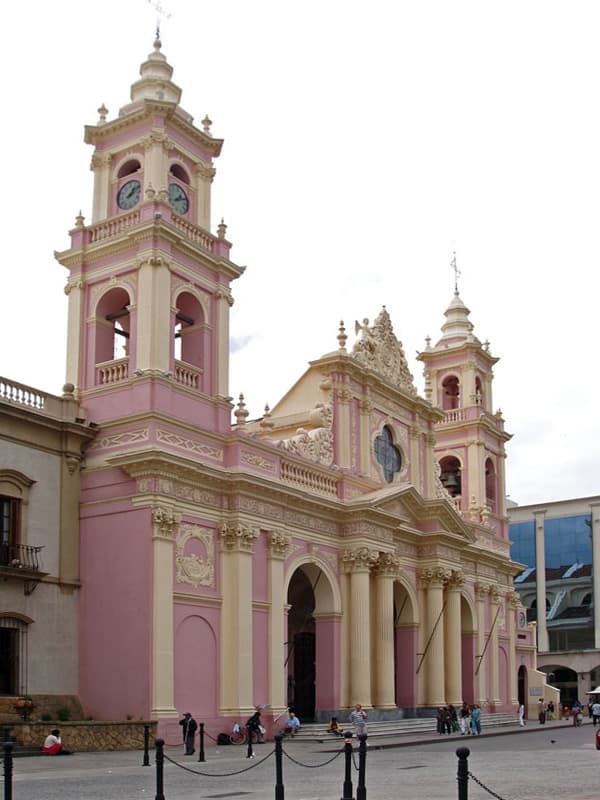
Salta Cathedral, officially the Cathedral Basilica of Salta, is the metropolitan cathedral of the Archbishop of Salta in Argentina. It is dedicated to Jesus Christ as the "Lord of Miracles" and the Blessed Virgin Mary as the "Our Lady of the Miraculous Rosary." The cathedral holds significant religious importance, having received a pontifical coronation for its enshrined images in 1902.

Basilica of our Lady of Perpetual Help
The Basilica of Our Lady of Perpetual Help, located in Labrador City, Newfoundland and Labrador, Canada, is a Roman Catholic minor basilica. Originally built as a church and later serving as a cathedral for the Diocese of Labrador City–Schefferville, it was officially designated a basilica by Pope Benedict XVI in 2007. It is notable for its postmodern architecture and its history as a significant religious center in the region.