
Basilica of the Virgin of Candelaria
Bolivia·Copacabana
The Basilica of Our Lady of Copacabana is a significant 17th-century Roman Catholic shrine located in Copacabana, Bolivia. Dedicated to the Virgin Mary as Our Lady of the Candles of Copacabana, it is the patroness of Bolivia and a major pilgrimage site. Pope Pius XII elevated the shrine to the status of Minor Basilica in 1940.
Key Facts
- ›The current basilica was constructed between 1669 and 1679, replacing an earlier chapel built by Augustinian friars.
- ›The image of our Lady of Copacabana was carved around 1576 by indigenous sculptor Francisco Tito Yupanqui.
- ›The shrine is situated on a site formerly known as the Temple of the Sun, sacred to the Inca.
- ›The Augustinian Order was entrusted with the management of the shrine starting in 1589.
- ›It was officially elevated to the rank of Basilica on July 2, 1940, by Pope Pius XII.
- ›The basilica was the target of a burglary in April 2013, during which its gold and silver accessories were stolen.

Roman Catholic
Image of Our Lady of Copacabana
Order of Saint Augustine
Francisco JiméNez De Siguenza
About Basilica of the Virgin of Candelaria
Basilica of Our Lady of Copacabana
The Basilica of Our Lady of Copacabana is a significant 17th-century Roman Catholic shrine situated in the town of Copacabana, Bolivia. It is dedicated to the Blessed Virgin Mary under the title of Our Lady of the Candles of Copacabana, who is venerated as the patroness of Bolivia. The shrine holds immense religious importance, serving as a major pilgrimage destination and a key sacred site for both indigenous peoples and Catholics.
History and Construction
The origins of the devotion trace back to around 1576 when the indigenous sculptor Francisco Tito Yupanqui carved an image of Our Lady of Copacabana. Miracles were soon attributed to her intercession, leading to the construction of an adobe shrine around 1583. This early shrine was built at the foot of a small hill in an area historically known as the Temple of the Sun, a place of sacred significance to the Inca civilization. In 1589, the Order of Saint Augustine was entrusted with the care of the shrine, establishing a monastery and meticulously documenting the Virgin's miracles. The Augustinians constructed their first chapel between 1614 and 1618. The current basilica, the building that stands today, was erected between 1669 and 1679 by the Spanish architect Francisco Jiménez de Siguenza, replacing the earlier church.
Religious Significance and Designation
The basilica is a focal point for religious devotion, particularly its connection to Cerro El Calvario, a hilltop overlooking Lake Titicaca. This area has been rededicated as a "calvario" or replica of Calvary, featuring the Stations of the Seven Sorrows of Mary and an altar with a depiction of the crucifixion. It is a major center of worship, especially during Holy Week. Recognizing its profound spiritual importance, Pope Pius XII officially elevated the shrine to the status of a Minor Basilica on July 2, 1940, through the pontifical decree Bolivianæ Ditionis Intra.
Notable Events
The Basilica of Our Lady of Copacabana has also been the site of unfortunate events. In the early hours of April 22, 2013, the basilica was burglarized. Thieves entered the building and stripped the image of the Virgen de Copacabana of its gold and silver accessories, with twenty-eight items, including the sculpture of the baby Jesus, reported missing.
Source: Wikipedia ↗
Frequently Asked Questions
When was the Basilica of Our Lady of Copacabana built?
The current basilica was constructed between 1669 and 1679. An earlier chapel was built by the Augustinian friars between 1614 and 1618.
Who is the Basilica of Our Lady of Copacabana dedicated to?
The basilica is dedicated to the Blessed Virgin Mary under the title of Our Lady of the Candles of Copacabana. She is recognized as the patroness of Bolivia.
What is the significance of the location of the basilica?
The shrine is located in a place formerly known as the Temple of the Sun, which was a sacred area for the Inca. It remains a principal sacred place for both indigenous peoples and Catholics.
When was the shrine elevated to the status of a Minor Basilica?
The shrine was raised to the status of a Minor Basilica by Pope Pius XII on July 2, 1940, through a pontifical decree.
Has the basilica ever been the subject of crime?
Yes, in April 2013, the basilica was robbed. Thieves entered the building and stole gold and silver accessories from the image of the Virgen de Copacabana, as well as the sculpture of the baby Jesus.
Related Basilicas
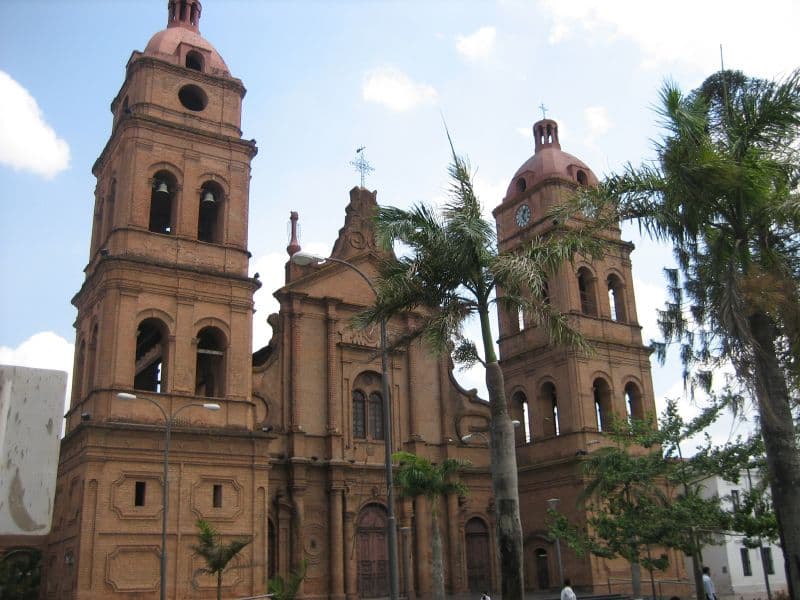
Metropolitan Cathedral Basilica of St Lawrence
The Metropolitan Cathedral Basilica of St Lawrence is the primary Catholic church in Santa Cruz de la Sierra, Bolivia, located in the city center. It has a history of rebuilding and alteration, with its current structure dating from the mid-19th century, notable for its eclectic style, wooden vaults, and preserved Jesuit mission artifacts.

Basilica Cathedral of Our Lady of Guadalupe
The Metropolitan Cathedral of Sucre, also known as the Cathedral of the Immaculate Conception, serves as the seat of the Roman Catholic Church in Bolivia. Constructed between 1559 and 1712, it holds significant historical and religious importance for the country.

"Old" Basilica of Our Lady of Guadalupe
The Insigne y Nacional Basílica de Santa María de Guadalupe, commonly known as the Basilica of Our Lady of Guadalupe, is a prominent Catholic church in Mexico City dedicated to the Virgin Mary under her invocation as Our Lady of Guadalupe. It is one of the most visited Marian shrines in the world, attracting an estimated twenty million pilgrims annually, with a significant portion visiting around December 12th, the feast day of Our Lady of Guadalupe. The sanctuary complex includes the older church, now referred to as the Old Basilica, built in the early 18th century, and the modern New Basilica constructed in the 1970s to accommodate the growing number of devotees.