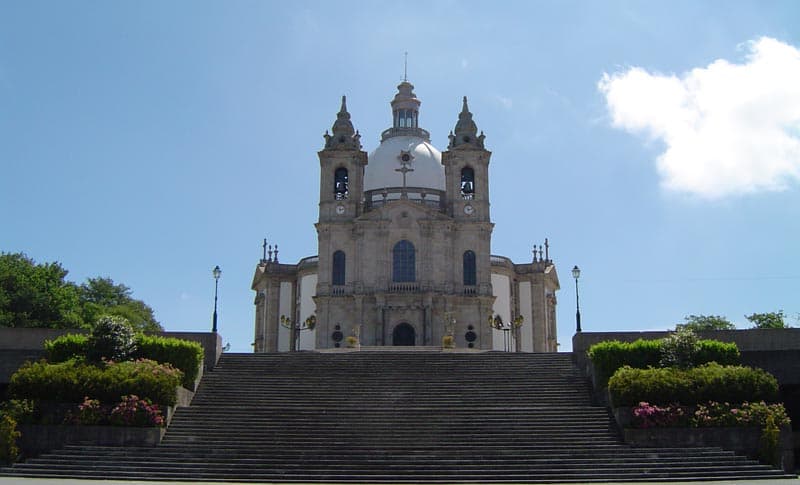
Basilica of Our Lady of the Martyrs
Portugal·Lisbon
The Basilica of Our Lady of the Martyrs is a Catholic church in Lisbon, Portugal, notable for its Baroque and late Neoclassical architecture, representing the quality of religious structures during Lisbon's post-earthquake reconstruction. Its origins trace back to a chapel built in 1147 to house an image of the Virgin brought by English crusaders, serving as a memorial to soldiers who died defending the faith.
Key Facts
- ›The parish of our Lady of the Martyrs was established in 1147 following the reconquest of Lisbon from the Moors.
- ›Its foundation is linked to a chapel built to house an image of the Virgin Mary brought by English crusaders.
- ›The church is named in memory of soldiers who died defending the Christian faith.
- ›Tradition states that D. Afonso Henriques sought the Virgin's protection at this site, and it was the location of the first baptism in Lisbon after the Reconquest.
- ›The original hermitage, a large Baroque church by 1755, was destroyed in the Lisbon earthquake of that year.
- ›The current basilica was designed by Reinaldo Manuel dos Santos and dedicated in March 1784.

Baroque, Late Neoclassical
Our Lady of the Martyrs
Reinaldo Manuel Dos Santos
About Basilica of Our Lady of the Martyrs
The Basilica of Our Lady of the Martyrs, known in Portuguese as Basílica de Nossa Senhora dos Mártires, is a significant Catholic church located in the Chiado district of Lisbon, Portugal. Situated on Rua Garrett within the parish of St. Mary, it stands as a notable example of religious architecture from the period of Lisbon's reconstruction following the devastating 1755 earthquake.
Origins and Historical Context
The parish itself traces its origins back to 1147, immediately after the reconquest of Lisbon from the Moors. Its foundation is linked to a small chapel established to house an image of the Virgin Mary brought by English crusaders. This chapel was dedicated to "Our Lady of the Martyrs" in remembrance of the soldiers who sacrificed their lives in defense of the Christian faith. Tradition holds that D. Afonso Henriques, the first King of Portugal, sought the protection of the Virgin at this site. Furthermore, it is said to have been the location of the first Christian baptism in the city after the Reconquest.
Destruction and Reconstruction
By the mid-18th century, the original hermitage had evolved into a substantial Baroque church. However, this structure was completely destroyed during the catastrophic earthquake that struck Lisbon in 1755. The current basilica was subsequently designed by Reinaldo Manuel dos Santos. The dedication of the new basilica by religious authorities took place in March 1784, marking the completion of a significant religious and architectural endeavor in the revitalized city.
Architectural Style
The Basilica of Our Lady of the Martyrs exhibits a blend of Baroque and late Neoclassical architectural styles. Its construction reflects the quality and artistic standards applied to religious buildings during the Pombaline rearrangement of Lisbon, a period of extensive rebuilding and urban planning following the 1755 earthquake.
Source: Wikipedia ↗
Frequently Asked Questions
What is the historical significance of the Basilica of Our Lady of the Martyrs?
The basilica's origins date back to 1147, established in memory of soldiers who died defending the Christian faith. It holds traditional significance as the site where D. Afonso Henriques sought divine aid and where the first baptism in Lisbon after the Reconquest took place.
What happened to the original church?
The original hermitage, which had become a large Baroque church by 1755, was completely destroyed during the devastating Lisbon earthquake of that year.
Who designed the current basilica?
The current basilica was designed by Reinaldo Manuel dos Santos. It was dedicated by religious authorities in March 1784.
What architectural styles are present in the Basilica of Our Lady of the Martyrs?
The basilica is constructed in the Baroque and late Neoclassical styles. It is considered an example of the quality of religious architecture from the period of Lisbon's rearrangement after the 1755 earthquake.