
Basilica of Mission San Diego de Alcalá
United States·San Diego·San Diego
Mission Basilica San Diego de Alcalá, the first Franciscan mission in California, was founded in 1769 by Junípero Serra near present-day San Diego. Although the current church is the fifth on the site, it holds significance as the location of the first Christian burial in Alta California and was designated a minor basilica in 1976. The mission played a crucial role in the Spanish colonization efforts and the conversion of indigenous peoples.
Key Facts
- ›Founded on July 16, 1769, by Spanish friar Junípero Serra.
- ›The site is a National Historic Landmark.
- ›It was the first Franciscan-founded mission in the Californias.
- ›The original mission church was destroyed by fire in 1775 during a native uprising.
- ›Father Luis Jayme, California's first Christian martyr, is entombed beneath the chancel floor.
- ›Designated as a minor basilica by Pope Paul VI in 1976.
Didacus of Alcalá
Tomb of Father Luis Jayme
Franciscans
About Basilica of Mission San Diego de Alcalá
Mission Basilica San Diego de Alcalá
Mission Basilica San Diego de Alcalá holds the distinction of being the first Franciscan-founded mission in the Californias, established on July 16, 1769, by Spanish friar Junípero Serra. Situated in what is now San Diego, California, the mission was established in an area long inhabited by the Kumeyaay people. The current church structure, built in the early 19th century, is the fifth to occupy this significant site. The mission grounds are recognized as a National Historic Landmark.
Historical Context and Founding
The mission and its surrounding lands were named in honor of Saint Didacus of Alcalá, a Spanish saint. Historically, Mission San Diego de Alcalá is noted as the site of the first Christian burial in Alta California. The early history of the mission was marked by significant challenges, including the destruction of the original church by fire in 1775 during an uprising by local indigenous people. Father Luis Jayme, who became California's first Christian martyr during this uprising, is interred beneath the chancel floor of the present church. The mission's re-establishment was a difficult process due to scarce water resources and challenges in preparing the land for agriculture.
Development and Industries
Before the arrival of the Spanish, native inhabitants utilized local materials for tools and building. The missionaries introduced manual training, encompassing agriculture, mechanical arts, and livestock raising, to foster self-sufficiency among the indigenous population. Key agricultural products included wheat, corn, wine grapes, barley, and beans, alongside cattle, horses, and sheep. In 1795, construction began on an aqueduct system to supply water for the mission and its fields, representing the first irrigation project in Upper California. The mission was primarily supported by a Spanish royal land grant that encompassed a substantial portion of present-day eastern San Diego.
Rancho Period and Restoration
Following secularization in 1834, mission properties were broken up into ranchos. Mission San Diego de Alcalá was granted to Santiago Argüello in 1846. After the United States' invasion of California, the mission was utilized by the military from 1846 to 1862. In 1862, President Abraham Lincoln signed a proclamation restoring ownership of the mission to the Roman Catholic Church, though it was in ruins at the time. Efforts to fund its restoration began in 1891, with significant work resuming in 1931.
Modern Era and Basilica Designation
In 1941, Mission San Diego de Alcalá was re-established as a parish church, continuing its role as an active parish serving the Diocese of San Diego. A significant ecclesiastical recognition occurred in 1976 when Pope Paul VI designated the mission church as a minor basilica, underscoring its enduring religious importance. The mission is now located within the city limits of San Diego, near major freeways and a notable local stadium.
Source: Wikipedia ↗
Frequently Asked Questions
When was Mission San Diego de Alcalá founded?
Mission San Diego de Alcalá was founded on July 16, 1769. It was the second Franciscan-founded mission in the Californias.
What is the historical significance of Mission San Diego de Alcalá?
It holds the distinction of being the first Franciscan mission in California and the site of the first Christian burial in Alta California. It was also designated a minor basilica in 1976.
What happened to the original mission church?
The original mission church was destroyed by fire in 1775 during an uprising by local indigenous people. It was subsequently rebuilt.
Who is entombed at Mission San Diego de Alcalá?
Father Luis Jayme, who is considered California's first Christian martyr, is entombed beneath the chancel floor of the current church. He was killed during the 1775 uprising.
What was the role of Mission San Diego de Alcalá in early California?
The mission was established to convert indigenous peoples to Roman Catholicism and facilitate Spanish colonization. It also served as an agricultural center and a point of support for military and civil government.
Related Basilicas
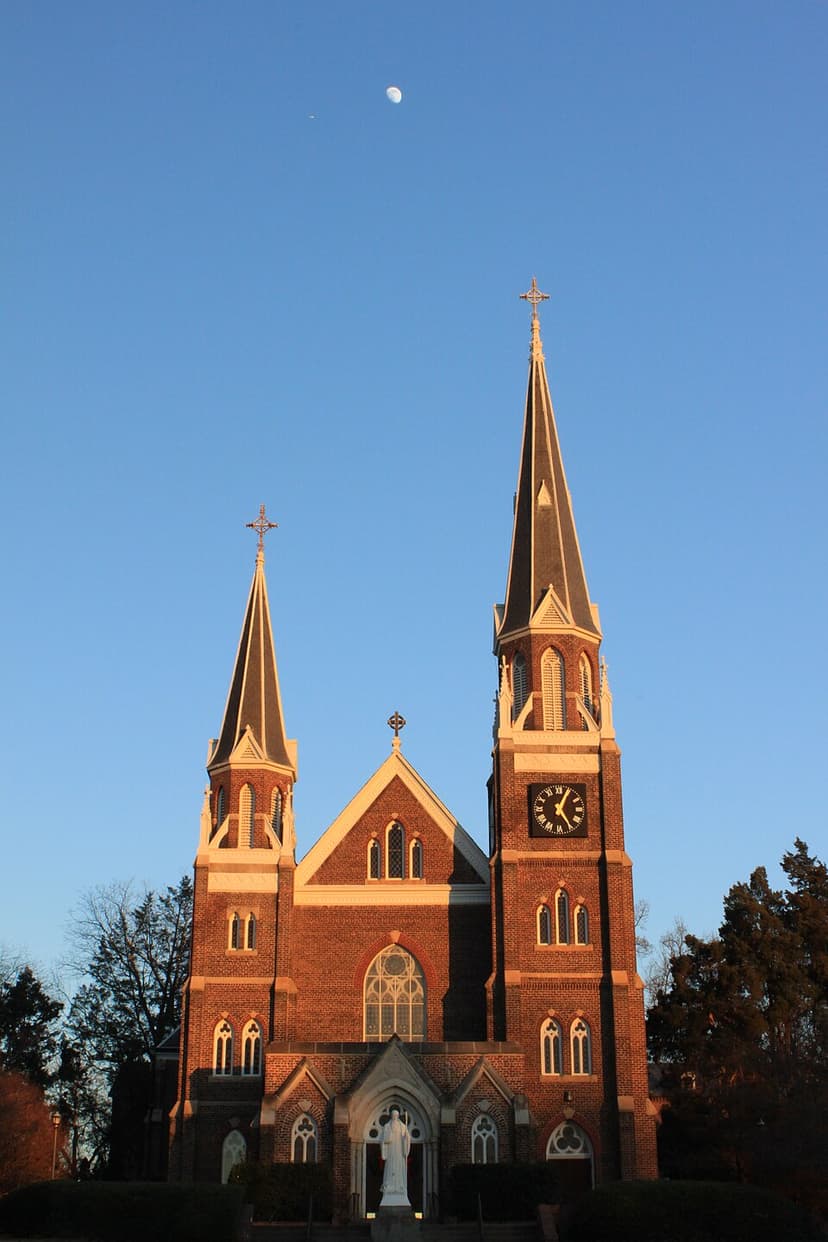
Abbey Basilica of Our Lady Help of Christians (Belmont Abbey)
The Abbey Basilica of Our Lady Help of Christians, located at Belmont Abbey in North Carolina, is a significant Catholic religious site. Originally established as a monastery and educational institution, it was elevated to the status of an abbey and later designated as a minor basilica. The basilica is notable for its Gothic Revival architecture and its historical role in education and religious administration in the region.
Basilica and National Shrine of Our Lady of Lebanon
The Basilica and National Shrine of Our Lady of Lebanon is a minor basilica of the Maronite Catholic Church situated in North Jackson, Ohio. It serves as a significant spiritual center for Maronites in the United States, mirroring the original shrine in Harissa, Lebanon. The basilica was dedicated in 1965 and later elevated to minor basilica status by Pope Francis in 2014.

Basilica and Shrine of Our Lady of Perpetual Help
The Basilica and Shrine of Our Lady of Perpetual Help, also known as The Mission Church, is a Roman Catholic basilica located in Boston, Massachusetts. It was elevated to the status of Minor Basilica in 1954 and is renowned for its shrine dedicated to Our Mother of Perpetual Help, which has been a site of reported miracles and votive offerings since its inception. The Redemptorist priests have ministered to the parish since its founding in 1870.