
Yarhibol
Aramean
Yarhibol was a prominent Aramean deity worshipped in ancient Palmyra, central Syria. Initially associated with a healing spring and possibly the moon, his role evolved to encompass solar aspects, divine judgment, and prophecy, leading to comparisons with the Greek god Apollo. He was frequently depicted in triads with other Palmyrene gods, most notably Bel and Aglibol.
Key Facts
- ›Originates from Aramean traditions and was primarily worshipped in Palmyra, Syria.
- ›Initially served as the patron of the spring Efqa and was titled 'Lord of the Source'.
- ›His name, 'the moon of Bel', suggests an early connection to lunar cults and the moon god Jarih.
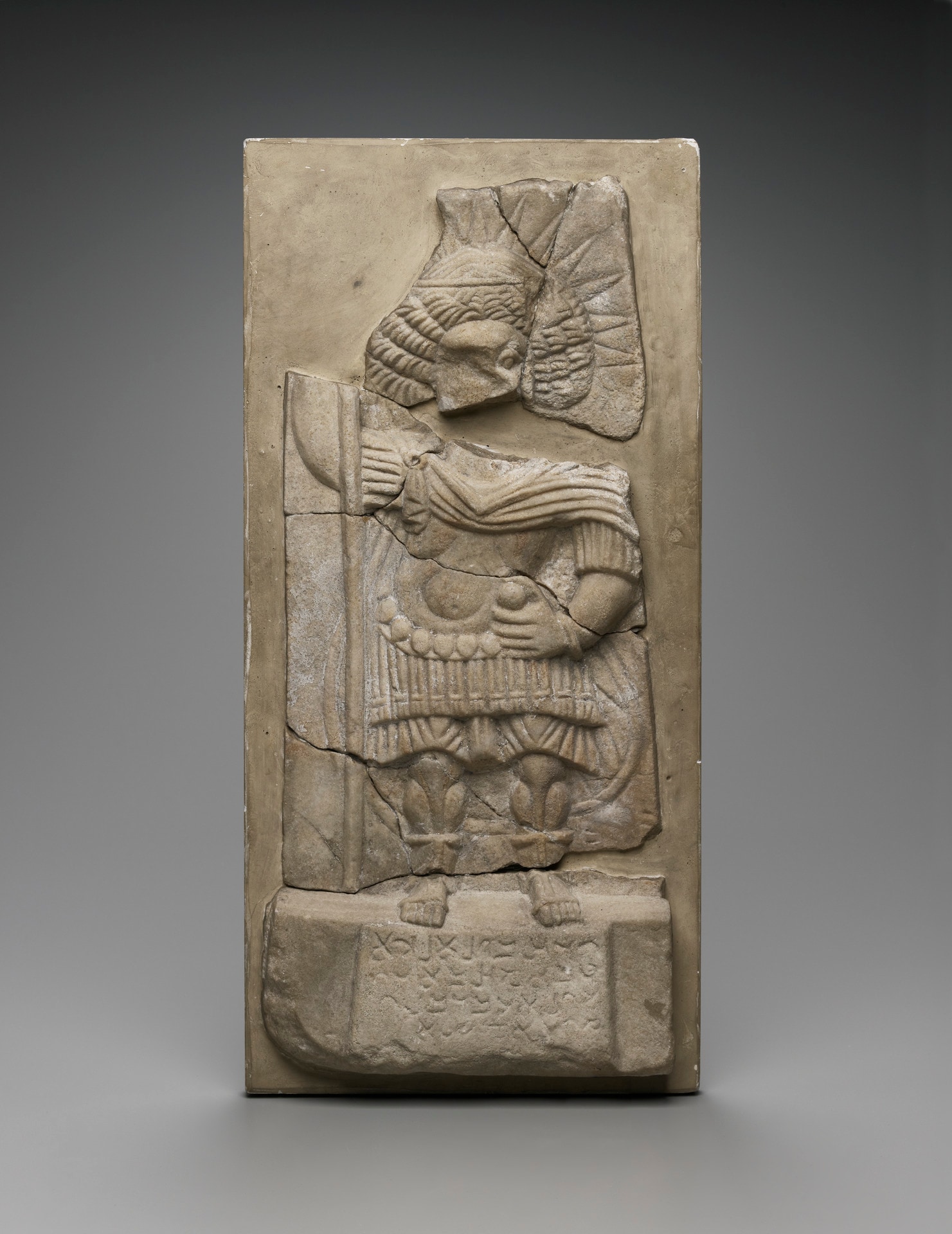
- ›Iconography evolved from pacifist depictions with a palm branch to representations with armament and Roman military attire.
- ›Often appeared in divine triads alongside Bel and Aglibol, or in his own triad with Aglibol and the goddess Arsu.
- ›His cult spread via caravan routes, with evidence found as far as Dura Europos.
Iarhibol
Guardian of the Source, Divine Judge, Prophet, Solar Deity Aspect
Moon, Sun, Spring
Solar Nimbus, Radiant Crown, Crescent, Palm Branch
Goodness, Justice
Bel, Aglibol, Arsu, Belti, Atargatis, Hercules, Semia, Jarih, Apollo, Hibil Ziwa
Reliefs In Palmyra and Dura Europos, Votive Lamps, Temple Tesserae, Frescoes
About Yarhibol
Yarhibol, also known as Iarhibol, was a significant Aramean deity primarily worshipped in the ancient city of Palmyra, located in central Syria. His worship is deeply intertwined with the city's religious landscape, often appearing in divine triads.
Origins and Evolution
Initially, Yarhibol is believed to have been the patron or 'genius loci' of the vital spring Efqa in Palmyra, earning him the title 'Lord/Guardian of the Source.' His name, which translates to 'the moon of Bel,' strongly suggests an earlier association with lunar cults and potentially the Canaanite moon god Jarih. Iconographic evidence, such as a radiant crown and crescent decoration on a stele from Dura Europos, supports this lunar connection. Historical accounts describe him as a 'good god,' and his role as custodian of a healing spring, a crucial resource for desert inhabitants, led to his functions expanding. He acquired the status of a supreme divine judge and developed prophetic qualities, aspects often linked with solar deities. This evolution led to ideological kinship with the Greek god Apollo.
Iconography and Depictions
In Palmyrene art, Yarhibol's iconography evolved over time. The oldest known reliefs from the 1st century BC depict him in Greek attire, holding a palm branch, signifying a pacifist form. However, by the 1st to 3rd centuries AD, representations shifted, showing him armed and in Roman military dress. Yarhibol commonly appeared in divine triads, most notably alongside Bel, the supreme deity of Palmyra, and Aglibol, another prominent Palmyrene god. He also formed his own triad with Aglibol (typically to his right) and the goddess Arsu, creating a symbolic cosmic grouping of Sun, Moon, and Earth. Other deities like Belti (the female equivalent of Bel, associated with Venus) or Atargatis sometimes accompanied him. He has also been depicted with figures like Hercules or Semia, though never with Malakbel.
Cult and Spread
The cult of Yarhibol was deeply entrenched in Palmyra, with evidence suggesting worship by the Amorites, considered the earliest inhabitants. Before a distinct iconography was established, he was likely worshipped in the form of a Baetylus. Votive lamps with his image and inscriptions, along with temple tesserae featuring him in various divine groupings, attest to his local cult. The use of his name as a personal name by Palmyrene inhabitants further highlights his popularity. The extensive caravan routes passing through Palmyra facilitated the spread of his cult eastward, with significant findings in the sanctuary at Dura Europos, dating to the Roman era. Parallels have also been drawn between Yarhibol and the Mandaean figure Hibil Ziwa, particularly in name and artistic representation.
Source: Wikipedia ↗
Frequently Asked Questions
What was Yarhibol's primary role in ancient Palmyra?
Yarhibol was revered as the 'Lord of the Source,' indicating his initial role as the guardian of the spring Efqa. Over time, his functions expanded to include being a supreme divine judge and acquiring prophetic qualities, often associated with solar deities.
What is the meaning of Yarhibol's name?
The name Yarhibol translates to 'the moon of Bel.' This etymology points to an early connection with lunar cults and the Canaanite moon god Jarih.
How was Yarhibol depicted in iconography?
Early depictions showed Yarhibol in a Greek chiton and himation, holding a palm branch. Later representations, particularly from the 1st to 3rd centuries AD, portrayed him with armament and in Roman military attire.
With which other deities was Yarhibol commonly depicted?
Yarhibol was frequently shown in divine triads. He most often appeared with Bel, the supreme god of Palmyra, and Aglibol, the god of the moon. He also formed his own triad with Aglibol and the goddess Arsu, symbolizing a cosmic Sun-Moon-Earth group.
Was Yarhibol's cult limited to Palmyra?
While Palmyra was his primary center of worship, Yarhibol's cult spread along caravan routes, evidenced by its presence in sanctuaries such as the one discovered in Dura Europos.
Are there any parallels between Yarhibol and other religious figures?
Scholars have noted resemblances between Yarhibol and the Mandaean uthra Hibil Ziwa. His association with prophecy and solar aspects also led to comparisons with the Greek god Apollo.