
Tennin
Buddhism (Japanese, influenced by Indian and Chinese traditions)
Tennin are divine spiritual beings originating from Japanese Buddhism, equivalent to angels, and derived from concepts like Apsaras in Hinduism and heavenly beings in Taoism. They are often depicted as beautiful individuals inhabiting Buddhist heavens, serving as companions to Buddhas and Bodhisattvas, and are associated with nature, enlightenment, and good fortune.
Key Facts
- ›Tennin are spiritual beings found in Japanese Buddhism, analogous to angels in other traditions.
- ›They are believed to reside in Buddhist heavens as companions to Buddhas and Bodhisattvas.
- ›Tennin are often depicted as beautiful women, sometimes topless or adorned in ornate kimonos and jewelry.
- ›They are associated with symbols of enlightenment, such as lotus blossoms, and may play musical instruments.
- ›In some legends, Tennin require special feathered garments, known as Hagoromo, to fly and return to heaven.
Tenshi, Tennotsukai, Hiten, Tennyo, Apsara
Companion To Buddhas and Bodhisattvas, Inhabitant of Buddhist Heavens
Clouds, Waters
Lotus Blossoms, Feathered Scarves
Buddhist Sutras
Buddhas, Bodhisattvas, Apsara, DevatāS
Japanese Art, Sculpture, Theater, Noh Plays
About Tennin
Tennin (天人; lit. "Heaven(ly) Person") are divine spiritual beings found in Japanese Buddhism, serving as the equivalent of angels in other religious traditions. They were imported into Japanese Buddhism from Chinese traditions, which were themselves influenced by concepts of heavenly beings from Indian Buddhism and Chinese Taoism. Their origins can be traced to the "Apsara" of Hinduism, who are celestial beings often depicted as spirits of clouds and waters.
Tennin are believed to reside in Buddhist heavens, where they act as companions to Buddhas and Bodhisattvas. While their heavenly abode is their primary dwelling, some beliefs suggest they also have homes in natural elements like trees, river bends, or stones. The concept of Tennin, particularly the female aspect known as Tennyo (天女; lit. "Heaven(ly) Woman/Women"), is prominent in Buddhist art, sculpture, and theater, shaping depictions of these ethereal figures.
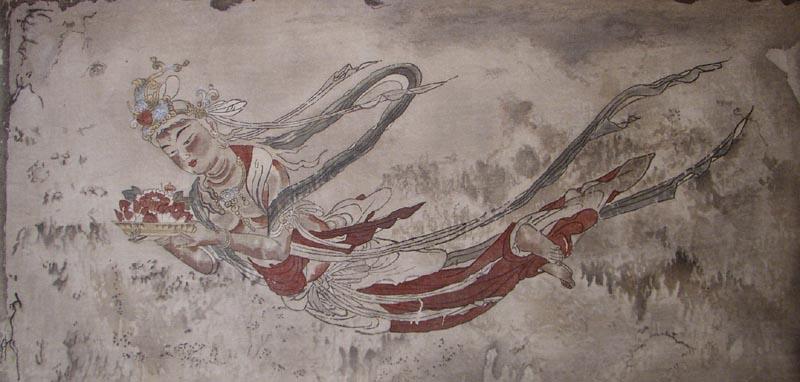
These beings are typically portrayed as exceptionally beautiful individuals. Common artistic representations show them as either topless or clad in ornate, colorful kimonos, adorned with exquisite jewelry. A distinctive feature is the presence of stole-like, feathered, flowing scarves known as Hagoromo (羽衣; lit. 'Feather[ed] Raiment'), which are also referred to as Tenne. These garments are sometimes depicted as essential for their ability to fly and return to their heavenly realm, a theme explored in legends such as the Noh play "Hagoromo." Tennin are often shown carrying lotus blossoms, symbolizing enlightenment, or playing musical instruments like the biwa or flute. Their powers are primarily associated with flight, and the belief that these spirits can bestow good luck and well-being has led to their veneration through amulets.
Source: Wikipedia ↗
Frequently Asked Questions
What are Tennin?
Tennin are divine spiritual beings found in Japanese Buddhism, considered the equivalent of angels. They are believed to inhabit Buddhist heavens and serve as companions to Buddhas and Bodhisattvas.
What is the origin of Tennin?
The concept of Tennin was seemingly imported into Japanese Buddhism from Chinese Buddhism, which itself was influenced by Indian Buddhism and Chinese Taoism. Their origins can be traced back to the Hindu "Apsara" beings.
How are Tennin typically depicted?
Tennin are usually pictured as unnaturally beautiful women, often topless or dressed in ornate, colorful kimonos, exquisite jewelry, and flowing, feathered scarves called Hagoromo. They may also carry lotus blossoms or play musical instruments.
What are the powers of Tennin?
Tennin possess the ability to fly, often indicated by their flowing garments. Some legends suggest they are unable to fly without their special feathered kimono, the Hagoromo, which allows them to return to heaven.
Where do Tennin live?
Tennin are believed to live in the Buddhist heaven as companions to Buddhas and Bodhisattvas. However, they are also described as having homes in nature, such as trees, river bends, or stones.
What is the significance of Hagoromo?
Hagoromo are feathered, flowing scarves that Tennin wear. They are crucial in some legends, as Tennin are said to be unable to fly and return to heaven without them, drawing parallels to swan maiden myths.