
Hanibal
Carthaginian
Hannibal was a Carthaginian general and statesman renowned for his military genius, particularly during the Second Punic War against the Roman Republic. He is celebrated for his innovative strategies, such as crossing the Alps with war elephants, and for inflicting significant defeats on Roman forces. His career highlights a persistent struggle against Rome, driven by a deep-seated animosity, and he is considered one of antiquity's greatest military tacticians.
Key Facts
- ›Hannibal was a Carthaginian general and statesman.
- ›He commanded Carthaginian forces against Rome during the Second Punic War.
- ›He invaded Italy by crossing the Alps with war elephants.
- ›Hannibal achieved notable victories at the Battles of Ticinus, Trebia, Lake Trasimene, and Cannae.
- ›He was distinguished for his ability to assess and exploit both his own and his opponent's strengths and weaknesses.
- ›After the war, he enacted reforms as sufet but fled into exile due to political opposition.
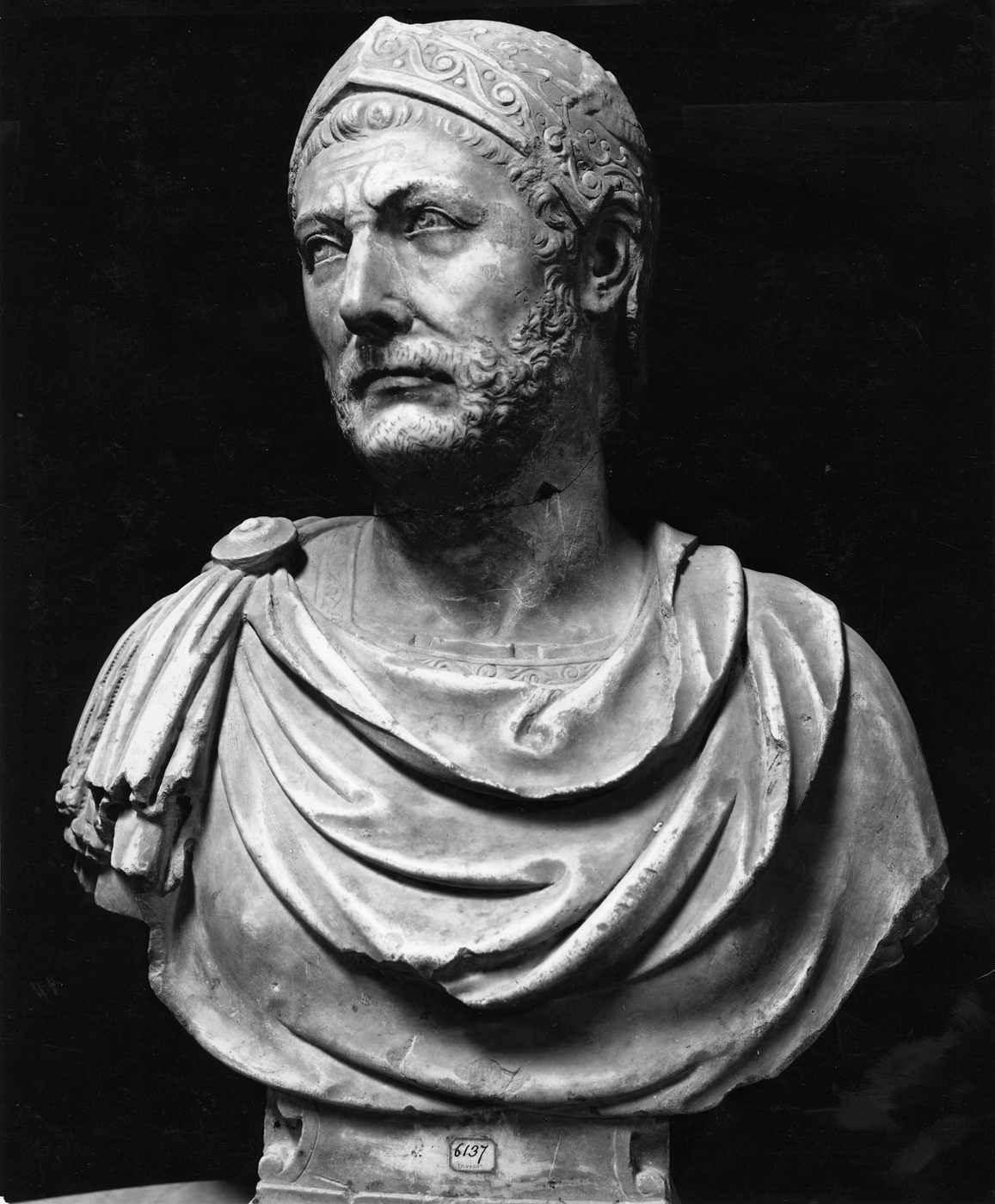
Hannibal Barca, Hannibal the Barcid, Hannibal, son of Hamilcar
General, Statesman, Military Tactician
War Elephants
Hamilcar Barca, Hasdrubal Barca, Mago Barca, Scipio Africanus, Fabius Maximus
- Considered One of the Greatest Military Tacticians of Western Antiquity.
About Hanibal
Hannibal
Hannibal (Punic: 𐤇𐤍𐤁𐤏𐤋; 247 – between 183 and 181 BC) was a preeminent Carthaginian general and statesman, celebrated for his strategic brilliance and leadership during the tumultuous Second Punic War against the Roman Republic. His name, derived from the Semitic deity Baal Hammon, signifies "The Grace of Baʿal," reflecting his cultural origins.
Early Life and Oath
Hannibal was born into the influential Barca family, the son of Carthaginian general Hamilcar Barca. A pivotal moment in his youth, recounted by historians, involved him swearing an oath to his father to "never be a friend of Rome." This pledge profoundly influenced his life, instilling a deep-seated animosity towards the burgeoning Roman Republic and setting the stage for his future military endeavors.
The Second Punic War and Invasion of Italy
In 218 BC, Hannibal initiated the Second Punic War by attacking Saguntum, a Roman ally in Hispania. His most audacious strategic move was the overland invasion of Italy, a feat that involved crossing the formidable Alps with a diverse army, including North African war elephants. Despite the immense hardships and losses during the crossing, Hannibal emerged in northern Italy, where he successfully detached Gallic tribes from Roman allegiance.
Military Genius in Italy
Hannibal's campaign in Italy was marked by a series of stunning tactical victories. He demonstrated an exceptional ability to assess the strengths and weaknesses of both his own forces and the enemy, planning battles with remarkable foresight. His notable triumphs included the Battles of Ticinus, Trebia, Lake Trasimene, and the devastating Battle of Cannae, where he inflicted catastrophic losses upon the Roman legions. For fifteen years, he maintained a significant Carthaginian presence in southern Italy, compelling Roman generals like Fabius Maximus to adopt a war of attrition to counter his prowess.
Exile and Final Years
Despite his military successes, Carthaginian defeats elsewhere and a Roman counter-invasion led by Scipio Africanus forced Hannibal to return to Carthage, where he was ultimately defeated at the Battle of Zama. After the war, he served as sufet, implementing reforms that were unpopular with the Carthaginian aristocracy and Rome. Fleeing into voluntary exile, he advised rulers in the Seleucid and Bithynian courts in their conflicts with Rome. Ultimately, to evade Roman capture, Hannibal died by suicide, a testament to his enduring defiance against his lifelong adversary.
Hannibal is widely regarded as one of the greatest military strategists and generals of antiquity, often placed in the same esteemed company as Alexander the Great and Julius Caesar.
Source: Wikipedia ↗
Frequently Asked Questions
What was Hannibal's most famous military achievement?
Hannibal is most famous for his daring invasion of Italy during the Second Punic War. He successfully crossed the Alps with his army, including war elephants, a feat previously thought impossible. This campaign led to several significant victories against the Roman Republic.
What was the significance of Hannibal's oath to his father?
According to historical accounts, Hannibal swore an oath to his father, Hamilcar Barca, to 'never be a friend of Rome' as long as he lived. This pledge fueled his lifelong animosity towards Rome and shaped his military career, culminating in the Second Punic War.
How did Hannibal cross the Alps?
Hannibal's crossing of the Alps was an arduous undertaking involving immense logistical challenges. While the precise route is still debated by scholars, ancient sources describe him using clever tactics and overcoming harsh conditions to lead his army, including war elephants, over the treacherous mountain passes.
What were Hannibal's major battles in Italy?
During his campaign in Italy, Hannibal achieved a series of significant victories. These include the Battles of Ticinus, Trebia, Lake Trasimene, and the decisive Battle of Cannae, where he inflicted devastating losses on the Roman legions.
What happened to Hannibal after the Second Punic War?
Following his defeat at the Battle of Zama, Hannibal returned to Carthage and served as sufet, implementing political and financial reforms. However, facing opposition, he went into voluntary exile, serving as a military advisor to other rulers before ultimately dying by suicide to avoid capture by the Romans.